

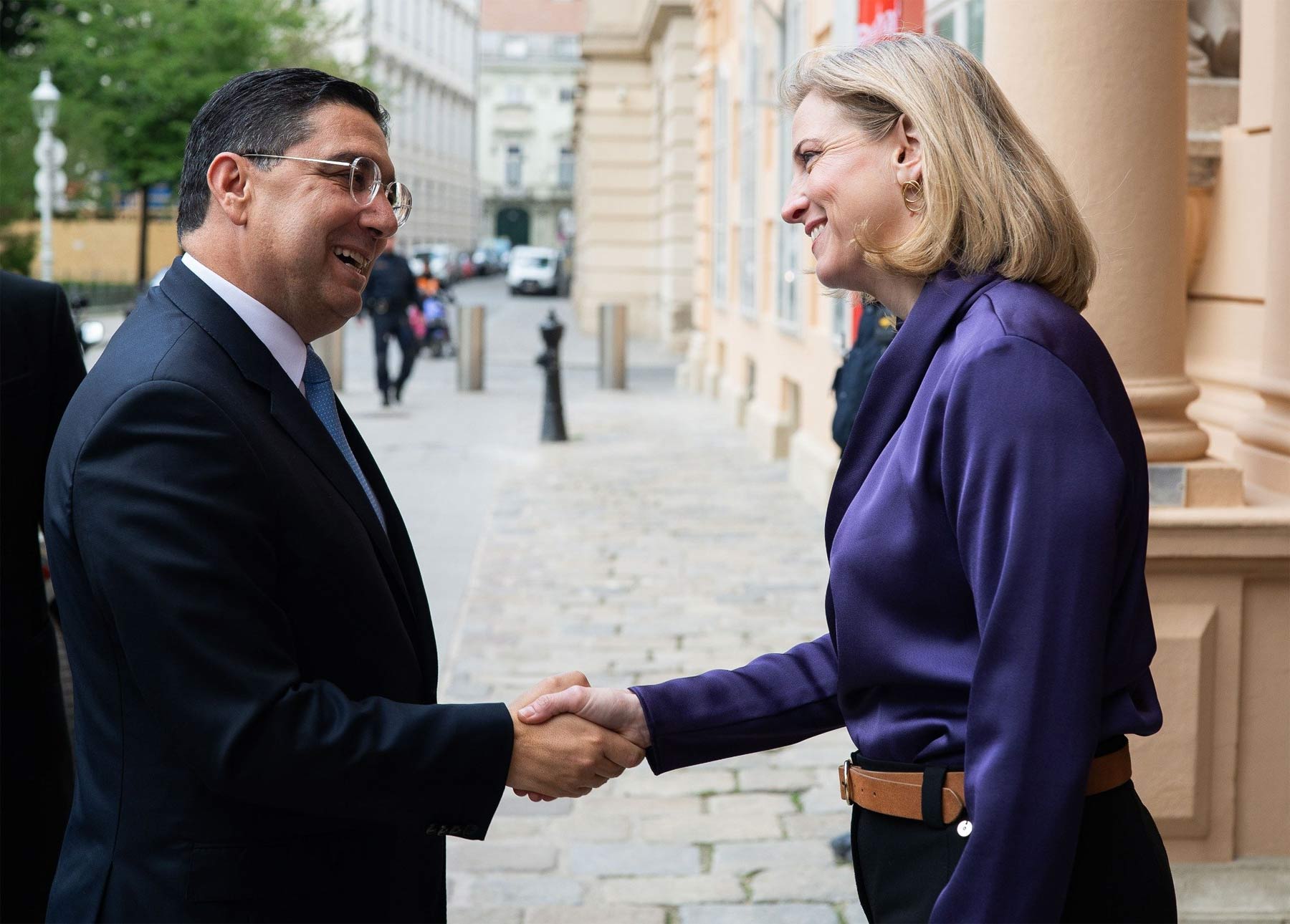
Shared determination to strengthen long-standing ties
Austria backs Morocco’s Sahara plan in shift under UN framework
The position adds to what diplomats describe as a widening international trend of support for Morocco’s plan for Western Sahara.
Thursday 23/04/2026
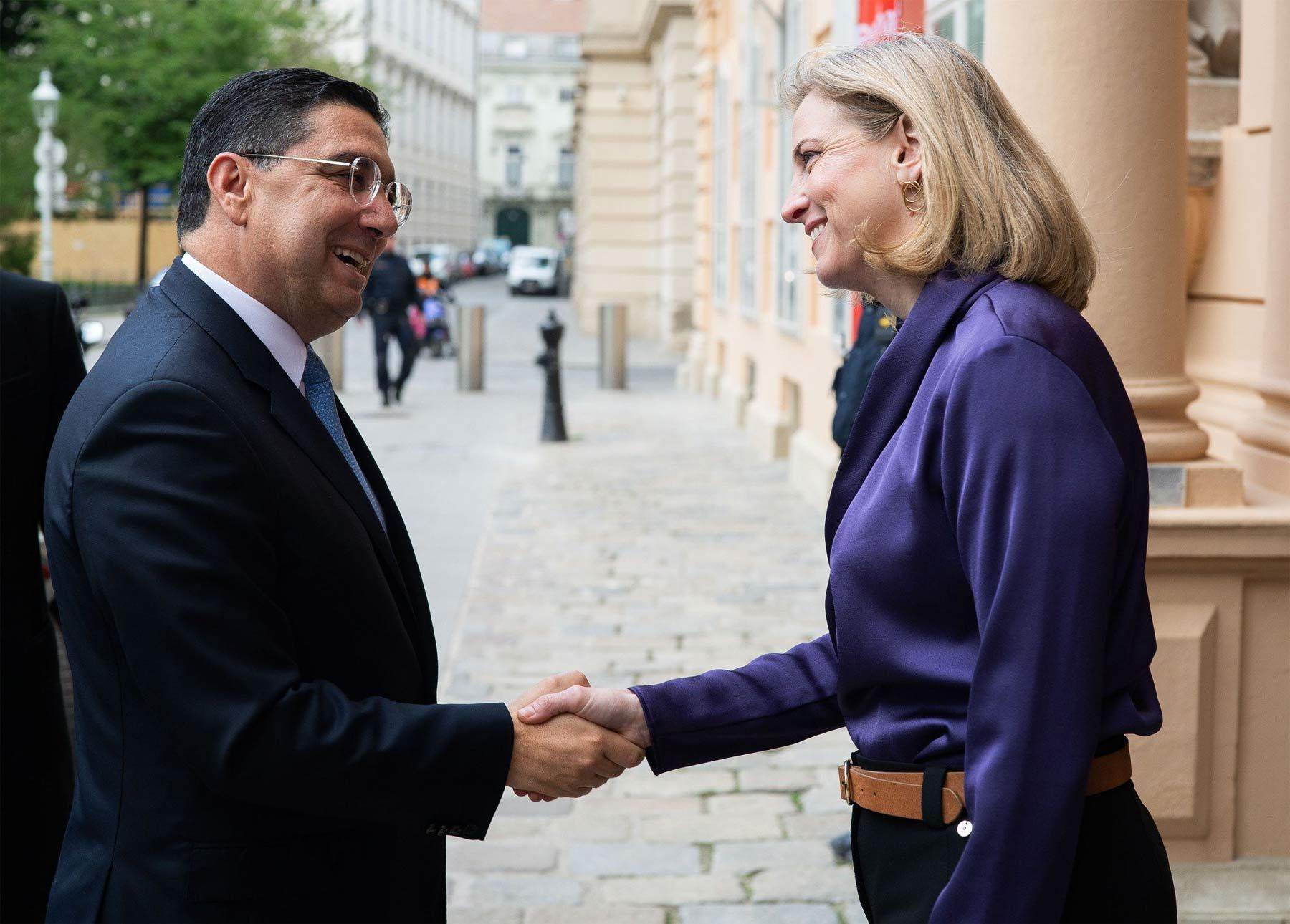
Shared determination to strengthen long-standing ties
RABAT/VIENNA – Austria has expressed support for United Nations Security Council Resolution 2797 and endorsed Morocco’s autonomy proposal as “one of the most viable solutions” to the long-running dispute over Western Sahara, marking another sign of growing international alignment behind Rabat’s position.
The stance was set out in a joint statement following talks in Vienna between Austria’s Federal Minister for European and International Affairs Beate Meinl-Reisinger and Morocco’s Foreign Minister Nasser Bourita, during a working visit by the Moroccan official.
In the statement, Austria said that “genuine autonomy under Moroccan sovereignty can constitute one of the most viable solutions” to the dispute, underscoring its support for a negotiated political process under United Nations auspices.
Vienna also welcomed the adoption of UN Security Council Resolution 2797, which it said fully backs the efforts of the UN Secretary-General and his Personal Envoy to facilitate and lead negotiations on the basis of Morocco’s autonomy initiative. The objective, the resolution states, is to achieve a “just, lasting and mutually acceptable political solution” to the regional dispute.
Austria further praised Morocco’s willingness to provide more detailed proposals on how autonomy could be implemented within the framework of its sovereignty, describing this as a constructive contribution to the political process.
The position adds to what diplomats describe as a widening international trend of support for Morocco’s plan for Western Sahara, which has gained increasing traction across Europe, Africa and the Arab world in recent years as a pragmatic framework for resolving the conflict. The momentum has been driven in part by diplomatic initiatives led by King Mohammed VI, which have steadily reshaped international discourse around the dispute.
The adoption of UN Security Council Resolution 2797 in October 2025 is widely seen as a milestone in this evolving diplomatic landscape, reinforcing the UN-led process while placing stronger emphasis on negotiations grounded in Morocco’s autonomy proposal.
At the same time, the resolution has intensified calls for all parties to engage constructively in order to reach a durable settlement, amid a gradual shift in international positions in favour of a negotiated compromise based on autonomy rather than competing sovereignty claims.
Beyond the Western Sahara file, Morocco and Austria also signed a memorandum of understanding establishing a structured strategic dialogue between the two countries. The agreement aims to deepen cooperation across political and economic fields and elevate bilateral relations towards a more comprehensive strategic partnership.
The framework is based on mutual respect for sovereignty, territorial integrity, independence and non-interference in internal affairs, and reinforces both countries’ commitment to regular consultation and information exchange on bilateral, regional and international issues of shared interest.
Officials on both sides said the agreement reflects a shared determination to strengthen long-standing ties, which are rooted in a historic diplomatic relationship spanning more than two centuries. Morocco and Austria marked 240 years of diplomatic relations on 28 February 2023.
The latest developments also build on momentum generated following the official visit of Austrian Chancellor Karl Nehammer to Morocco, which culminated in a joint declaration signed in Rabat in March 2023, laying the groundwork for expanded cooperation in multiple sectors.
Taken together, the latest Austrian position and the new bilateral framework underline both the strengthening of Morocco’s diplomatic outreach in Europe and the continued consolidation of international support for its autonomy proposal as the central basis for resolving the Western Sahara dispute.