

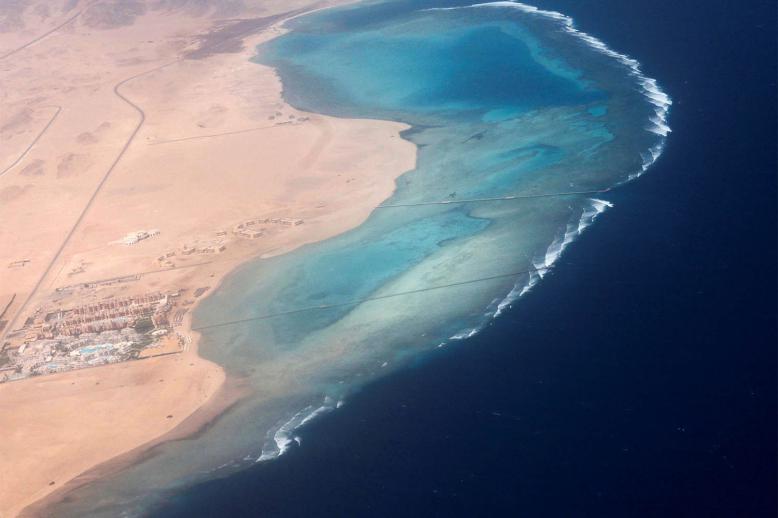

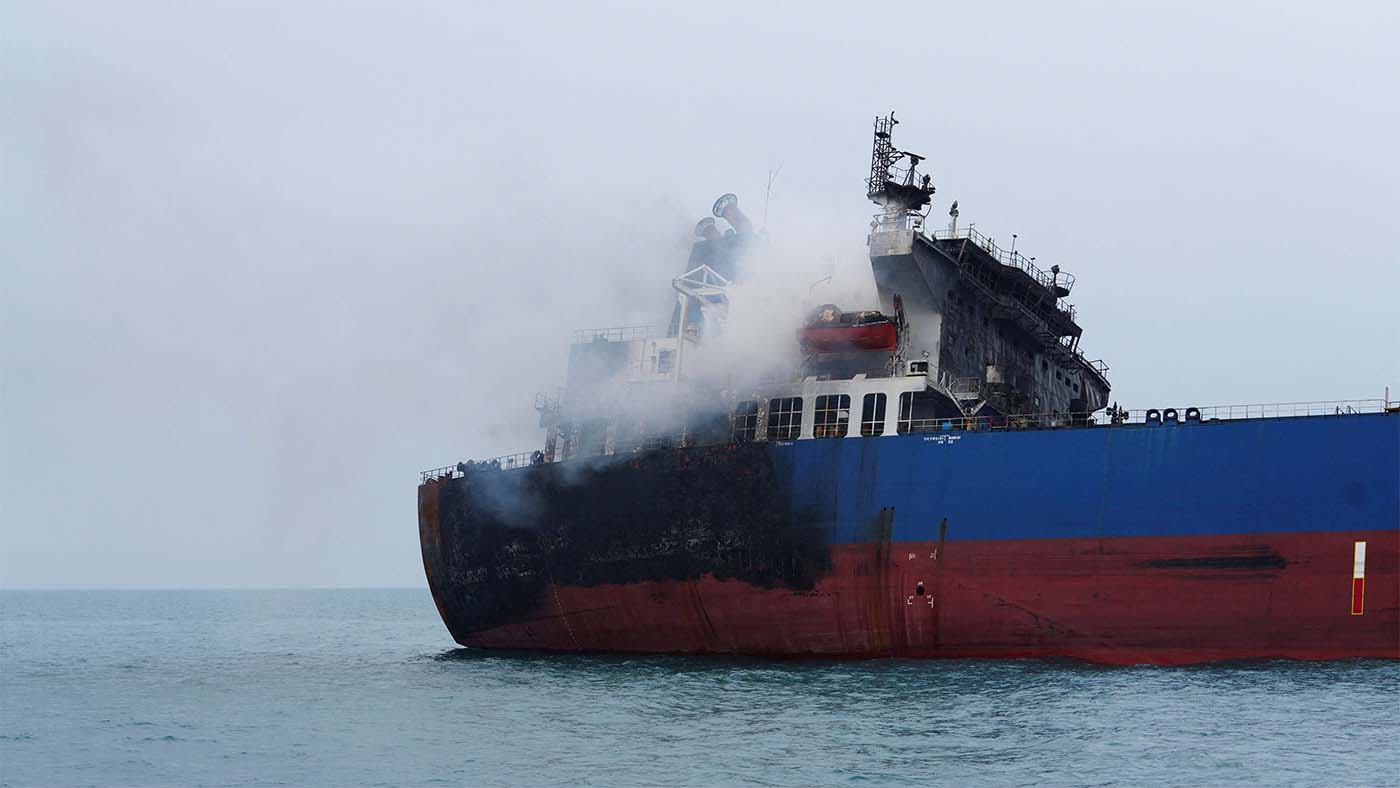
In the Strait of Hormuz, any military confrontation targeting oil tankers or energy facilities could trigger massive oil spills that would be extremely difficult to contain
The blue economy in times of war: Why do environmental concerns disappear during times of conflict?
Amid the risks of oil spills, noise pollution, and the disruption of marine ecosystems, oceans have become silent victims of wars in which security and geopolitics take precedence over biodiversity.
Wednesday 01/04/2026
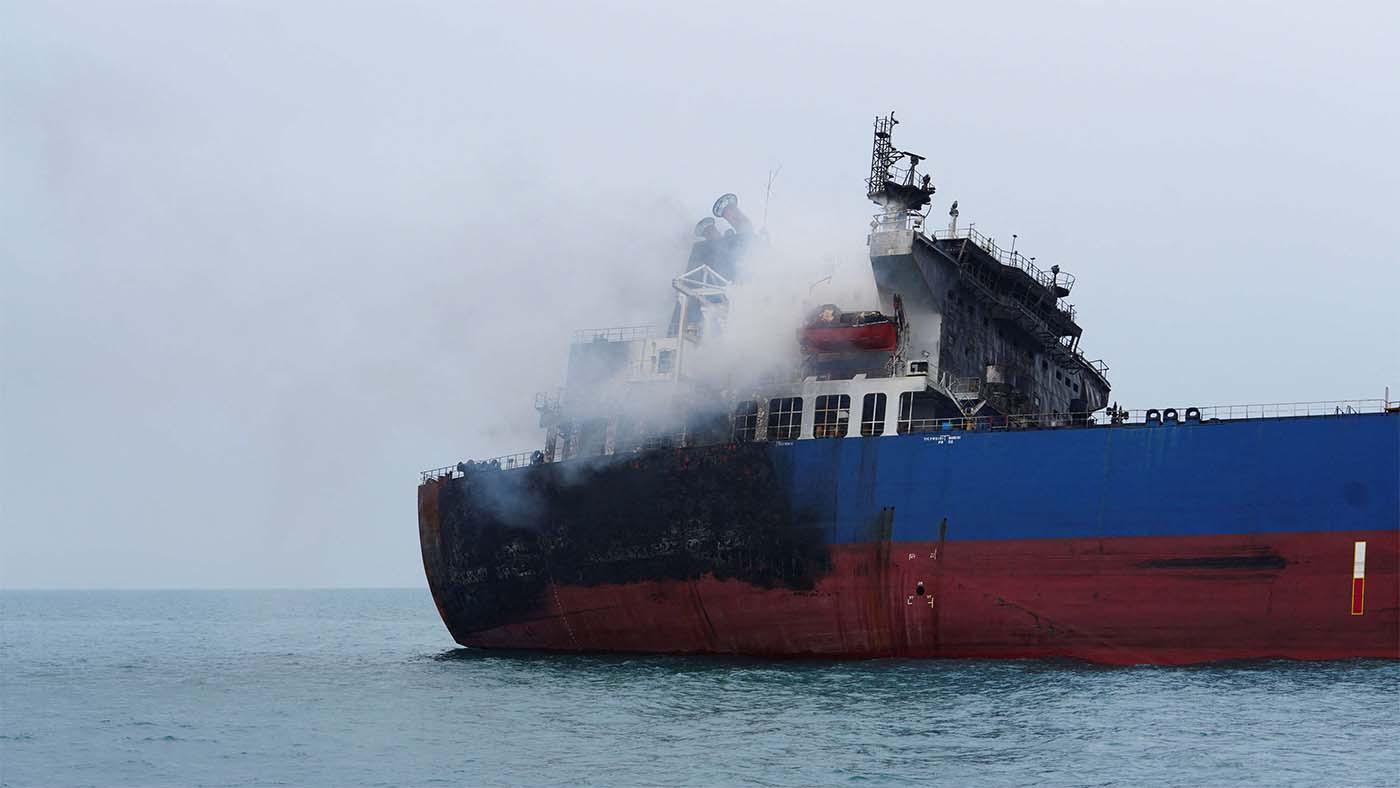
In the Strait of Hormuz, any military confrontation targeting oil tankers or energy facilities could trigger massive oil spills that would be extremely difficult to contain
As military conflicts intensify in strategic straits and across the Mediterranean Sea, environmental impact issues have almost disappeared from the international debate. Amid the risks of oil spills, noise pollution, and the disruption of marine ecosystems, oceans have become silent victims of wars in which security and geopolitics take precedence over biodiversity.
A Bitter Reality After Environmental Summits
While international summits dedicated to protecting oceans and the climate continue to take place, vital maritime corridors are paying the price for the decisions of major powers, with marine ecosystems becoming silent casualties.
As I move anxiously between different media platforms, I feel both frustration and despair at an international landscape that, in many of its details, has turned into a dangerous hotspot of pollution, both of awareness and of the environment itself. After a series of environmental summits filled with bright recommendations and promising initiatives, we quickly return to square one, or worse than square one. Painful scenes emerge of people belonging to the same humanity who have failed to live in peace and harmony, but have instead been transformed, through policies and conflicts, into “enemies of one another.” Hatred, hunger, poverty, destruction, extinction… as if nothing had happened. As if all those conferences held under the banners of protecting oceans and the climate were merely media bubbles that burst at the first geopolitical test.
In the Strait of Hormuz, where maritime oil routes intersect with lines of fire, a painful paradox becomes clear, just as in the waters of the Mediterranean Sea, where gas projects and military influence compete. For both, the same contradiction: while climate and ocean summits are held in luxurious halls, environmental destruction is reproduced daily in the name of national security and military deterrence. How long will the sea remain hostage to conflicts? And where are the promises of ocean protection heading in times of war?
New Dynamics: When the Ocean Becomes a Battlefield
The world is witnessing an increasing politicisation of maritime spaces. Straits and waterways are no longer merely trade routes or fragile ecological systems; they have become front lines of regional and international conflicts. The Strait of Hormuz, through which about 20 percent of global oil passes, periodically becomes a point of military friction, amid threats of closure and attacks on vessels linked to regional tensions.
At the other end of the map, the Mediterranean Sea has become a complex theater of conflict. From the Strait of Gibraltar to the coasts of Libya and Syria, disputes over the delimitation of exclusive economic zones intersect with natural gas exploration, all under the shadow of heavy military presence from NATO forces and competing naval bases. Tensions between Turkey, Greece, and Cyprus, the conflict in Libya, and Russia’s presence in the Eastern Mediterranean all transform this ancient sea into a crucible where geopolitical interests collide, at the expense of a fragile ecological system.
Environmental Consequences of Conflicts: The Great Omission
Major contradictions become evident, as while international conferences call for a sustainable blue economy and for ocean conservation that recognize no borders, in practice, borders are enforced by force, and even create new extended boundaries of environmental threat. Military escalation in waterways threatens navigation and places additional pressure on ecosystems already suffering from pollution, global warming, and human overexploitation.
When discussing tensions in the Strait of Hormuz or the Mediterranean, the environmental dimension remains largely absent from prevailing analyses. Yet war, even before it breaks out, leaves long-term ecological scars.
In the Strait of Hormuz, any military confrontation targeting oil tankers or energy facilities could trigger massive oil spills that would be extremely difficult to contain in such a narrow and relatively shallow waterway. The resulting environmental disaster would not be limited to the coasts of Iran, Oman, and the United Arab Emirates; it would also devastate wetlands and unique coral reefs in the Arabian Gulf, ecosystems already suffering from record temperatures and rising salinity.
In the Mediterranean Sea, the picture is even more complex. Years of conflict in Libya and Syria led to the sinking of ships and fuel cargoes, the leakage of hazardous materials from damaged oil facilities, and chronic pollution resulting from military exercises and intensive naval movements. The unprecedented migration crisis, along with search and rescue operations and strict security measures, has placed additional pressure on sensitive marine areas. Meanwhile, gas exploration using seismic surveys generates noise pollution that disrupts the ability of marine mammals, such as dolphins and whales, to communicate and navigate, not to mention its impact on fish stocks that sustain millions of fishermen.
Both basins face a dual threat. They are already suffering from the impacts of climate change, rising water temperatures, ocean acidification, and sea-level rise. Adding the pressures of military conflict and related activities makes the recovery capacity of these ecosystems almost impossible.
Med Mosaic: Civil Society Confronting the Destruction of Seas in Times of War
Marine environmental expert Mona Samari noted that “the Mediterranean Sea connects all countries of the region. Environmental degradation in one country quickly becomes a problem threatening everyone. Addressing environmental issues in difficult times does not mean ignoring conflicts, it means documenting another crisis that will shape the region’s future for decades.”
Samari added: “The media sector is already experiencing a global crisis. Environmental journalism is often the first victim, despite being one of the most crucial fields for the region’s future. Environmental challenges, such as the loss of fishermen’s livelihoods, the growing vulnerability of coastal communities, and the intensifying competition over marine resources, may soon evolve into security issues for the next generation.”
This perspective is echoed by Samari’s work with the Med Mosaic initiative, which focuses particularly on marine issues affecting countries experiencing conflict or post-conflict situations in the Mediterranean region. The initiative is already addressing problems such as the increasing use of dynamite fishing in Lebanon, Syria, and Libya.
Legal Analysis: War Against Environmental Law
Dr. Mohamed Belmahi, a Moroccan legal expert specializing in public law, stated that the situation reveals a persistent failure in international environmental governance. According to Belmahi, armed conflicts expose the limitations of current international environmental law. When security and energy concerns become priorities, the protection of marine ecosystems is often marginalized, despite international commitments to biodiversity and ocean conservation.
He explains that protecting oceans in areas of geopolitical tension requires strengthening international legal mechanisms capable of integrating environmental considerations into security policies and crisis management. The relationship between war and the environment, he notes, has become one of the most complex legal challenges in the contemporary international system.
Modern armed conflicts, he emphasizes, no longer affect only infrastructure or civilian populations; they also extend to marine and terrestrial ecosystems. Targeting oil facilities, disrupting navigation in strategic straits, or intensifying naval military activities can all lead to severe and long-lasting environmental damage.
Although international law contains some protective mechanisms, it still suffers from clear gaps. International humanitarian law includes general principles for environmental protection during armed conflicts, such as prohibiting widespread, long-term, and severe damage to the environment, but the real problem lies in weak enforcement mechanisms and the absence of effective monitoring systems, particularly in sensitive marine areas.
The greatest legal challenge, according to Belmahi, is the mandatory integration of environmental considerations into military and strategic decisions, especially in international waterways. Protecting the marine environment, he argues, should not remain a secondary issue in times of crisis but must become an integral component of the international security framework.
Ultimately, protecting seas in conflict zones is no longer merely an environmental issue, it is also a legal and ethical one concerning the future of global environmental security.
Civil Society and NGOs: Between Local Framing and Strategic Silence
In tension zones such as the Strait of Hormuz and the Eastern Mediterranean, civil society organizations and NGOs face structural dilemmas.
The first issue is the framing of an issue as a « security » related one, as environmental concerns are often folded under the umbrella of “national security,” where any discussion about the environmental impacts of conflicts is treated as a security threat or as the disclosure of sensitive information.
Secondly, regional fragmentation become even more apparent. Civil society presence in the Gulf and Eastern Mediterranean is highly divided. Environmental organizations operate in countries such as the United Arab Emirates, Oman, Iran, Greece, or Turkey, but cross-border coordination is nearly nonexistent due to political tensions.
Thirdly is the funding crisis. International funding tends to support “blue economy” or “clean energy” projects in relatively stable regions, while initiatives focused on monitoring pollution from military activities or preparing for large-scale oil spill disasters in conflict zones remain largely neglected.
As a result, NGOs fail to play the environmental mediation role they have achieved in other regions such as the Arctic, where networks of organizations have succeeded in placing environmental protection on the agenda despite geopolitical tensions.
Media: Between Escalation and Silence
The media faces a double dilemma. When incidents occur, such as the targeting of a tanker in the Strait of Hormuz or a naval confrontation in the Mediterranean, coverage focuses on geopolitical implications and energy price fluctuations, while the environmental dimension disappears almost entirely or is mentioned only briefly. This is the face of immediate escalation.
During periods of “neither war nor peace,” however, systematic silence prevails. There is little investigative coverage on the chronic pollution caused by heavy military presence, the degradation of ecosystems due to repeated military exercises, or the lingering impact of old naval mines that still threaten maritime corridors.
Environmental discourse remains distant from decision-making processes as long as the dominant frameworks imposed by major media outlets focus on security, armament, and political tensions rather than shared environmental risks that recognize no borders.
Scientific Research: Data Absence and the Problem of Neutrality
In maritime conflict zones, researchers face structural challenges that trap science within politics.
In the Strait of Hormuz, states consider marine survey data and environmental maps to be nationally sensitive information, hindering the production of open science capable of assessing shared risks.
In the Mediterranean, although frameworks such as the Barcelona Convention for the Protection of the Marine Environment exist, political tensions hinder the free exchange of data, particularly in contested areas of the Eastern Mediterranean.
Researchers also face a lack of funding for cross-border studies. Research projects are usually entirely national or dependent on fragile bilateral agreements. Rarely are comprehensive studies funded to evaluate the cumulative impacts of military activities, energy exploration, and conflicts on marine ecosystems.
More alarming still is the huge gap between what scientists know about the fragility of these ecosystems and what is translated into protective policies during conflicts. Military decisions are made without prior strategic environmental assessments and without any legal obligation to consider the sensitivity of marine areas during conflict.
Political Decision-Makers: A Crisis of Priorities
At international conferences, decision-makers sign ambitious commitments to protect oceans and achieve the “30×30” target, protecting 30 percent of oceans by 2030. Yet a critical analysis of the situation in the Strait of Hormuz and the Eastern Mediterranean reveals striking double standards.
The very states sponsoring ocean initiatives and supporting marine environmental protection may simultaneously provide diplomatic cover or weapons to conflicting parties in these vital straits, or exert geopolitical pressure that obstructs any joint environmental protection effort.
When tensions rise in the strait or escalate in the Mediterranean, priorities become clear: securing energy supplies, military deterrence, and regional alliances. Meanwhile, issues such as biodiversity protection, pollution accountability, environmental disaster preparedness, and the rights of coastal communities that depend on clean and stable seas are marginalized.
There also remains a dangerous legal ga as no binding international mechanism requires warring parties to proactively protect sensitive ecosystems in waterways. Agreements such as the Geneva Conventions provide general environmental protections during wartime, but their implementation in strategic straits like Hormuz or in enclosed and heavily trafficked seas like the Mediterranean remains weak and requires effective enforcement mechanisms.
What unites the Strait of Hormuz and the Mediterranean Sea, despite their different contexts, is that both are governed by the same logic: the politicization of maritime space at the expense of sustainability.
In both basins, waterways are transformed into arenas of conflict, and the marine environment becomes hostage to calculations of power and influence.
The real challenge is not merely gathering commitments at ocean summits, but building mechanisms that make the protection of seas a counterforce to war, a pressure capable of transcending short-term escalation.
This means requiring conflicting parties to conduct binding strategic environmental assessments before any military action in sensitive waterways. It means opening funding channels for cross-border civil society initiatives in tension zones rather than limiting environmental action to stable countries. It also means transforming scientific research from a nationally monopolized tool into a collective pressure instrument through regional networks of scientists capable of imposing evidence on decision-makers regardless of political disagreements. Finally, it requires creating a media discourse that balances coverage of escalation with coverage of chronic environmental degradation so that awareness of shared ecological risk becomes an integral part of public debate about conflicts.
Ultimately, if the sea recognizes no borders, our actions will remain ineffective unless we confront the new reality: political borders are being violently reproduced at sea, and the price is paid by the ecosystems upon which all humanity depends, from the Arabian Gulf to the Mediterranean shores, from the Strait of Hormuz to Gibraltar.
Either we recognize that the marine environment is the silent victim of wars, or we continue watching the catastrophe unfold while repeating slogans that never translate into action.