

Syria or where abstract symbols first became structured language
Damascus exhibition reveals Syria’s role in the birth of writing
At the heart of the exhibition are some of the earliest known forms of symbolic communication discovered at archaeological sites such as Tell Mureybet and Jerf al-Ahmar.
Thursday 30/04/2026
Syria or where abstract symbols first became structured language
DAMASCUS – A new exhibition at the National Museum in Damascus is offering a sweeping journey through one of humanity’s most transformative inventions, writing, tracing its origins in Syria from prehistoric symbols carved into stone to the emergence of the world’s earliest alphabet.
Titled “Syria: From Symbol to Letter,” the exhibition has been organised by the Directorate-General of Antiquities and Museums and brings together artefacts spanning thousands of years of human expression. It highlights Syria’s often overlooked but pivotal role in the development of writing systems that would later shape civilisations across the Mediterranean and beyond.
The opening ceremony was attended by senior Syrian officials as well as foreign diplomats, including French Ambassador Jean-Baptiste Faivre and Italian chargé d’affaires Stefano Ravagnan, underscoring international interest in the country’s ancient cultural heritage despite years of conflict and isolation.
At the heart of the exhibition are some of the earliest known forms of symbolic communication discovered at archaeological sites such as Tell Mureybet and Jerf al-Ahmar. These geometric engravings, dating back to prehistoric communities in the region, reflect humanity’s first attempts to record meaning visually, long before structured language systems existed.
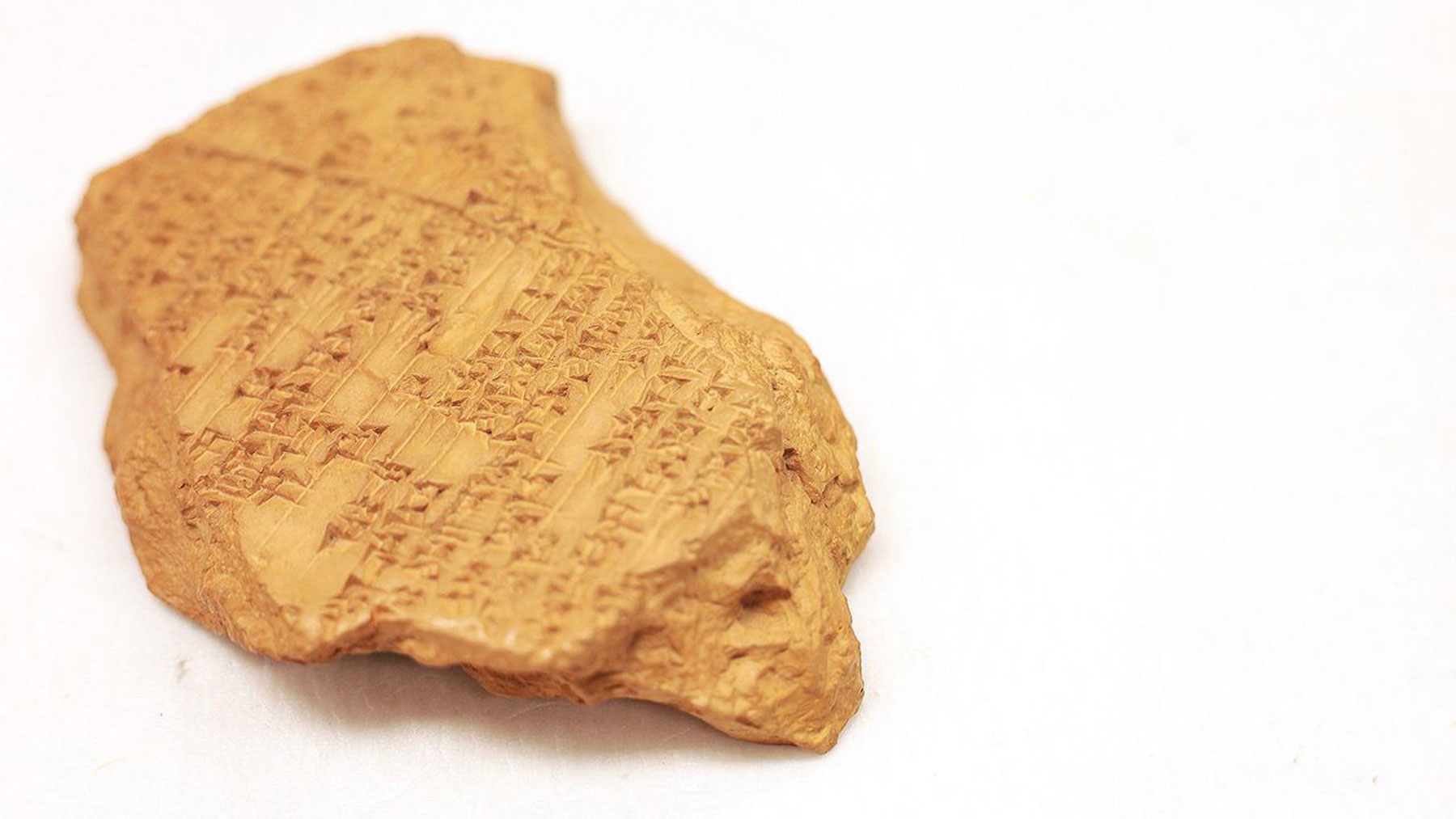
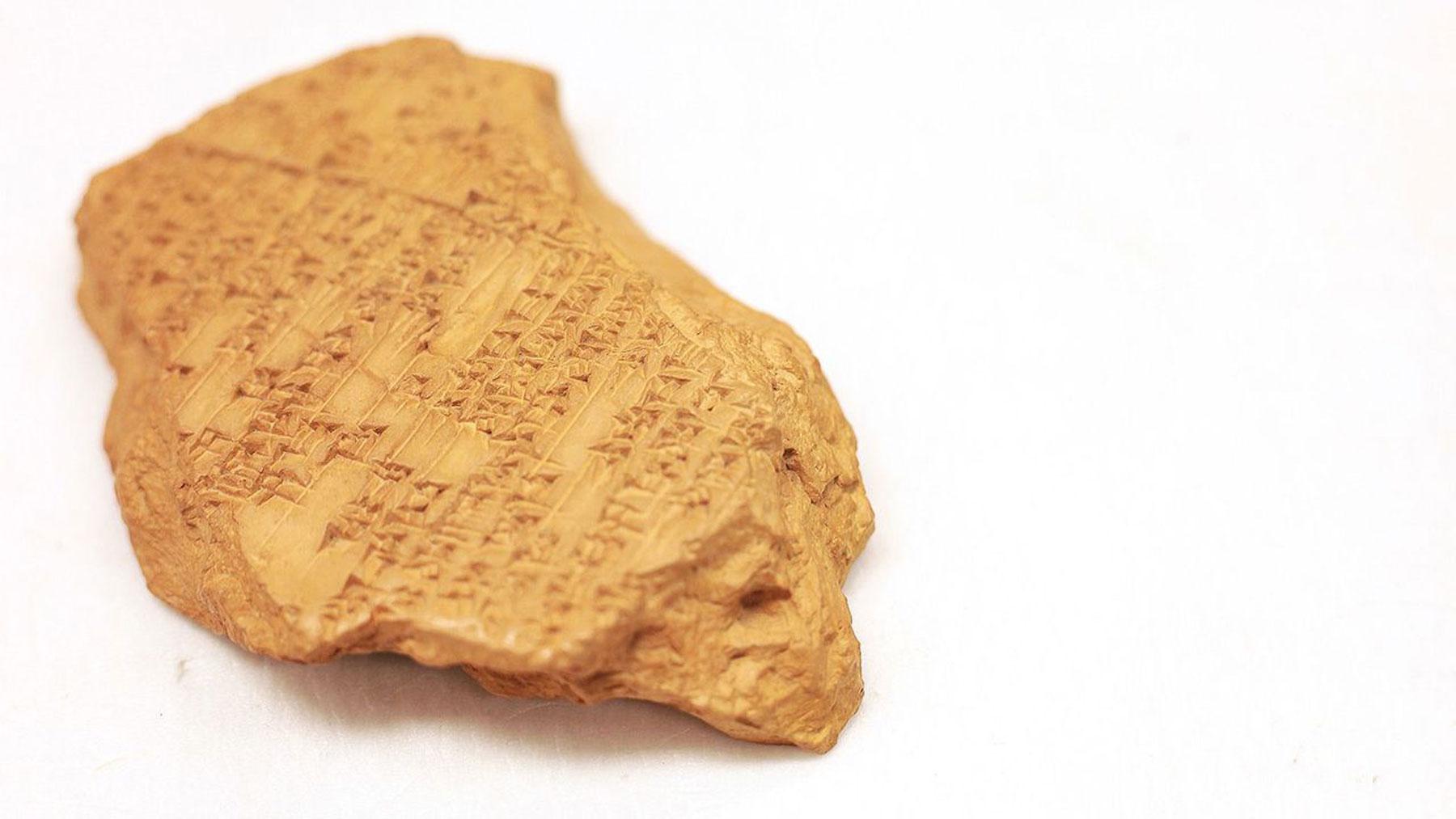
The display then moves forward in time to the ancient city of Mari, where clay tablets inscribed with cuneiform and Akkadian script reveal the administrative and literary sophistication of early urban societies in Mesopotamia’s wider cultural sphere. Among the standout artefacts is a bronze sword from Ras Shamra bearing an inscription linked to an Egyptian pharaoh, illustrating early diplomatic and cultural exchanges across the ancient Near East.
However, the centrepiece of the exhibition is the revolutionary script developed in Ugarit, on Syria’s Mediterranean coast. Widely regarded as one of the world’s earliest alphabetic systems, Ugarit’s writing reduced complex symbolic languages to around 30 characters. This innovation is considered a decisive breakthrough in the history of writing, laying the conceptual foundations for alphabetic systems still used today.
Ugarit is also associated with another extraordinary discovery: what is believed to be the earliest known example of musical notation, inscribed on a clay tablet, offering rare insight into the artistic and intellectual life of the ancient world.
The exhibition continues its chronological arc through successive civilisations that shaped Syria’s identity as a crossroads of cultures. Greek inscriptions from the southern Hauran region, intricate sculptures from Palmyra, and early Arabic calligraphy in Kufic and later forms demonstrate the continuous evolution of written expression across centuries.
Together, these artefacts illustrate the transition from Phoenician writing systems to Greek and ultimately Arabic scripts, reflecting Syria’s enduring position at the intersection of empires, languages and ideas.
Organisers say the exhibition seeks not only to present archaeological treasures but also to reaffirm Syria’s contribution to global civilisation. It charts a continuous narrative stretching from symbolic markings in the 10th millennium BC to the refinement of alphabetic writing that would later spread across Europe and the wider world.
By bringing together these fragments of ancient communication, “Syria: From Symbol to Letter” positions the country as a foundational space in the story of human literacy, a place where abstract symbols first became structured language, and where writing, in its earliest recognisable form, was born.