

Mounting political and security challenges
Dbeibah plans cabinet reshuffle, signals outreach to Gadhafi loyalists
With elections still elusive and rival administrations entrenched, Dbeibah’s planned reshuffle and conciliatory rhetoric appear designed to strengthen his hand.
Wednesday 18/02/2026
Mounting political and security challenges
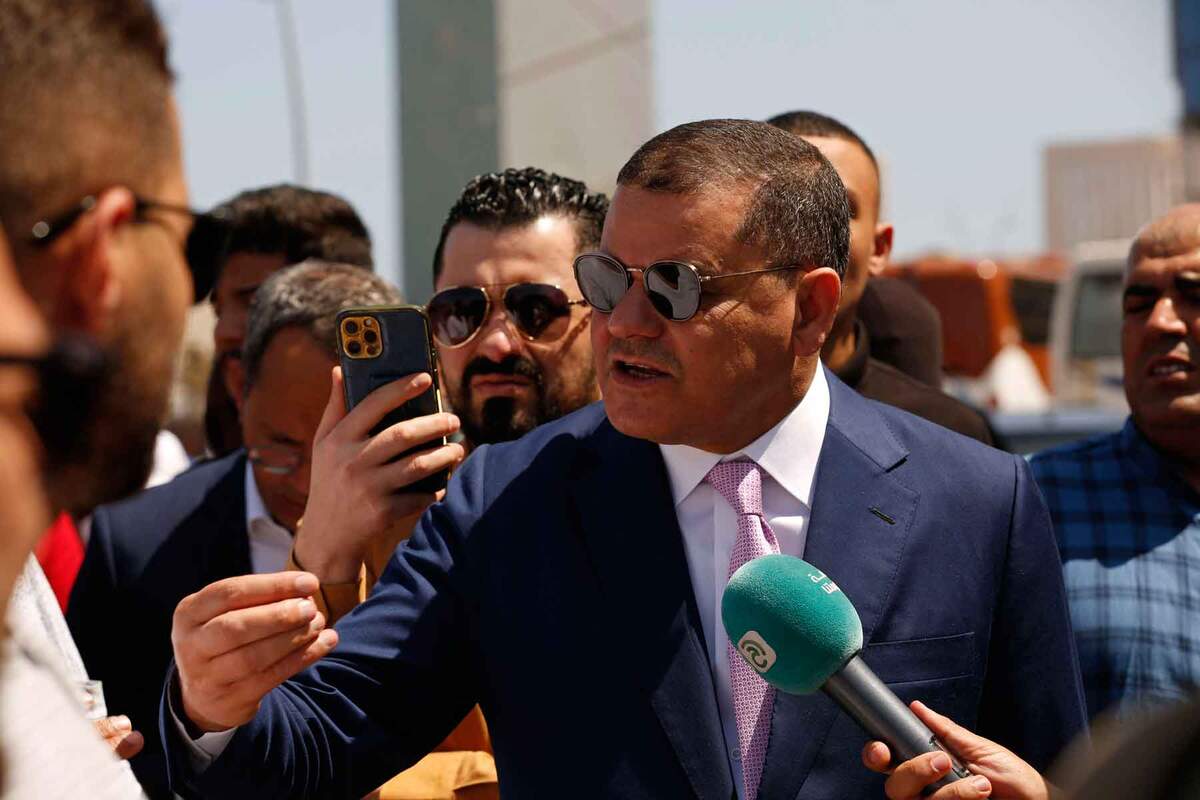
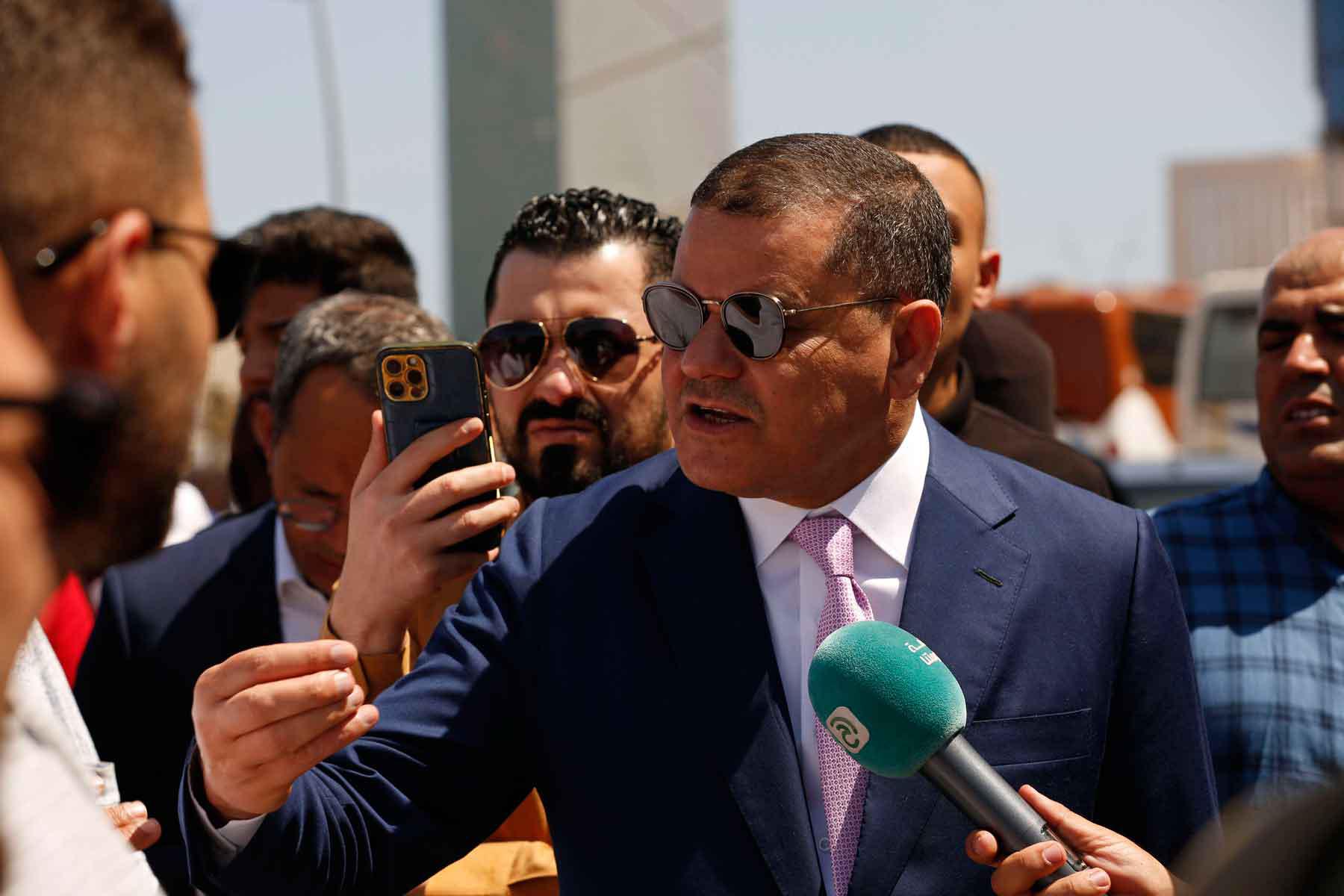
TRIPOLI – Libya’s Prime Minister Abdulhamid Dbeibah said on Tuesday he would announce a long-anticipated cabinet reshuffle at the next meeting of his Government of National Unity (GNU), as he faces mounting political and security challenges in western Libya and renewed efforts to end the country’s institutional split.
Speaking on the anniversary of the February 17, 2011 uprising that toppled longtime ruler Muammar Gadhafi, Dbeibah said the reshuffle was needed to fill vacant posts and “inject new blood” into the administration.
“The formation of this government came under complex political and security circumstances,” he said in a televised address. “The current stage requires a ministerial adjustment to fill gaps in a number of ministries and bring in competent figures capable of assuming responsibility.”
The GNU has been operating with fewer ministers than originally proposed when it took office in 2021, particularly after several ministers resigned in 2022 following a vote of no confidence by the eastern-based House of Representatives.
Political observers say the reshuffle is likely aimed at consolidating alliances in western Libya as the United Nations and neighbouring states intensify efforts to bridge divisions between rival institutions and pave the way for long-delayed national elections.
Libya has been split between two competing administrations since 2022. Dbeibah’s government, based in Tripoli, is recognised by the international community and controls the west of the country. A rival administration appointed by the eastern-based parliament is led by Osama Hammad and operates from Benghazi, overseeing the east and much of the south.
The United Nations has for years sought to broker agreements to resolve disputes between Libya’s political bodies, which have repeatedly derailed plans for presidential and parliamentary elections that many Libyans hope would reunify state institutions and end more than a decade of transitional arrangements.
Economic pact and spending row
In his speech, Dbeibah also outlined elements of what he described as a “unified development programme agreement,” reached after technical talks in November involving representatives of the government, the central bank, parliament and the High Council of State.
He said the agreement aims to ensure economic and financial stability, complete the unification of the central banking system and prevent the creation of new public debt or the extension of existing debt through unilateral measures.
Under the deal, all sovereign revenues, oil and non-oil, must be deposited into the state treasury account at the Central Bank of Libya. Parties are also required to adhere to the bank’s plan for letters of credit and anti-money laundering and counter-terrorism financing procedures, with the bank empowered to suspend funding to entities that violate the rules.
Dbeibah criticised what he described as 70 billion dinars (around $11 billion) in development spending earmarked for 2025 “without a clear plan”, arguing that the state’s real capacity in that area did not exceed 10 billion dinars.
“The difference will turn into imaginary money that puts pressure on the exchange market and leads to demands to raise fees or taxes,” he warned, stressing that his government had not recorded any public debt or resorted to borrowing, either domestically or abroad, despite being legally permitted to do so.
“Preserving the strength of the dinar is a priority, and spending must be disciplined according to the state’s capabilities,” he said, adding that he had formally requested a halt to development spending if other parties failed to comply with the agreement, to avoid harming citizens’ livelihoods.
Outreach to former regime supporters
In remarks that drew particular attention, Dbeibah also appeared to extend an olive branch to supporters of the former regime, signalling what analysts described as a calculated attempt to broaden his political base ahead of any future electoral contest.
Addressing loyalists of the pre-2011 order, he said: “Come to a common word. Libya opens its arms to everyone to work towards a better future for our children.”
The comments came against the backdrop of the recent killing of Seif al-Islam Gadhafi, son of the late leader, in an attack by gunmen earlier this month in the town of Zintan. Prosecutors have opened an investigation into the incident.
The large crowds that attended his funeral in Bani Walid underscored the continued mobilisation capacity of former regime supporters, a constituency some analysts describe as a “silent electoral reservoir” that could prove decisive in any nationwide vote.
Dbeibah said his government had dealt positively with former regime backers “from the first day”, including releasing detainees where appropriate and addressing grievances. He pledged to pursue those responsible for the killing and bring them to justice, while ensuring that the family was able to hold funeral rites without restriction.
Observers see the dual message as an attempt to reassure both Gadhafi loyalists and a wider public that the state remains committed to the rule of law.
With elections still elusive and rival administrations entrenched, Dbeibah’s planned reshuffle and conciliatory rhetoric appear designed to strengthen his hand at a time when Libya’s political landscape remains fluid, and when any breakthrough towards a unified government and ballot could quickly reshape alliances.