

A sustained engagement with Haftar as a central player in Libya’s balance of power
Egypt’s intelligence chief meets Haftar amid growing coordination
Talks focused on developments inside Libya and across its regional environment, with both sides emphasising the need for continued coordination in support of stability.
Monday 16/02/2026
A sustained engagement with Haftar as a central player in Libya’s balance of power
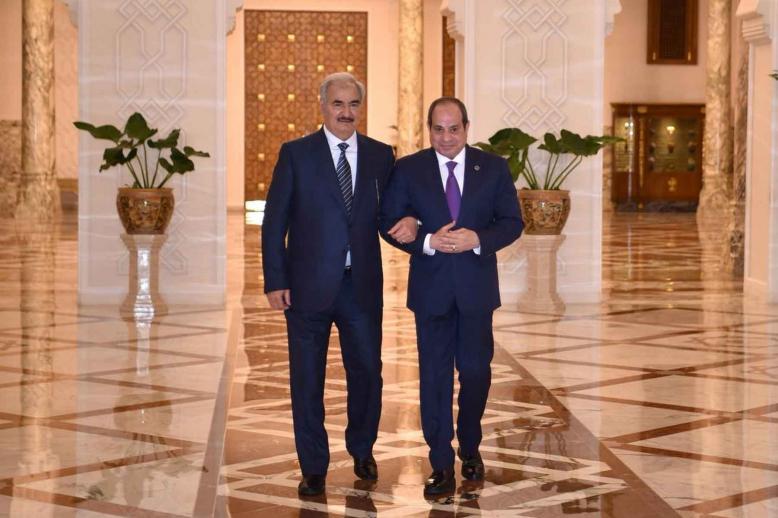
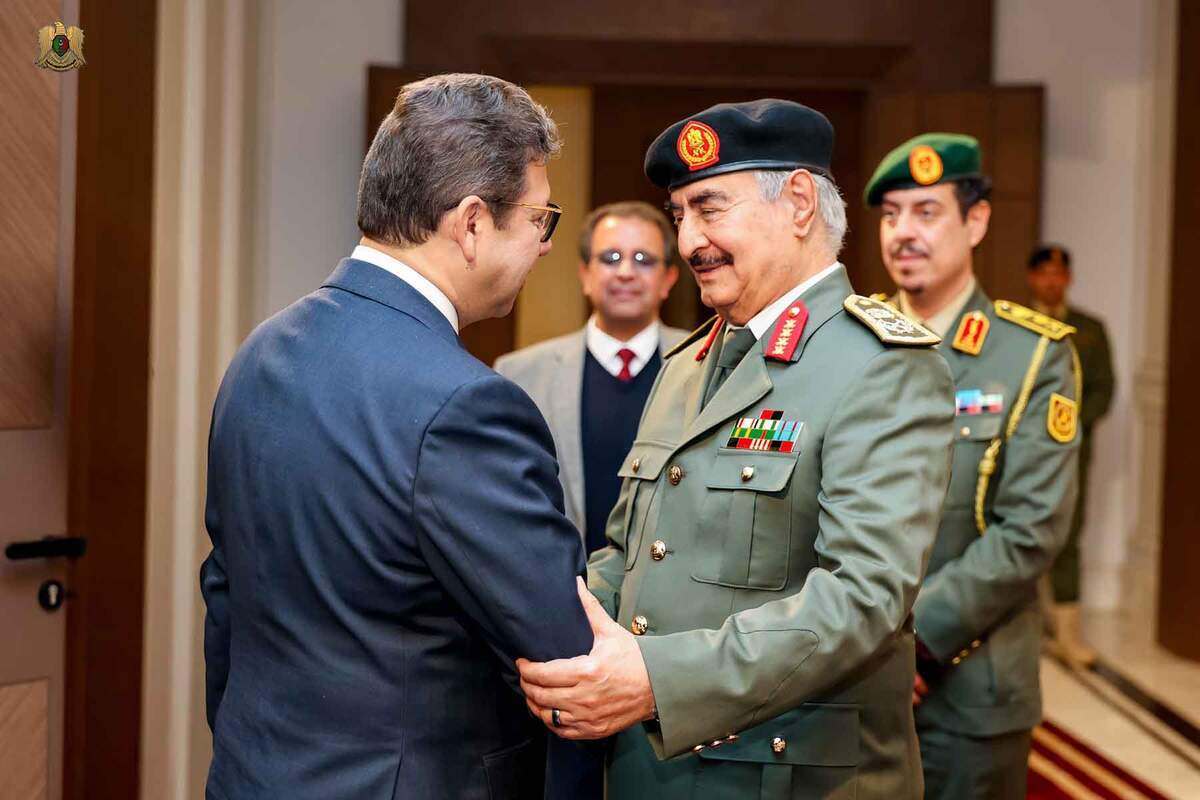
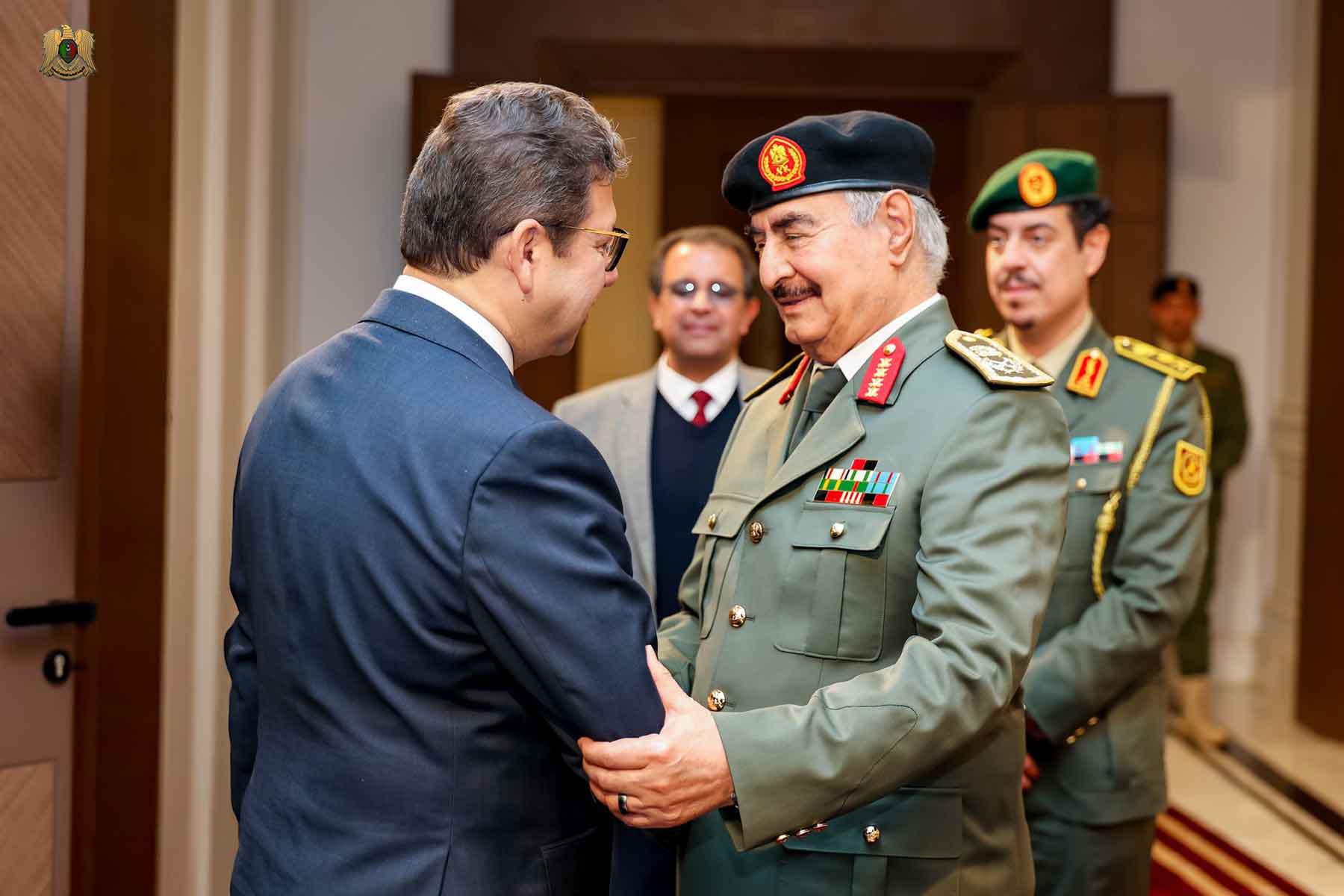
TRIPOLI – Egypt’s intelligence chief held high-level talks with eastern Libyan commander Field Marshal Khalifa Haftar in Benghazi, underscoring deepening coordination between Cairo and the leadership of eastern Libya at a time of mounting regional and security challenges.
Head of the Egyptian General Intelligence Service, Major General General Hassan Rashad met Haftar, commander of the self-styled Libyan National Army (LNA), in a visit that reflected what observers describe as an advanced level of political and security alignment between the two sides.
The meeting, attended by senior Libyan military officials, carried clear political messages. The Egyptian official conveyed greetings from President Abdel Fattah al-Sisi and reaffirmed the strength of bilateral ties, stressing the importance of maintaining and expanding channels of communication amid shifting regional dynamics.
Talks focused on developments inside Libya and across its regional environment, with both sides emphasising the need for continued coordination in support of stability in the two neighbouring countries.
Egypt’s engagement with eastern Libya is rooted in a relationship that has intensified since Libya’s post-2011 upheaval. While Cairo has publicly maintained that it engages with all Libyan actors, Haftar has remained a central figure in Egyptian strategic calculations due to his control over large swathes of eastern Libya and his military and political weight in the fragmented landscape.
For Cairo, Libya represents a direct extension of its national security. The two countries share a long and porous land border, in addition to intertwined tribal and commercial ties. Securing Egypt’s western frontier remains a top priority for decision-makers in Cairo, particularly in combating arms smuggling, extremist infiltration and human trafficking networks. Cooperation with eastern Libyan authorities has become a key component of this security architecture.
For eastern Libya’s leadership, Egyptian political backing is seen as an important pillar in consolidating its standing within Libya’s divided institutional framework, where rival governments and parallel institutions continue to operate.
Repeated official meetings point to ongoing understandings on sensitive files, including efforts to unify Libya’s military establishment and manage transitional arrangements. Egypt continues to state its support for a comprehensive political settlement leading to presidential and parliamentary elections aimed at ending institutional fragmentation.
However, Cairo’s approach is based on the inclusion of all influential actors in any future settlement, which explains its sustained engagement with Haftar as a central player in Libya’s balance of power. Maintaining open lines with multiple Libyan factions, analysts say, allows Egypt broader room for manoeuvre in navigating the complex file.
The Benghazi talks cannot be separated from wider regional dynamics. Libya’s crisis intersects with other volatile theatres, notably developments in Sudan. The geographical overlap between south-eastern Libya and the Sudanese border has added another layer to shared security concerns, amid fears that instability in Sudan could spill over into neighbouring territories.
Regional calculations in the eastern Mediterranean also form part of the backdrop. Libya remains an arena of competition among regional and international powers, with energy arrangements, reconstruction prospects and influence over political outcomes all at stake. Egypt appears intent on consolidating its position as a key stakeholder in shaping Libya’s future trajectory.
The latest meeting in Benghazi reflects what observers describe as a dual-track Egyptian strategy: backing renewed international efforts to revive Libya’s political process while preserving close security coordination with eastern forces to safeguard immediate national interests.
As international pressure builds to relaunch Libya’s stalled political process, no final settlement has yet taken shape. Against this backdrop, Cairo appears to be reinforcing a pragmatic approach, supporting unity and territorial integrity in principle while simultaneously maintaining strong ties with actors it considers indispensable to managing risks along its western border.
The flurry of Egyptian engagement with eastern Libya illustrates a network of overlapping interests that extends beyond bilateral ties to encompass broader regional equations. For Cairo, the Libya file remains inseparable from national security, regional balance and its wider strategic presence in a volatile neighbourhood.