

‘The start of a more ambitious phase'
Haftar announces long-term plan to modernise Libyan army
Vision 2030 signals Haftar’s intention to position the LNA at the centre of Libya’s future state-building project, even as the country’s competing authorities continue to vie for control.
Thursday 19/02/2026
‘The start of a more ambitious phase'
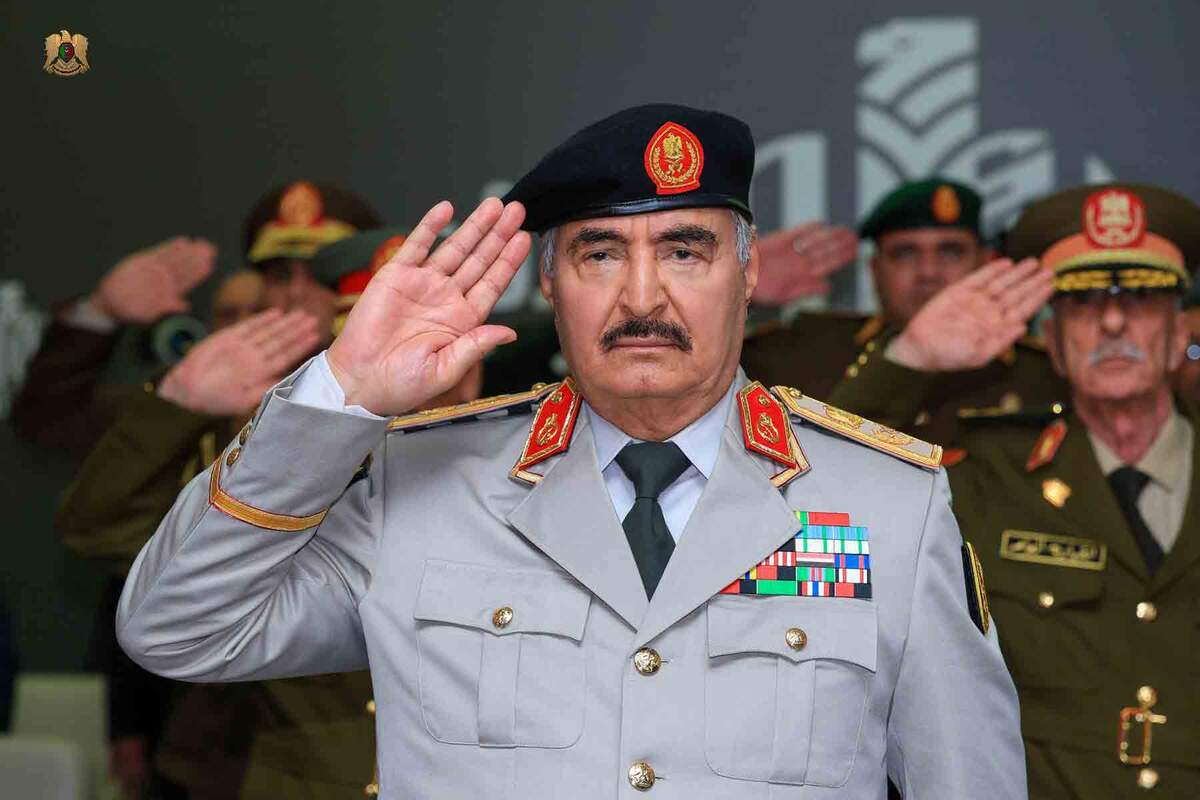
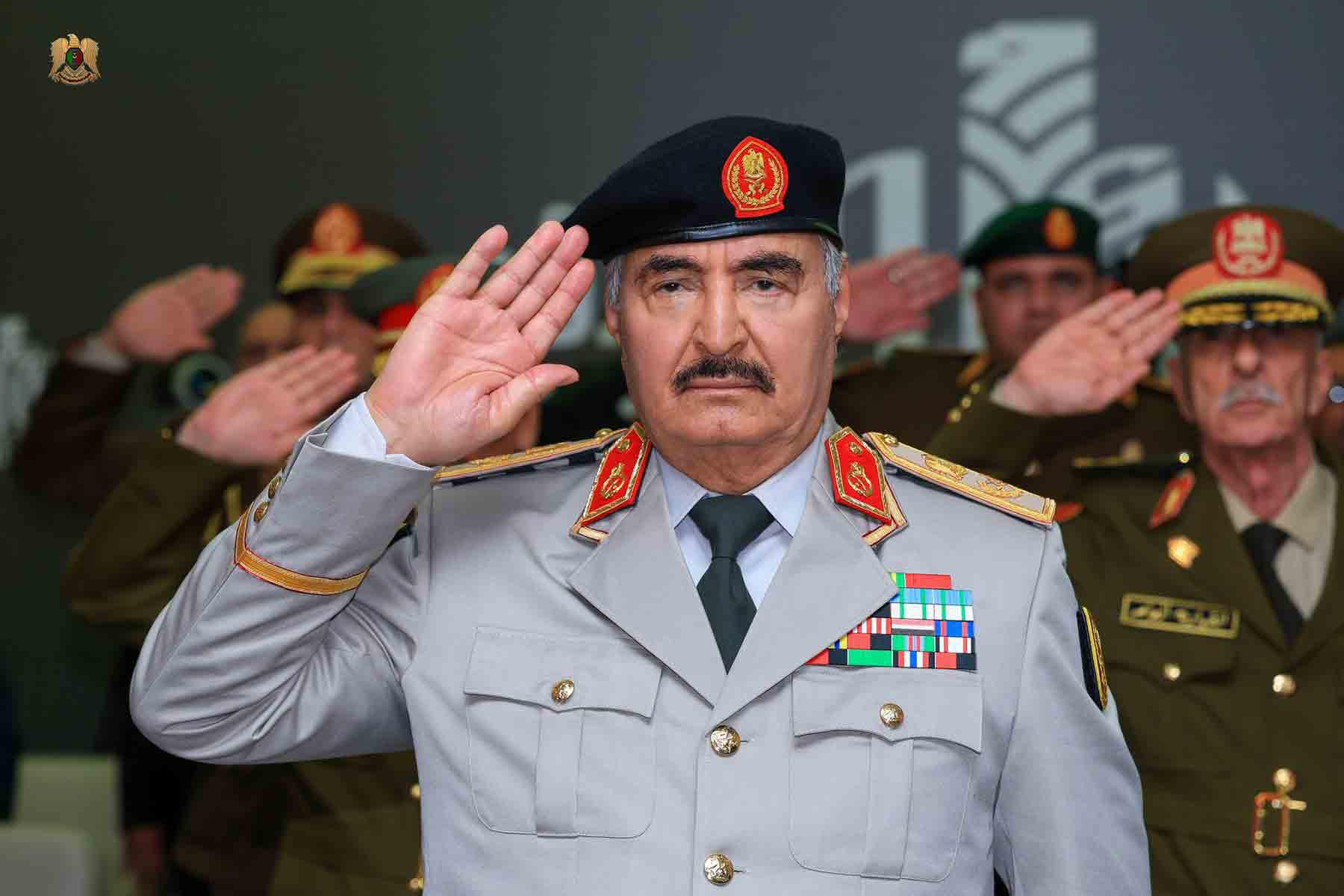
TRIPOLI – Commander-in-Chief of the Libyan National Army (LNA) Field Marshal Khalifa Haftar launched a Vision 2030 plan aimed at developing and modernising Libya’s armed forces, describing it as the foundation for a new phase of structured military action.
Haftar said the initiative would lay the groundwork for building a modern and capable military institution able to adapt to domestic and regional shifts. However, no detailed implementation mechanisms or specific timeline were disclosed.
The announcement was made during an official ceremony attended by the Deputy Commander-in-Chief Lieutenant General Saddam Haftar along with the secretary-general of the General Command, chiefs of staff and a number of senior officers.
During the event, the document was formally handed over to the deputy commander-in-chief, a gesture presented as signalling the transition from conceptual planning to the beginning of practical steps linked to implementation.
In a statement published on Facebook by the General Command’s media office, “Vision 2030 for the Development of the Libyan Armed Forces” was described as “a comprehensive strategic path leading the phase of military transformation” and as an achievement in building the military institution.
The statement added that the vision was “not merely a timetable, but a strategic project for reconstruction and re-establishment on modern and solid foundations.”
According to the media office, launching the vision reflects the military institution’s transition to “a new stage of professionalism and readiness through strategic planning and institutional work based on clear vision and defined objectives.”
Haftar was quoted as saying: “Vision 2030 is not an end point, but the start of a more ambitious phase, one that will elevate the armed forces to the highest levels of readiness and ensure they are fully prepared to meet emerging challenges.”
Haftar’s rhetoric frames the LNA as the principal guarantor of national security and the cohesion of the Libyan state, particularly amid persistent domestic instability and a complex regional environment.
Under this conception, the LNA is not viewed solely as a conventional security apparatus but as a unifying institution intended to transcend political divisions and serve as the organised framework of legitimate force.
The LNA’s role, according to Haftar, is decisive in confronting extremist organisations and armed groups operating outside state authority, in addition to securing Libya’s vast borders and preventing the spread of instability.
Within this context, expanding military cooperation with foreign partners forms part of a broader strategy to enhance operational efficiency and strengthen training and logistical capabilities.
Recent months have seen increased coordination with regional actors, notably Egypt, including high-level meetings focused on exchanging expertise and bolstering joint security coordination, particularly in relation to border security and shared interests.
This cooperation reflects a desire, from the General Command’s perspective, to benefit from regional military experience and to rebuild a more disciplined and professional institutional structure, with the stated aim of consolidating stability and creating conditions for stronger state institutions.
Efforts to rebuild the military establishment intersect with Libya’s ongoing political division, which has persisted since 2011. Executive authority remains split between a government in western Libya, based in Tripoli and internationally recognised, and a parallel authority in the east backed by the House of Representatives and supported militarily by Haftar’s forces.
Within this framework, the unification of the armed forces is presented as a gateway to restoring state unity, through the integration of disparate formations into a single command structure under central authority.
Haftar has also emphasised the social dimension of stabilisation efforts, placing importance on the role of tribes as a historically influential component of Libyan society, capable of easing tensions and fostering reconciliation.
Through repeated meetings with tribal elders and dignitaries, the General Command has stressed that any sustainable settlement must take into account the particularities and values of Libyan society, and rest on internal consensus that precedes or accompanies formal political processes.
Supporters argue that this approach could provide broader ground for rebuilding state institutions on firmer foundations. Critics, however, note that the success of any long-term military reform will depend not only on institutional restructuring but also on a comprehensive political settlement capable of ending Libya’s prolonged fragmentation.
For now, Vision 2030 signals Haftar’s intention to position the LNA at the centre of Libya’s future state-building project, even as the country’s competing authorities continue to vie for legitimacy and control.