


A rejection of the current diplomatic track
Hezbollah pushes back against Israel talks, demands full ceasefire
Hezbollah’s warning of a widening rift underscores the fragile balance Lebanon faces: pursuing diplomacy with Israel while managing deep internal divisions.
Wednesday 15/04/2026
A rejection of the current diplomatic track
DUBAI – Lebanon’s Hezbollah lawmaker Hassan Fadlallah warned on Wednesday that divisions within Lebanon could deepen over the government’s decision to enter negotiations with Israel, urging authorities to reconsider a move the Iran-aligned group opposes.
Fadlallah said Hezbollah was seeking a comprehensive ceasefire rather than a return to near-daily Israeli strikes and targeted killings, as seen in the aftermath of the November 2024 truce, underscoring the group’s rejection of the current diplomatic track.
He noted that Tuesday’s US-mediated meeting between Lebanon’s Washington ambassador and her Israeli counterpart did not reflect Lebanon’s national identity or “the choices of its people.”
“Does the government not realise the danger of what it has undertaken? And does it understand that it has entered a wrong path that leads only to increasing the rift among the Lebanese?” Fadlallah said.
“It has obtained nothing from the enemy except praise without achieving any demand,” he said in a televised statement.
His comments came as Washington hosted a rare round of direct talks between Israeli and Lebanese officials, highlighting a widening gap between Hezbollah and the Lebanese government over how to handle the conflict.
US Secretary of State Marco Rubio brought together Israel’s ambassador to the United States, Yechiel Leiter, and his Lebanese counterpart Nada Hamadeh Moawad in what officials described as the first such meeting in decades. Rubio said he hoped the talks would help establish a framework for a longer-term peace process, even as Israel pressed ahead with its military campaign against Hezbollah.
The meeting comes at a critical moment in the wider Middle East crisis, a week into a fragile ceasefire between the United States, Israel and Iran. Tehran has insisted that Israel’s operations against Hezbollah in Lebanon must be included in any broader agreement, complicating mediation efforts led by Pakistan.
Despite US efforts to launch a political process, the two sides entered the talks with sharply conflicting positions. Israel has ruled out any discussion of a ceasefire and is demanding that Beirut disarm Hezbollah as a precondition for any future peace agreement or normalisation of ties.
Israeli Foreign Minister Gideon Saar said the talks would focus on dismantling Hezbollah’s military capabilities, describing the group as a threat to both Israel’s security and Lebanon’s sovereignty. “We want to reach peace and normalisation with the state of Lebanon,” he said.
For its part, the Lebanese government, led by President Joseph Aoun and Prime Minister Nawaf Salam, has signalled willingness to negotiate, despite Hezbollah’s objections. The move reflects growing internal tensions as the state seeks a ceasefire while avoiding a broader confrontation with the powerful Shiite group.
Lebanese officials said Moawad’s mandate in Washington was limited to pursuing a ceasefire, but Israeli officials made clear that this was not on the table, exposing the narrow scope for immediate progress.
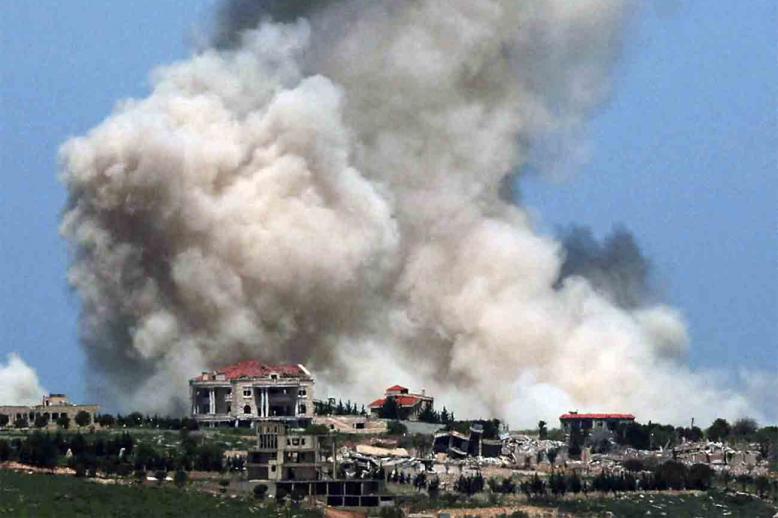
The stakes are high. Since Hezbollah opened fire in support of Iran on March 2, Israel’s offensive has killed more than 2,000 people and displaced around 1.2 million, according to Lebanese authorities, further straining the country’s fragile political and social fabric.
The talks also come amid signals from Israel’s envoy that Lebanon is seeking to assert greater state authority. Leiter said Beirut had conveyed that it no longer wanted to be “occupied” by Hezbollah and was discussing a long-term vision for a clearly defined border.
Such statements risk further inflaming tensions with Hezbollah, which remains deeply entrenched in Lebanon’s political and security landscape. Any attempt to disarm the group by force carries the risk of triggering internal conflict, recalling past clashes in a country still marked by its 1975–1990 civil war.
The current government has already banned Hezbollah’s military wing after it opened fire on Israel last month, a move that has added to the pressure on the group but also heightened the risk of confrontation.
Against this backdrop, Hezbollah’s warning of a widening rift underscores the fragile balance Lebanon faces: pursuing diplomacy with Israel while managing deep internal divisions over the role of the group and the future direction of the Lebanese state.