

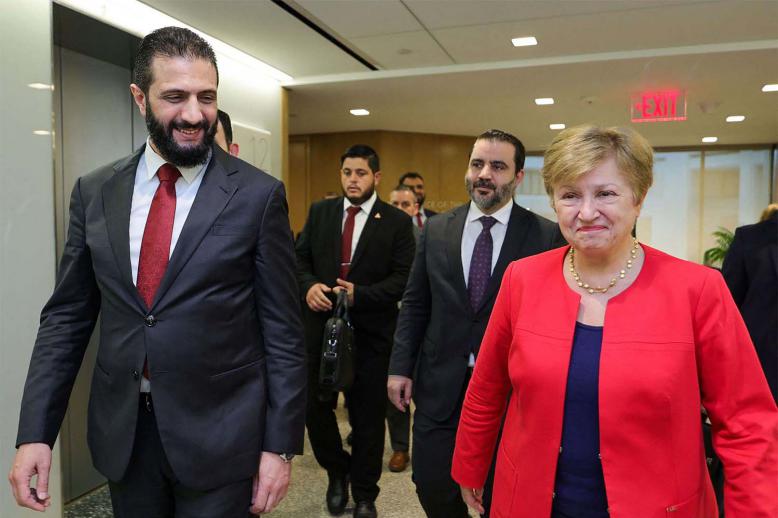

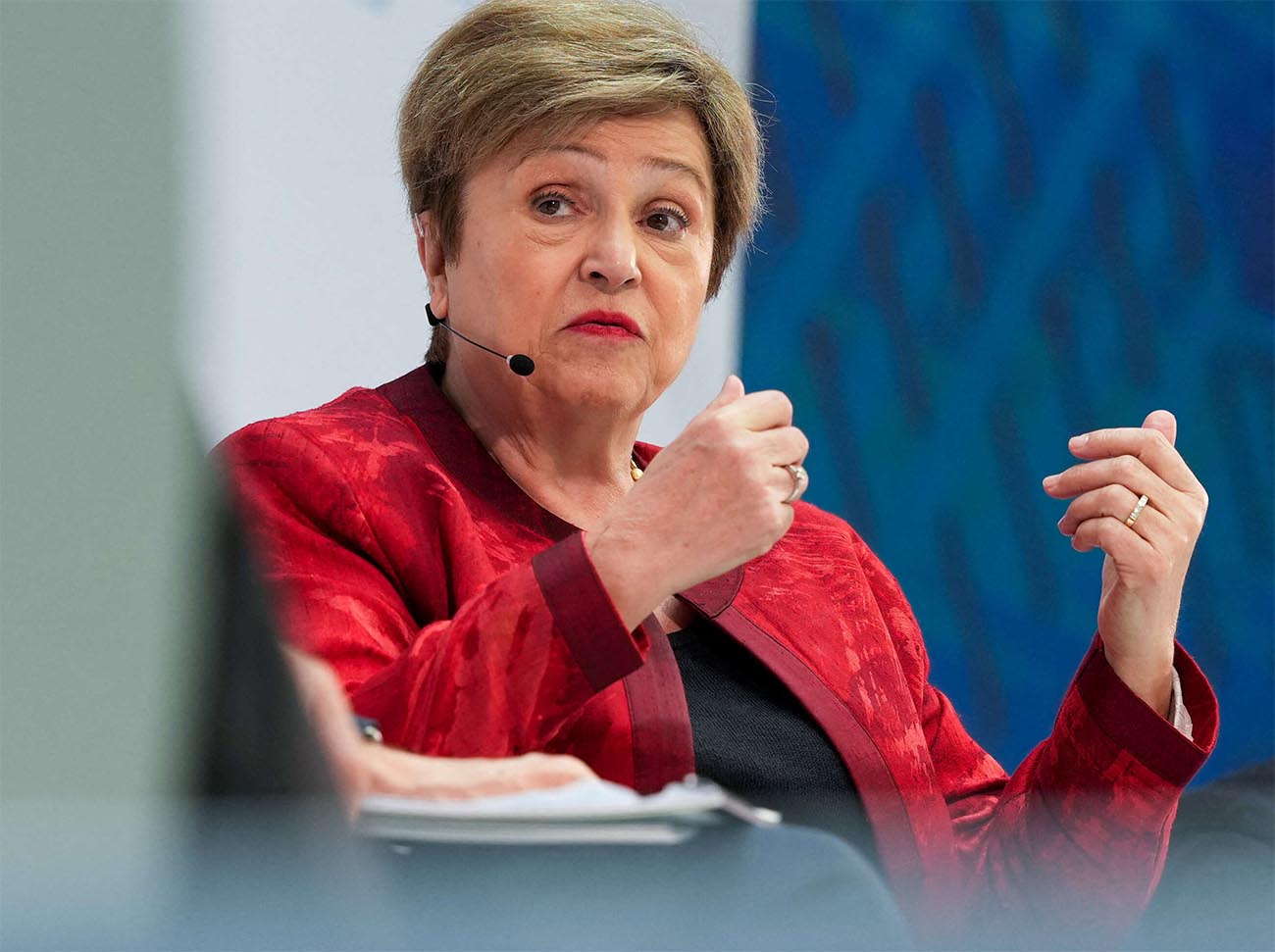
Georgieva commended Egypt's authorities for a strong track record on reforms and policies.
IMF rules out augmentation of Egypt’s $8 billion loan program
IMF Managing Director: Despite the difficult external environment and the impact of the regional conflict on Egypt’s economy, we are not, at this stage, discussing any augmentation of the program
Thursday 16/04/2026
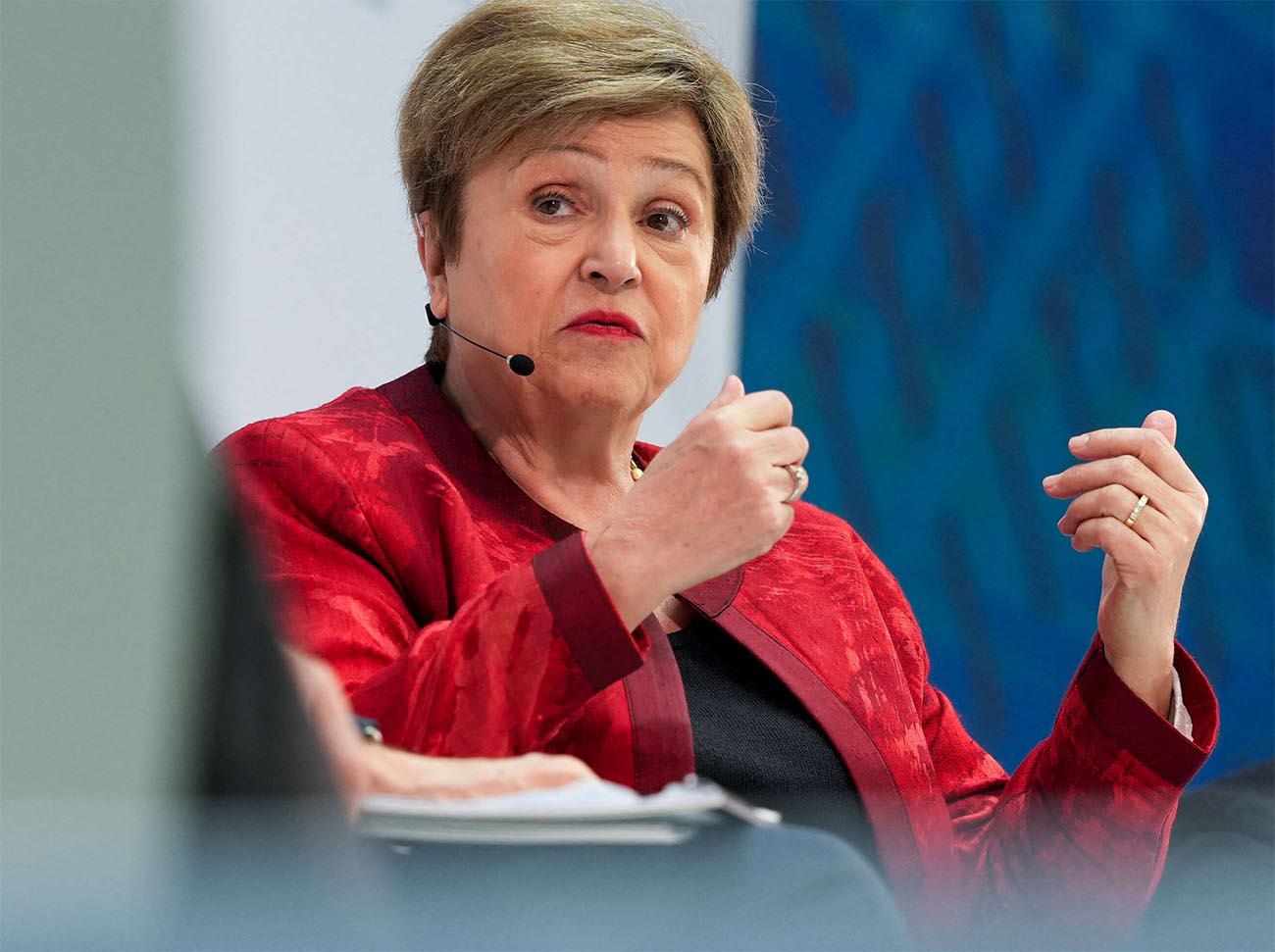
Georgieva commended Egypt's authorities for a strong track record on reforms and policies.
WASHINGTON - International Monetary Fund is not currently discussing an augmentation of Egypt's two-year-old, $8 billion IMF loan program despite a severe impact from the Middle East war on the country's economy, IMF Managing Director Kristalina Georgieva said on Wednesday.
Georgieva told a news conference that the IMF could look at doing more to aid Egypt if conditions worsen further. She commended the country's authorities for a strong track record on reforms and policies.
Speaking to reporters, Georgieva made it clear that the existing Extended Fund Facility arrangement, approved in late 2024, remains unchanged and that no talks are taking place to expand its size or scope.
“Despite the difficult external environment and the impact of the regional conflict on Egypt’s economy, we are not, at this stage, discussing any augmentation of the program,” Georgieva stated.
The announcement comes as Egypt grapples with significant economic challenges triggered by the Iran-Gulf war that erupted on February 28. The conflict has disrupted regional energy markets, raised global oil prices, and created uncertainty in maritime trade routes, all of which have strained Egypt’s key revenue sources — particularly Suez Canal receipts and tourism.
Economic Toll on Egypt
The war has already led to higher import costs, inflationary pressures, and reduced foreign currency inflows for Egypt, one of the region’s most populous economies. Tourism, a vital sector, has been hit by security concerns and travel warnings, while shipping companies have rerouted vessels away from the Suez Canal amid broader Red Sea and Gulf tensions.
Egypt’s government has implemented several measures to absorb the shock, including the 1.65 billion dirham-style support packages seen in neighbouring Morocco, but officials have repeatedly highlighted the need for additional external support to maintain fiscal stability.
The $8 billion IMF program, originally designed to support Egypt’s economic reform agenda, debt sustainability, and foreign exchange reserves, has been a cornerstone of Cairo’s international financing strategy. However, with the program now two years old and the war adding unforeseen external shocks, many analysts had expected discussions on a possible top-up or new facility.
Georgieva’s comments signal that the IMF currently views the existing framework as sufficient and is focusing instead on ensuring Egypt continues its structural reforms, including fiscal consolidation and exchange rate flexibility.
No Immediate Change in IMF Stance
The IMF chief emphasised that the Fund remains closely engaged with Egyptian authorities and continues to monitor the situation. She noted that any future augmentation would depend on evolving economic data, the duration of the regional conflict, and Egypt’s reform progress.
Egyptian officials have not yet issued a public response to Georgieva’s statement, but sources in Cairo say the government is prioritising domestic measures and alternative financing sources, including bilateral deals with Gulf partners and increased bond issuance.
The development underscores the delicate balancing act facing Egypt as it navigates the dual pressures of domestic economic reforms and the spillover effects of the Middle East conflict, which has already affected energy infrastructure in the UAE, Kuwait, and Iraq, and prompted high-level diplomatic activity across the region.
As the war enters its seventh week and ceasefire talks continue, the IMF’s position suggests that Cairo will need to rely primarily on its own reform momentum and existing international partnerships rather than an immediate increase in multilateral support. Further updates on Egypt’s economic outlook and the IMF program are expected in the coming weeks.