




A stubborn security challenge
ISIS reinvents itself online, raising fears of renewed global threat
Analysts say ISIS has increasingly abandoned its former reliance on visible territorial presence and public pledges of allegiance, instead adopting a decentralised digital structure.
Tuesday 17/02/2026

A stubborn security challenge
BAGHDAD – Islamic State (ISIS) is reorganising its operational model by shifting its focus to cyberspace, using digital platforms as an alternative arena for expansion and recruitment, in a move security experts warn reflects a long-term strategy to rebuild its influence without the need for territorial control.
Analysts say the terrorist group has increasingly abandoned its former reliance on visible territorial presence and public pledges of allegiance, instead adopting a decentralised digital structure that allows it to operate more flexibly across borders while avoiding traditional military confrontation.
Iraqi political analyst Mukhlid Hazem said the organisation has effectively moved away from the model of public “bay’ah” (pledges of allegiance), which previously required physical presence in areas under its control, toward a far more complex and adaptable digital network.
This new structure relies heavily on encrypted messaging applications, social media platforms and anonymous online identities to recruit sympathisers and establish closed communication channels, particularly in regions affected by social and economic instability.
Experts say the group has refined its propaganda strategy, designing online content specifically to appeal to younger audiences in Europe and elsewhere by exploiting grievances related to marginalisation, unemployment and identity crises.
Recruitment often begins with general protest-themed or religious content before gradually transitioning to more extremist ideological material. Individuals are then drawn into private virtual forums or closed “educational” sessions presented as religious instruction but in reality functioning as systematic indoctrination programmes.
Security specialists warn that this digital transformation represents more than a tactical shift; it marks a strategic adaptation that enables the group to maintain influence even without holding territory, the cornerstone of its so-called caliphate declared in Iraq and Syria in 2014.
The battlefield is no longer limited to deserts or destroyed cities, analysts say. It has moved to servers, encrypted networks and digital platforms that are far more difficult to monitor and disrupt.
This evolution poses new challenges for governments, requiring advanced intelligence capabilities, international cooperation in cyber security and online monitoring, and preventive policies addressing the social and economic vulnerabilities extremist groups exploit.
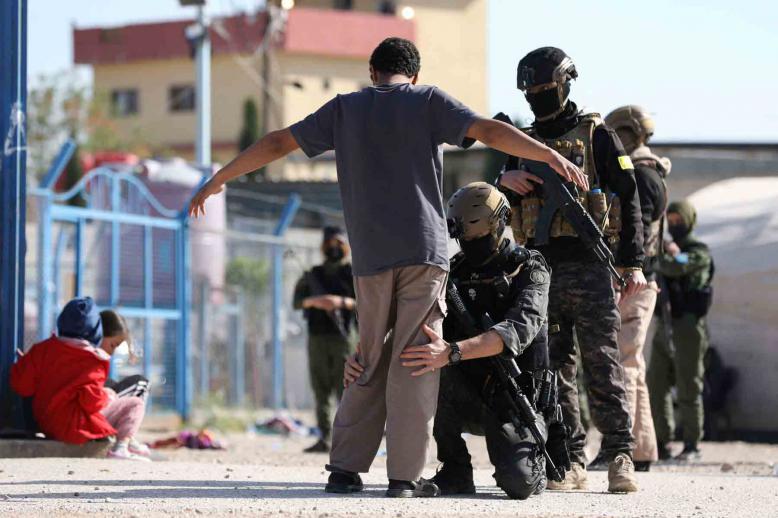
The warnings come amid growing concern over the handling of thousands of Islamic State detainees held in Syria.
Former Iraqi communications minister Mohammed Allawi cautioned against transferring large numbers of detained militants from Syrian prisons to Iraq, a process reportedly conducted under the supervision of the international coalition led by the United States.
He called for stricter oversight of detention facilities, warning that inadequate security could lead to further escapes and the reactivation of extremist cells.
These fears intensified following clashes between Syrian government forces and the Kurdish-led Syrian Democratic Forces in north-east Syria, which resulted in the escape of detainees from Al-Shaddadi prison in Hasakah province last month.
Syrian authorities said around 120 detainees escaped, with dozens later recaptured, while Kurdish officials reported significantly higher numbers, highlighting the uncertainty surrounding the scale of the incident.
Reports indicate that some escapees fled to remote desert regions and rugged border areas between Deir ez-Zor and Hasakah, extending toward the Iraqi frontier, territories historically exploited by ISIS as safe havens for regrouping and launching attacks.
United Nations assessments have also raised concerns that foreign fighters may attempt to return to their countries of origin in Europe or relocate to other conflict zones, including Libya, the Sahel region and Afghanistan, where ISIS-affiliated groups remain active.
These developments underscore fears that the group’s resurgence may not depend solely on traditional attacks but increasingly on its ability to exploit political instability, weak governance and digital vulnerabilities simultaneously.
Although ISIS lost its last territorial stronghold in Syria in 2019, security experts warn that its ideological infrastructure and operational networks remain intact and adaptable.
By leveraging encrypted communication, decentralised cells and digital propaganda, the group is attempting to transform itself into a resilient transnational network capable of sustaining recruitment and coordination without centralised command or physical territory.
Experts say countering this evolving threat will require a comprehensive approach combining military vigilance, intelligence coordination, economic development and stronger safeguards against online radicalisation.
Without addressing both the physical and digital dimensions of the threat, they warn, ISIS could continue rebuilding its influence in ways that are harder to detect and counter than its previous territorial insurgency.