

War rhetoric intensifies
Khamenei warns US warships ‘could be sunk to the bottom of the sea’
Khamenei characterised US threats and demands as an attempt to dominate Iran.
Tuesday 17/02/2026
War rhetoric intensifies
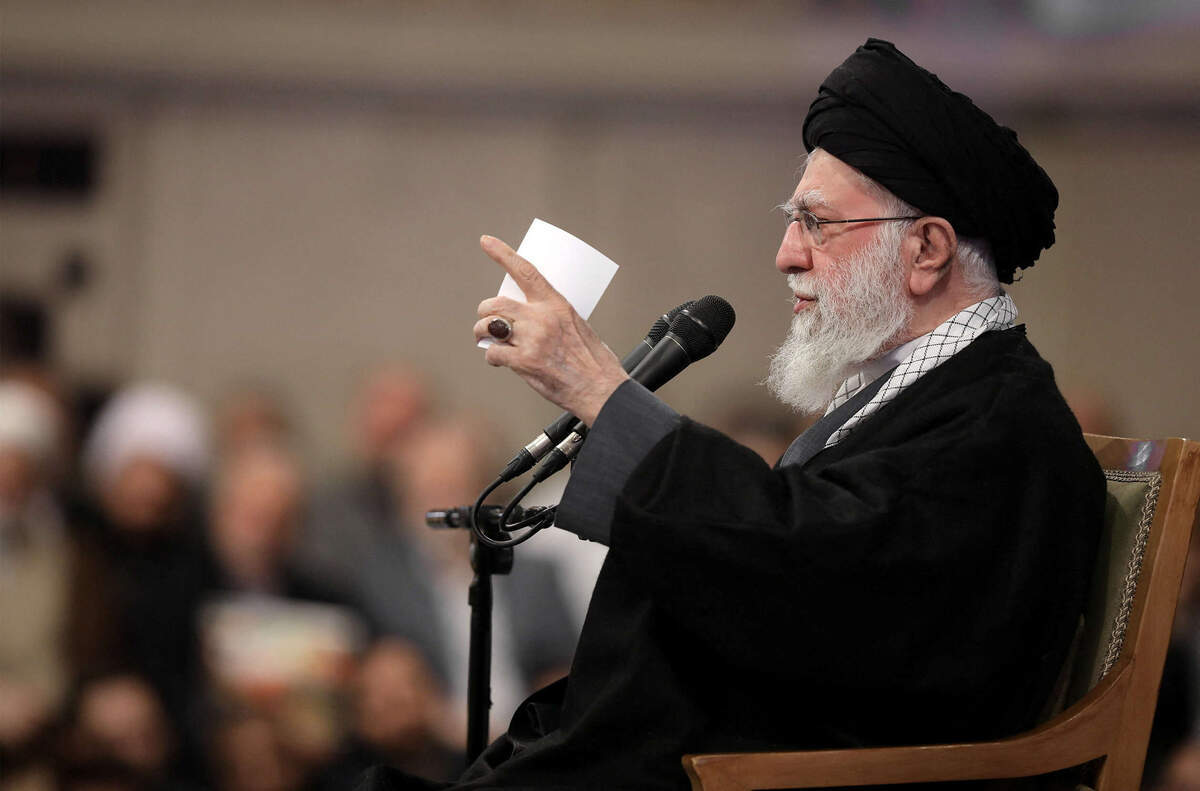
TEHRAN – Iran’s Supreme Leader Ali Khamenei issued a stark warning to Washington, declaring that US warships deployed to the Arabian Gulf “could be sunk to the bottom of the sea,” as a new round of indirect nuclear negotiations opened in Geneva under Omani mediation.
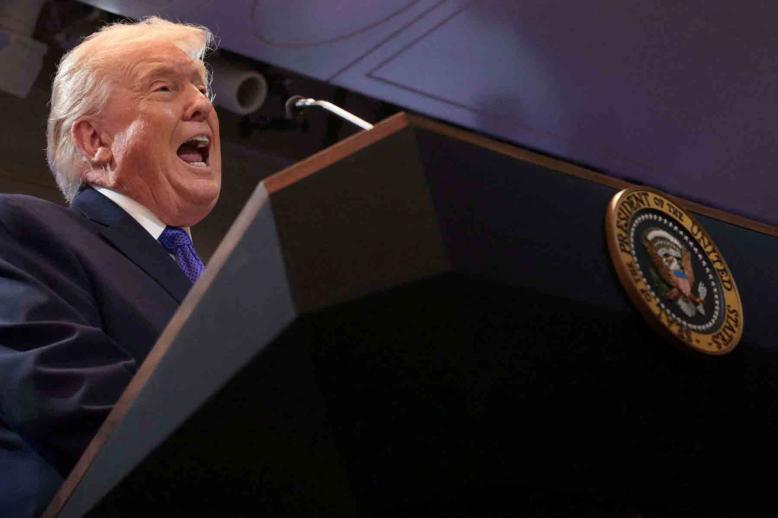
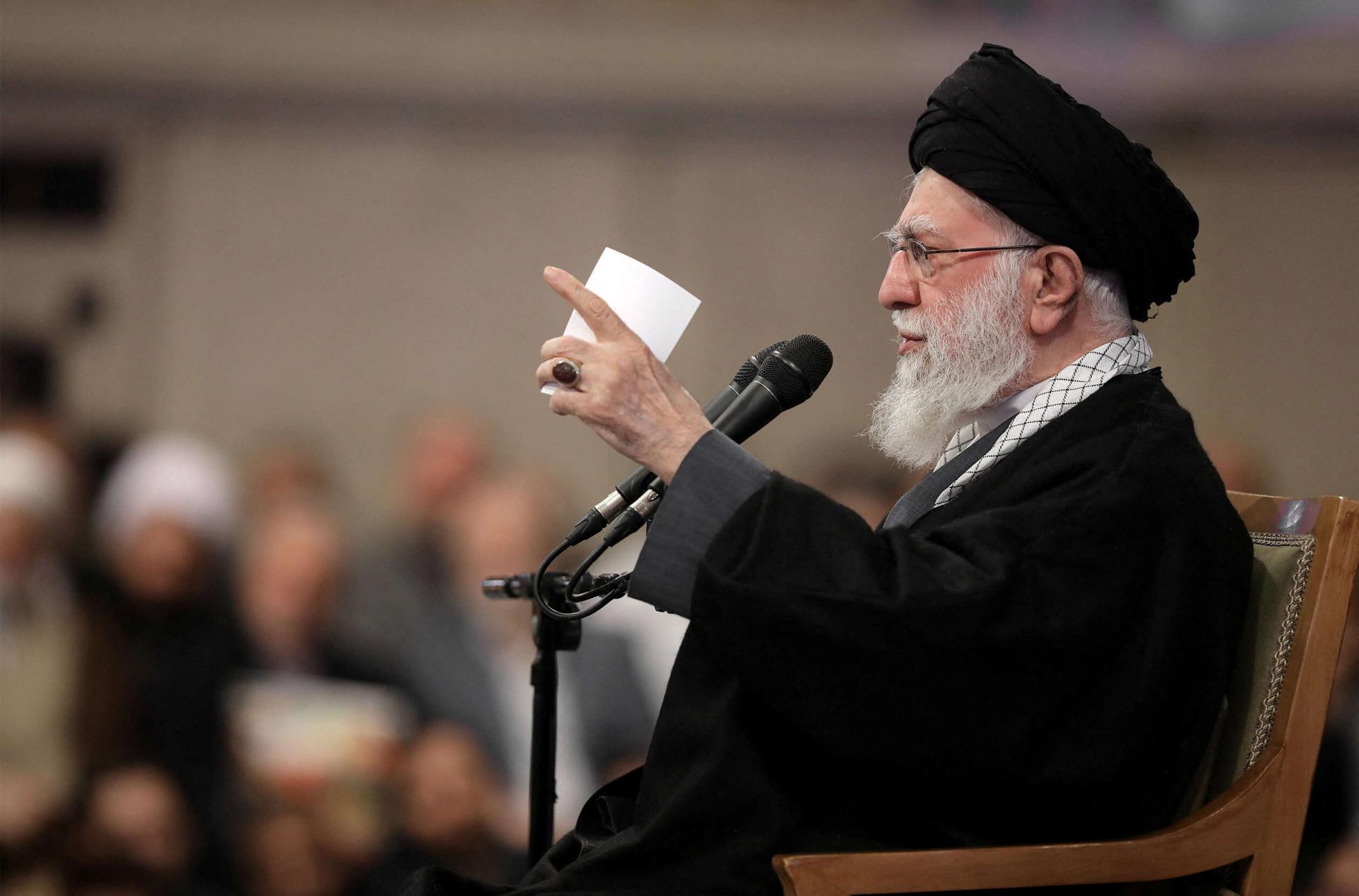
Speaking at an event in Tehran on Tuesday, Khamenei responded directly to remarks by US President Donald Trump, who has repeatedly described the United States as possessing the “strongest army” in the world.
“The strongest army in the world may receive a slap it cannot recover from,” Khamenei said.
“They keep saying that we sent a warship toward Iran. Very well, a warship is indeed a dangerous machine, but more dangerous than a warship is the weapon that can sink it to the bottom of the sea,” he added.
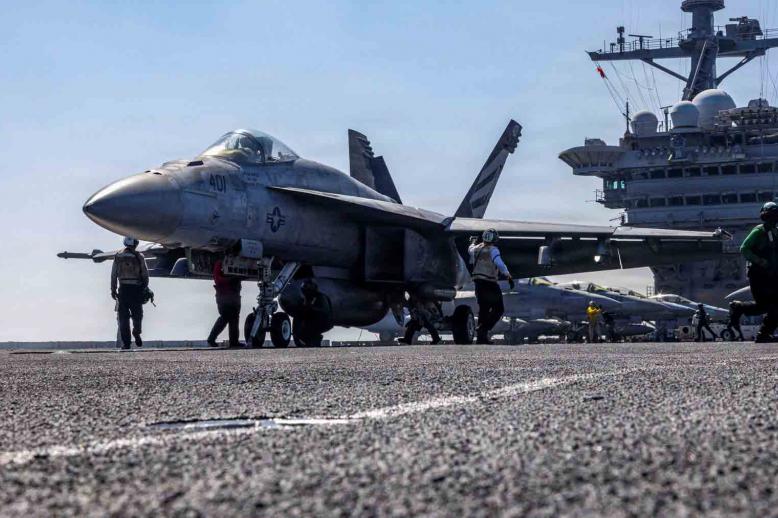
In a separate address, he reiterated the warning in similar terms: “The strongest army in the world may at times receive such a slap that it cannot rise.” He added, “They keep saying we have sent an aircraft carrier toward Iran. Very well, an aircraft carrier is a dangerous device, but more dangerous than the carrier is the weapon that can send it to the bottom of the sea.”
The remarks come amid a renewed US military build-up in the region and increasingly heated rhetoric between Tehran and Washington.
On Friday, Trump said the USS Gerald R. Ford, described as the world’s largest aircraft carrier, would soon head to the region if negotiations fail. “In case we don’t make a deal, we’ll need it,” he said. “It’ll be leaving very soon.”
The USS Abraham Lincoln and a fleet of destroyers are already stationed in the Gulf, having been dispatched last month as tensions rose between the two countries.
Khamenei dismissed suggestions that the US could topple the Islamic Republic. Referring to Trump’s recent remarks, he said, “The US president said in one of his recent remarks that for 47 years America has been unable to eliminate the Islamic Republic; he complained about it to his own people. For 47 years, America has not been able to eliminate the Islamic Republic. That is a good admission.”
“I say: You, too, will not be able to do this.”
His comments follow Trump’s statement days earlier that regime change “would be the best thing that could happen.”
Khamenei characterised US threats and demands as an attempt to dominate Iran.
“These statements by the US president, sometimes threatening, sometimes saying this must be done or that must not be done, mean they seek domination over the Iranian nation,” he said.
“Iran will not pledge allegiance to corrupt leaders currently in power in the United States.”
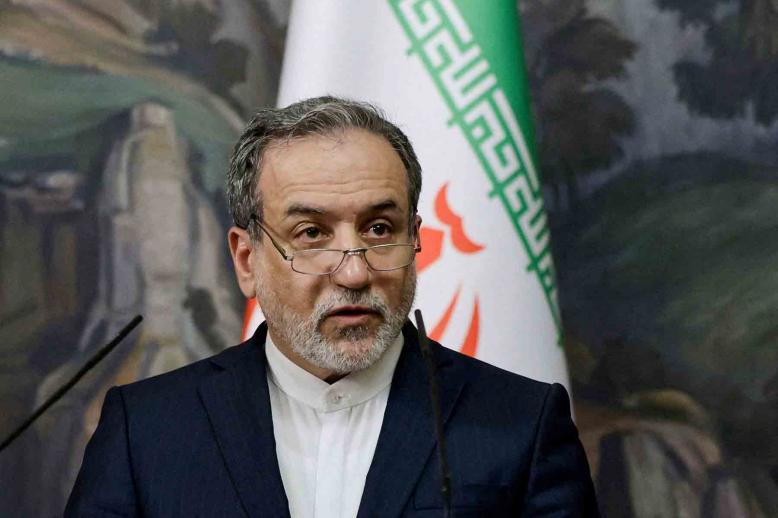
The second round of indirect negotiations between Tehran and Washington began on Tuesday in Geneva, mediated by Oman. The Iranian delegation is led by Foreign Minister Abbas Araghchi, while the US side is headed by Special Envoy Steve Witkoff. The two delegations held separate meetings with Omani Foreign Minister Badr Albusaidi at the Omani embassy before exchanging notes.
Talks resumed earlier this month in Muscat, nearly eight months after they were suspended following a 12-day war between Iran and Israel. They are now taking place against a backdrop of continued military posturing and threats from both sides.
On the negotiations themselves, Khamenei warned against pre-empting their outcome. “They say let us negotiate about your nuclear energy, and the result of the negotiation should be that you do not have this energy,” he said. “If a negotiation is to take place, and there is no place for negotiation, determining its result in advance is wrong and foolish.”
He also described attempts by US officials to set conditions before dialogue as “absurd.”
Meanwhile, Iran’s top military commander Major General Abdolrahim Mousavi warned on Sunday that any war against the country would serve as “a lesson” for Trump, further underscoring the high-stakes atmosphere surrounding the talks.
In the same speech, Khamenei addressed those killed during the January protests, saying they are mourned as martyrs.
“Blood was shed. We are grieving. I say we are in mourning for the blood that was shed,” he said, while adding that not all of the dead fell into the same category.
Security forces responded to the nationwide unrest with lethal force, mass arrests and communication blackouts. According to Amnesty International, authorities imposed sweeping controls aimed at silencing survivors, intimidating families of victims and preventing documentation of what it described as unlawful mass killings carried out to crush a popular uprising.
Khamenei divided those killed into three groups. The first, which he described as “defenders of security,” including police, Basij and Guards members, he called “among the greatest martyrs.”
A second group, he said, were bystanders caught up in unrest. When turmoil breaks out in a city, “innocent people walking toward their workplace or their homes are also killed,” he said, adding that they too should be considered martyrs because their deaths occurred within “the enemy’s sedition”.
The third group, he said, consisted of those who had been misled. “They were deceived, inexperienced … they are also ours; they are our children,” he said, noting that some later wrote to him expressing regret.
“Therefore, the circle of our fallen whom we count as martyrs is a wide one,” he added, excluding only what he called “the ringleaders and those who took money and weapons from the enemy.”
He concluded by offering prayers for mercy and forgiveness for those he described as misled participants, framing the unrest as an enemy-driven plot rather than a domestic protest movement.
As negotiations continue in Geneva, the sharp escalation in rhetoric, coupled with military deployments on both sides, underscores how fragile the diplomatic opening remains.