



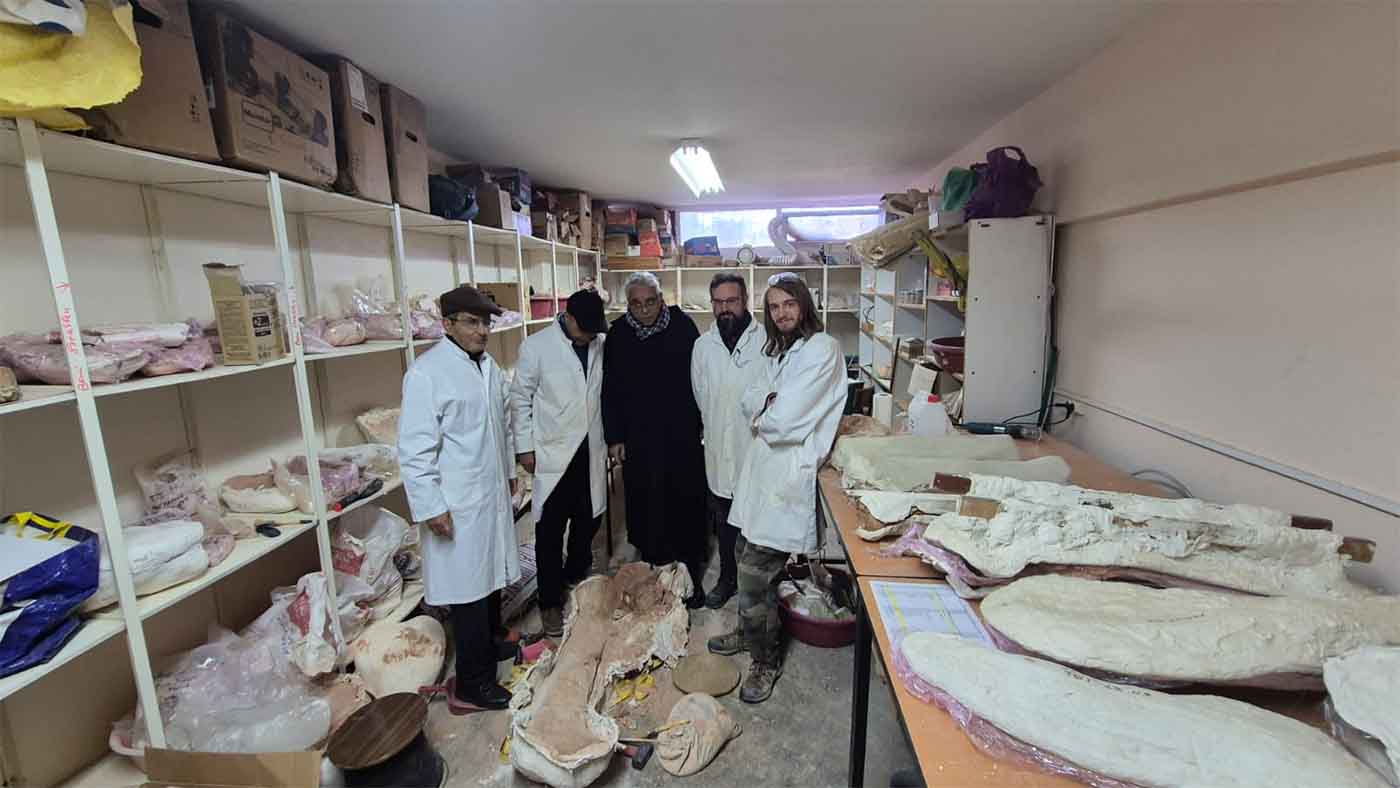
The team of researchers behind the discovery
More than 100-million-year-old dinosaur fossils discovered in Morocco
The unearthed remains confirm that eastern Morocco was a thriving habitat for massive prehistoric creatures during the Cretaceous period, tens of millions of years before the more familiar Late Cretaceous ecosystems.
Tuesday 17/03/2026
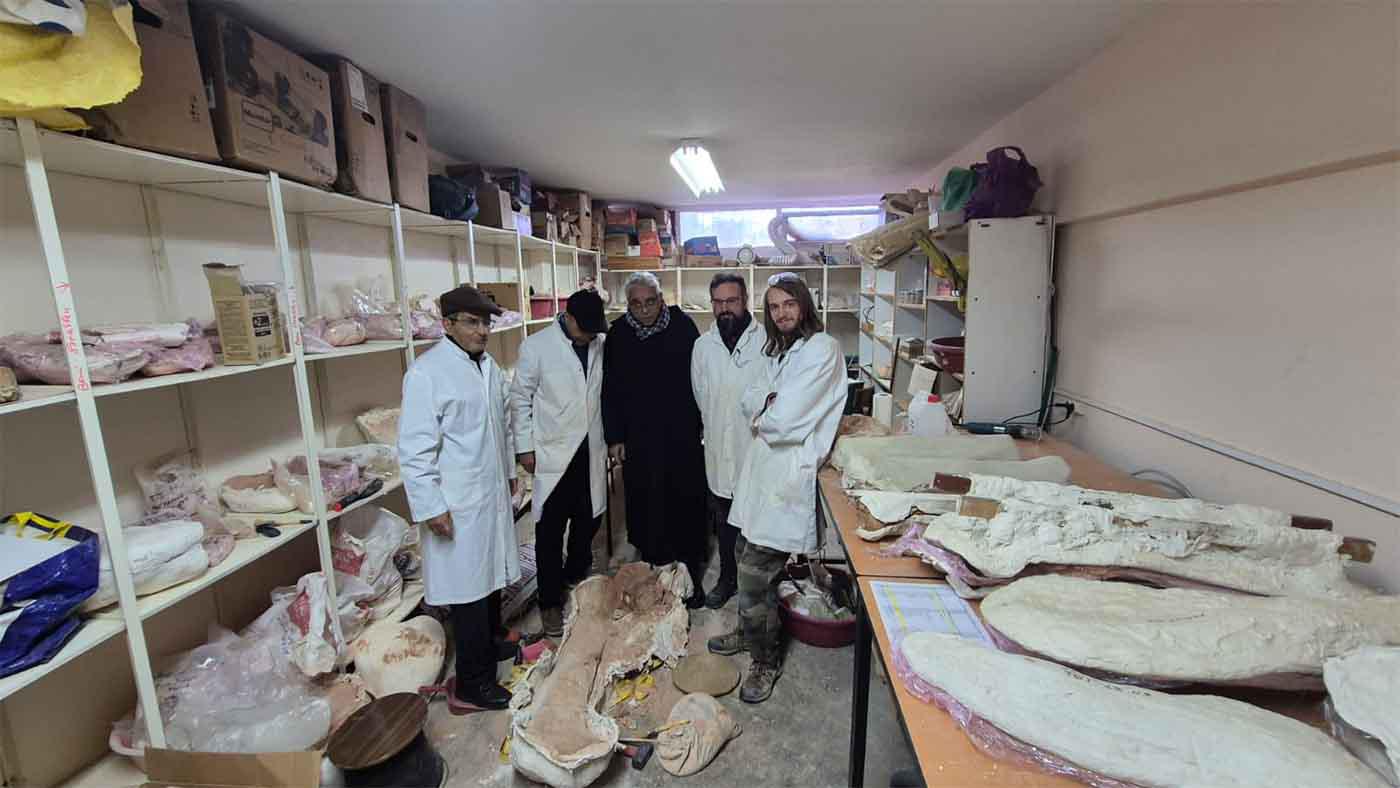
The team of researchers behind the discovery
CASABLANCA - Moroccan researchers have discovered the fossilized skeletal remains of a previously unknown dinosaur species in the country's Eastern (Oriental) region in a groundbreaking paleontological achievement.
The find, dating back more than 100 million years, was announced in mid-March 2026 and hailed as unprecedented for the area, shedding new light on prehistoric life in North Africa.
The fossils were excavated in the Tendrara area, part of Morocco's Oriental region near the border with Algeria. A team from the Faculty of Sciences at Mohammed I University in Oujda, collaborating with international experts, spent years meticulously recovering the bones using specialized extraction and preservation techniques. University President Yassine Zarhloule highlighted the significance of the discovery on social media, noting that the skeleton emerged after prolonged fieldwork.
Sources from the faculty described the dinosaur as herbivorous, belonging to one of the two main groups that coexisted in ancient Morocco alongside carnivorous species. While details about the exact species, size, or full anatomy remain limited in initial reports—suggesting the find may represent a new taxon—the remains confirm that eastern Morocco was a thriving habitat for massive prehistoric creatures during the Cretaceous period, tens of millions of years before the more familiar Late Cretaceous ecosystems.
This discovery reinforces the region's rich but underexplored fossil heritage. Eastern Morocco, including areas like Tendrara, lies outside the better-known Kem Kem beds farther south, which are famous for iconic theropods such as Spinosaurus and Carcharodontosaurus from roughly the same ~100-million-year-old timeframe. The Tendrara site may tap into similar or adjacent geological formations, potentially from the Cenomanian stage of the Early-Late Cretaceous transition, when much of North Africa featured river deltas, floodplains, and diverse dinosaur communities.
Paleontologists emphasized that the area continues to hold "untapped secrets" about Earth's history. The find adds valuable data to understanding plant-eating dinosaurs that roamed ancient landscapes, complementing Morocco's growing list of dinosaur discoveries. Recent years have seen other major Moroccan finds, including the world's oldest ankylosaur (Spicomellus) from the Middle Atlas Mountains (~168 million years old) and the earliest known cerapodan ornithischian fossils, underscoring the country's pivotal role in dinosaur paleontology.
The university and collaborating teams plan further analysis, preparation, and possibly publication in scientific journals to formally describe the specimen. For now, the unearthing highlights eastern Morocco's potential as a key site for future expeditions, promising more revelations about the diversity and evolution of dinosaurs in Africa during a critical chapter in Earth's past.
This latest discovery arrives at a time when global interest in African paleontology continues to grow, reminding us how much of the dinosaur story—especially from underrepresented regions—still lies buried beneath the sands.