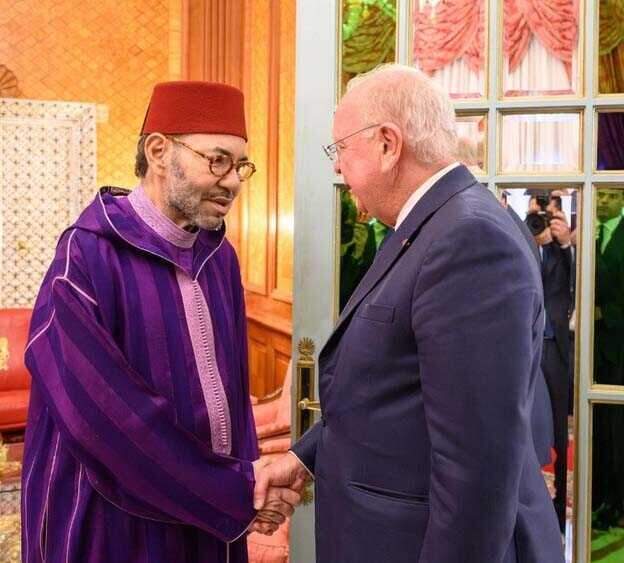
The Moroccan Monarch receives Ross McInnes, Chairman of the Board of Directors of Safran Group



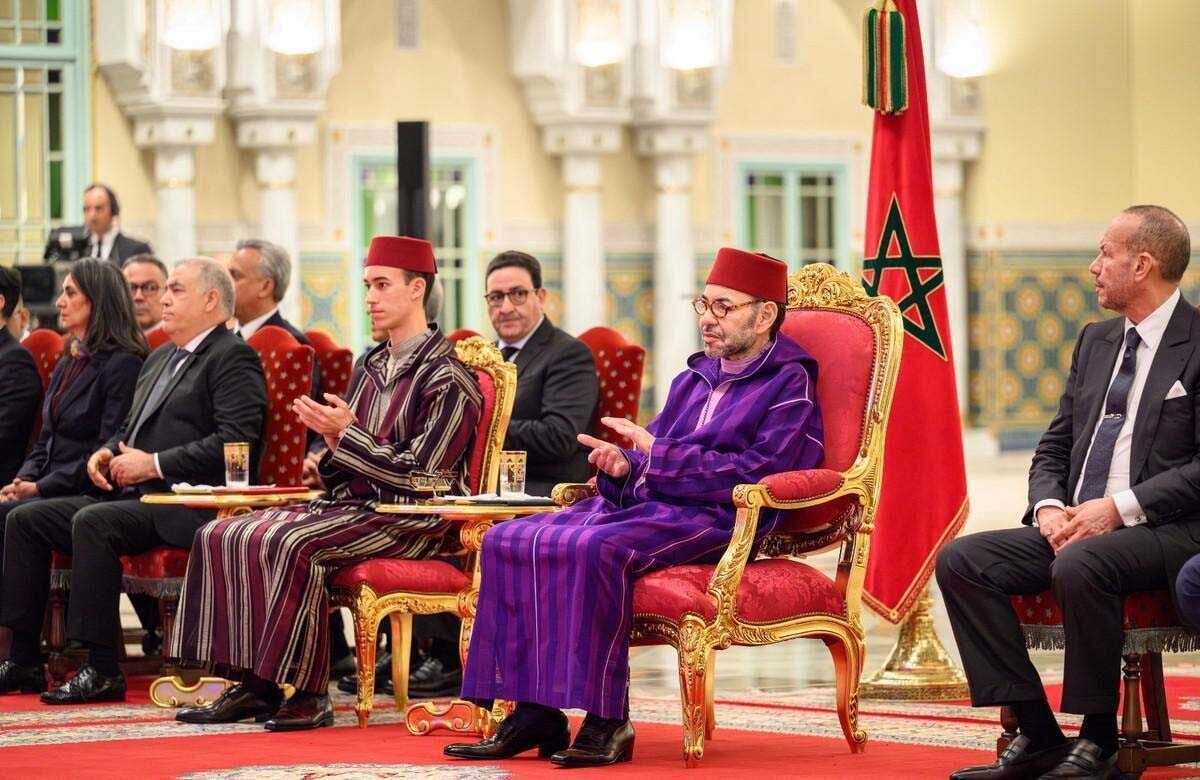
CASABLANCA - Morocco’s King Mohammed VI presided on Friday at the Royal Palace in Casablanca, over the presentation and launch ceremony of a project to establish a factory for the production of aircraft landing gear in Nouaceur, belonging to the Safran Group.
This step reinforces Morocco's position on the map of global aerospace industries and cements its direction towards consolidating a high-tech industrial base capable of integrating into international value chains.
The new industrial project, which will be built in Nouaceur within the 'Midparc' industrial platform specialized in aerospace professions, is considered one of the largest centers globally for the production of landing gear belonging to the Safran Landing Systems branch. It will include an integrated industrial chain comprising precision manufacturing, high-tech assembly, testing, certification, and advanced maintenance services.
This integration reflects Rabat's direction towards transitioning from the role of an industrial assembly site to an integrated technological development and production hub.
During the ceremony, an institutional film was presented reviewing the path traversed by the Moroccan industry over the past two decades, highlighting the structural transformation experienced by the industrial ecosystem thanks to investment in human competencies, logistics infrastructure, and the investment environment.
The new project comes to translate this transformation into reality, especially as it adopts the latest technological standards and modern production systems that keep pace with the requirements of the global aviation industry.
Minister of Industry and Trade Ryad Mezzour confirmed in a speech on the occasion that Morocco has succeeded over twenty years in consolidating its position as a reference platform for the aviation industry. He noted that the partnership with Safran Group, extending for over a quarter of a century, contributed to the transfer of expertise, development of local competencies, and enhancement of the Kingdom's integration into this precise industry.
Mezzour explained that the new factory will be built on an area exceeding seven hectares, reflecting the size of the industrial and investment stake linked to it.
He pointed out that manufacturing landing gear locally represents an indicator of the national industry reaching an advanced level of control over precision technology, considering that the project constitutes an additional step towards deepening industrial integration and raising local added value within international production chains. He also drew attention to the fact that the Moroccan aviation sector currently employs about 25,000 internationally recognized qualified personnel, which reflects the development of specialized human capital.
For his part, Safran Group Chairman Ross McInnes explained that the launch of this project comes as an extension of previous industrial initiatives by the group in Morocco. He considered that the prospective factory will be among the largest global units specialized in landing gear and will contribute to keeping pace with the increasing demand for aircraft production and enhancing the resilience of the industrial model by shortening supply routes and bringing production sites closer to European assembly lines.
The investment value in this project is expected to reach more than 280 million euros, creating about 500 direct job opportunities upon the start of operations, in addition to indirect opportunities in supply chains and associated services. The factory will also rely entirely on carbon-free energy, in harmony with international trends towards sustainable, low-emission manufacturing.
Observers believe that the project goes beyond being a solitary industrial investment, as it reflects a strategic shift in Morocco's industrial positioning, where it is now viewed as a production partner rather than just a low-cost manufacturing base. This trend enhances the Kingdom's ability to attract new global suppliers, contributing to expanding the national industrial ecosystem and developing the network of local suppliers.
At the conclusion of the ceremony, King Mohammed VI presided over the signing ceremony of the agreement protocol for establishing the factory.
This signing signals the transition of the project from the announcement phase to the actual implementation phase, while the implications of the event indicate that Morocco continues to secure its position on the map of advanced industries by attracting qualitative investments in strategic sectors, especially aviation, which is considered one of the industries most dependent on innovation and technology. The project also reflects the confidence of international actors in the Moroccan investment environment and its stability, a decisive factor in attracting long-term projects with high added value.
The factory does not represent a mere numerical addition to the balance of industrial investments, but a qualitative step that reinforces the Kingdom's positioning as a regional industrial pole capable of competing globally. It confirms that the Moroccan industrial transformation has entered a stage of maturity where investments move from traditional manufacturing to precision industries with high technological content.