

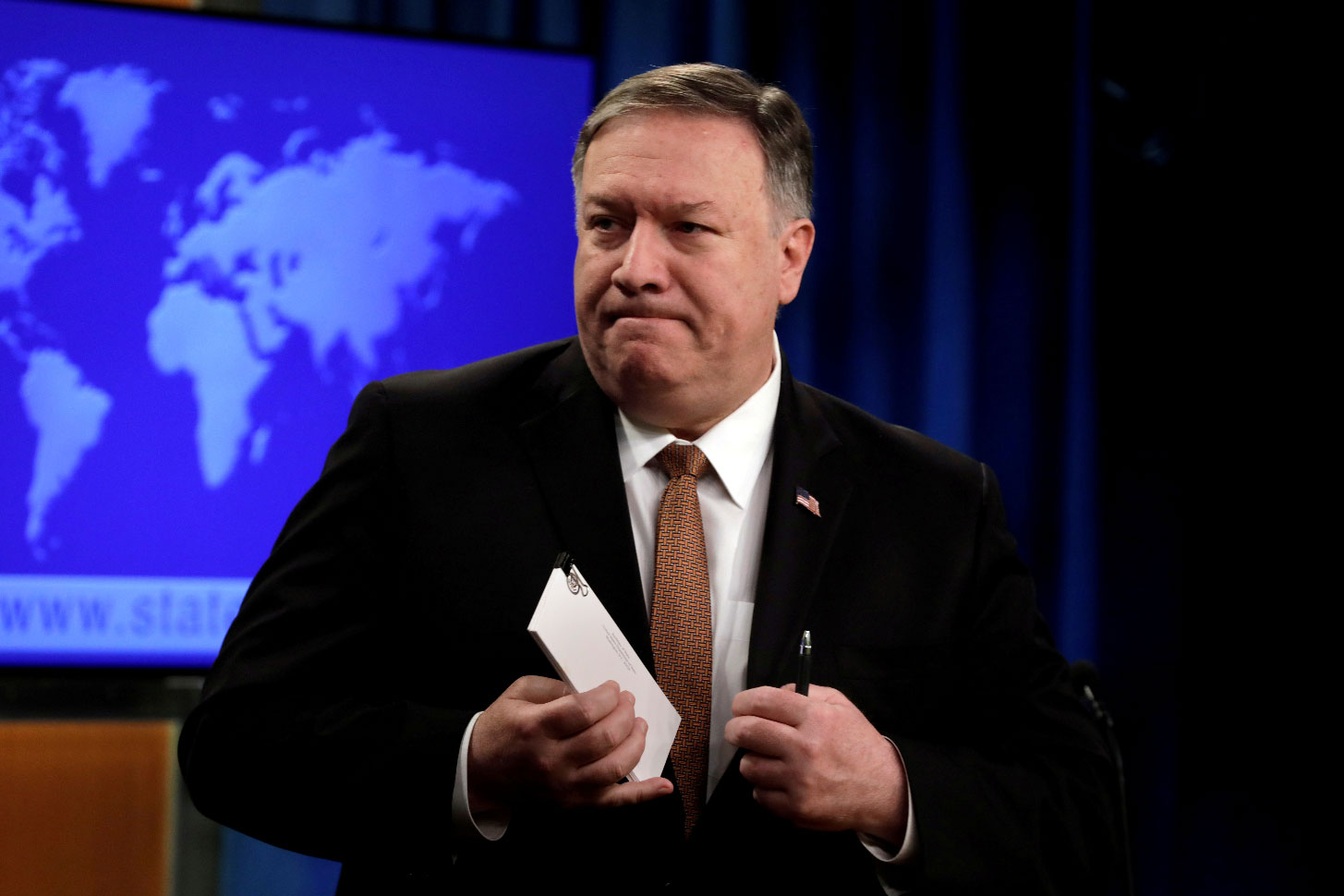
US Secretary of State Mike Pompeo
Amid growing frustration, US targets Iran uranium
US to impose sanctions on anyone involved in Iran's trading of enriched uranium, which is allowed under conditions of 2015 nuclear deal.
Saturday 04/05/2019
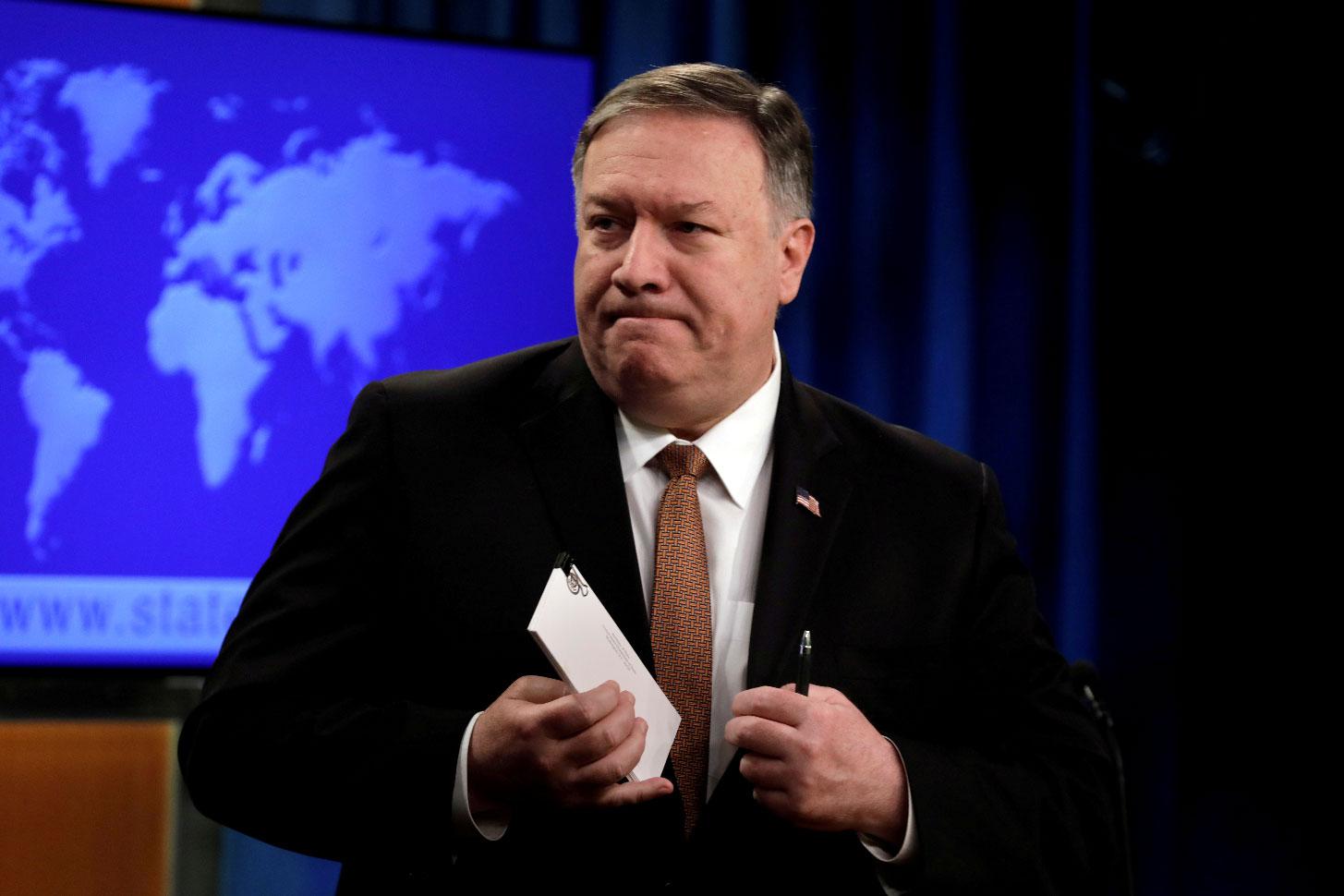
US Secretary of State Mike Pompeo
WASHINGTON - The United States said Friday it would start imposing sanctions over Iranian exports of enriched uranium allowed under a nuclear deal rejected by President Donald Trump, even as it granted waivers to allow the accord to survive.
The move comes amid growing Iranian frustration with the nuclear deal, with which UN inspectors say Tehran is complying but which has not led to a promised economic boom, with the Trump administration instead imposing sweeping sanctions.
Under the 2015 deal, which was negotiated under former president Barack Obama and still enjoys strong support among European powers, Iran was limited to keeping 300 kilograms of uranium enriched up to 3.67 percent -- far below the level needed to build nuclear weapons.
As part of the agreement, Iran was to sell any enriched uranium above that threshold on international markets in return for natural uranium, with Russia a key player.
But in Friday's policy change, Secretary of State Mike Pompeo said the United States would start to impose sanctions on anyone involved in the trade of natural for enriched uranium -- as well as in the storage of Iranian heavy water that was in excess of limits.
"The Trump administration continues to hold the Iranian regime accountable for activities that threaten the region's stability and harm the Iranian people. This includes denying Iran any pathway to a nuclear weapon," State Department spokeswoman Morgan Ortagus said.
At the same time, the United States issued new three-month waivers to allow the continuation of the major parts of the nuclear deal.
In particular, the United States said it will not target the transfer of scrap and spent nuclear fuel out of Iran and will not impose sanctions over work at Bushehr, the country's only civilian nuclear power station, although it said it may punish any activity that expands the site.
The Trump administration pulled out of the nuclear accord a year ago and instead vowed "maximum pressure" aimed at curbing the regional role of Iran, an arch-rival of US allies Saudi Arabia and Israel.
Some observers believe that the Trump team is trying to goad Iran into breaking the terms of the nuclear deal, thereby causing it to collapse and significantly deepening Tehran's international isolation.
'We will carry on'
Iranian parliament speaker Ali Larijani was quoted as saying on Saturday that Iran will continue with low-level uranium enrichment in line with the nuclear deal.
"Under the (nuclear accord) Iran can produce heavy water, and this is not in violation of the agreement. Therefore we will carry on with enrichment activity," the semi-official news agency ISNA quoted Larijani as saying. The Fars agency carried a similar report.
Heavy water can be employed in reactors to produce plutonium, a fuel used in nuclear warheads.
Iran has repeatedly rejected Washington's demand that it end its production of low-enriched uranium as it says it uses the uranium to help produce electricity.
Until now, Iran was allowed to ship low-enriched uranium produced at Natanz to Russia before it hit the 300-kg limit, an expert said.
The United States also said it would no longer waive sanctions that allowed Iran to ship to Oman for storage heavy water produced at its Arak facility beyond a 300-tonne limit set in the 2015 nuclear deal.
Separately, President Hassan Rouhani said live on television on Saturday that Iran must counter US sanctions by continuing to export its oil as well as boosting non-oil exports.
"America is trying to decrease our foreign reserves ... So we have to increase our hard currency income and cut our currency expenditures," Rouhani said.
"Last year, we had we non-oil exports of $43 billion. We should increase production and raise our (non-oil) exports and resist America's plots against the sale of our oil."
Friday's US move, which Rouhani made no direct reference to, was the third punitive action Washington has taken against Iran in as many weeks.
Last week, it said it would stop waivers for countries buying Iranian oil, in an attempt to reduce Iran's oil exports to zero. It also blacklisted Iran's elite Revolutionary Guard Corps.