

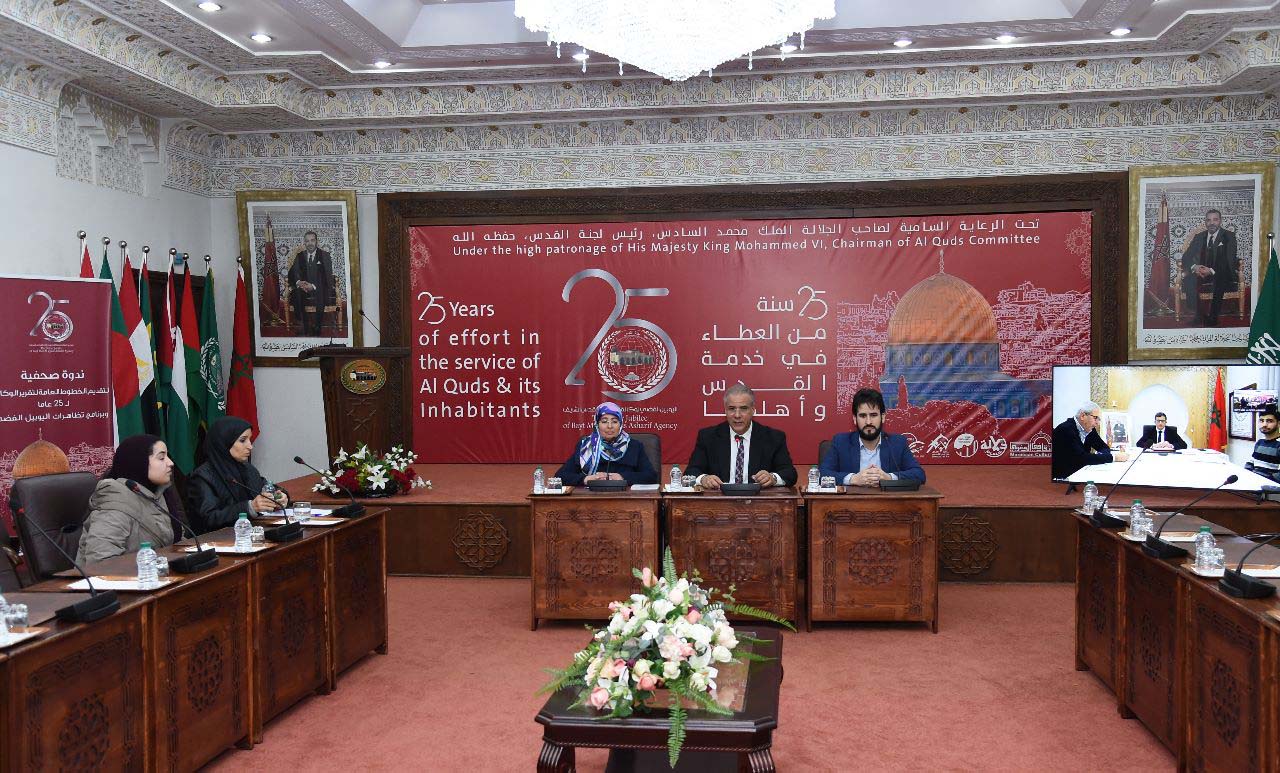
The report was reviewed by Mohamed Salem El Sharkawy (C)
Bayt Mal Al-Quds Al-Sharif spent $64 million in Jerusalem between 2020 and 2022
The Agency’s report says the social assistance, culture, youth and sports sectors accounted for about 60% of its expenditures in the Holy City.
Wednesday 18/01/2023
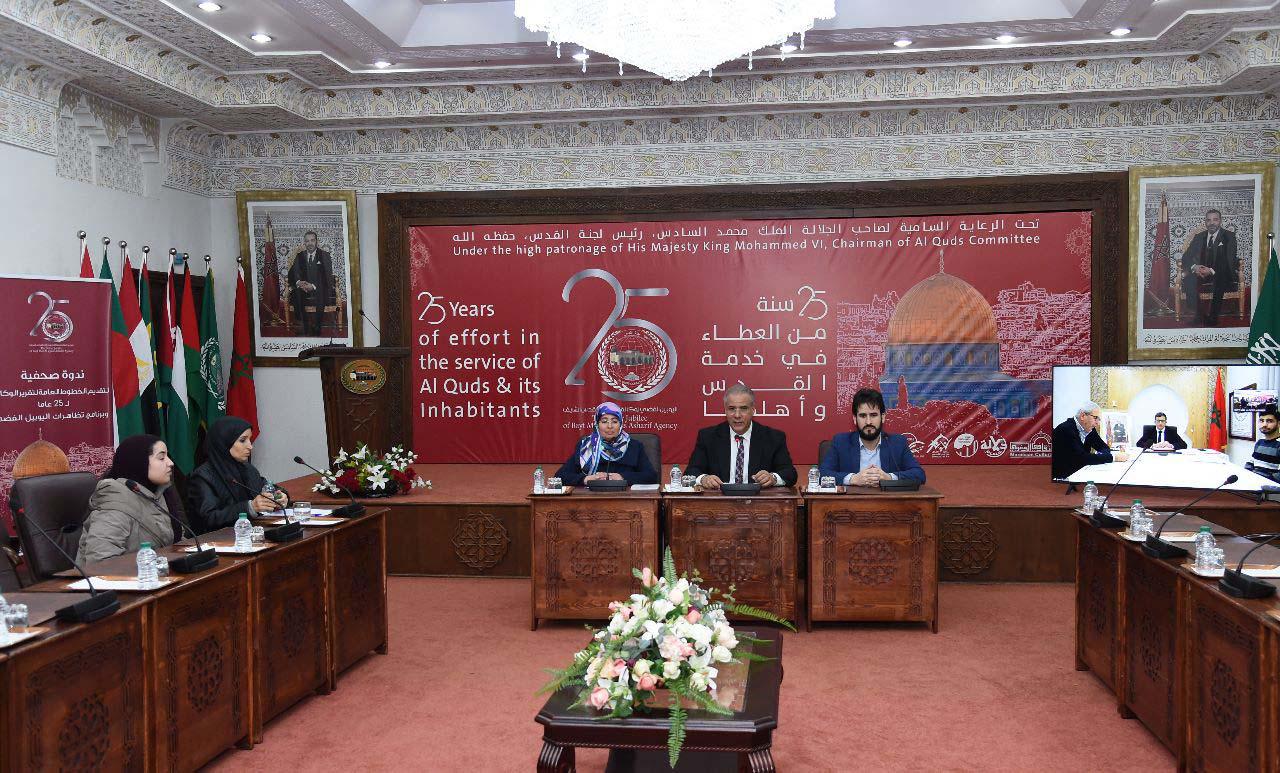
The report was reviewed by Mohamed Salem El Sharkawy (C)
RABAT - The volume of development subsidies provided by the Bayt Mal Al-Quds Al-Sharif Agency, between 2000 and 2022 to various sectors in the Holy City, amounted to about 64 million US dollars, according to the agency’s report released Wednesday on the occasion of the 25th anniversary of its founding.
Morocco contributed $16.7 million of the total contributions from countries, according to the report which, which was reviewed by Mohamed Salem El Sharkawy, Director in charge of running the Agency.
The report states that the social assistance, culture, youth and sports sectors accounted for about 60% of the Agency’s expenditures, in implementation of the high instructions of King Mohammed VI, Chairman of the Jerusalem Committee, which requires that the Agency give special attention to this sector.
The decent living program, which targets poor families in Al-Quds Al-Sharif, distributes 29,000 loaves of bread per day to about 2,900 families, and creates an important economic cycle for the benefit of 20 bakeries.
The report notes that the Jerusalem Orphan Sponsorship Program sponsors 100 orphans from among Jerusalem’s children, while 650 boys and girls benefited from the summer camps program for Jerusalem children in Morocco, in addition to the beneficiaries of the “summer camps for Jerusalem children in Jerusalem” program, which is funded by the Agency in partnership with Jerusalemite associations and in cooperation with the Directorate of Education in Jerusalem.
The report states that the “Civil Initiatives Project for a Sustainable Human Development Program in Jerusalem” is interested in financing association projects in the fields of professions, training, women's empowerment, income-generating projects, capacity support, and community integration, explaining that the agency has a number of other social projects such as restoring and rehabilitating clubs, sports and cultural centers and equipping them, distributing food parcels during the holy month of Ramadan and religious occasions, in addition to supporting and financing the individual and group lending program for building and restoring homes and housing, rehabilitating the homes of the poor and marginalized, and restoring Moroccan mosques and mausoleums.
The report says that the Agency has completed several projects in the education sector that accounted for about 20% of its budget, which concerned the construction of four new schools and the repair and restoration of 10 other schools.
The scholarship program for Jerusalemite students also provides annual scholarships in the field of higher education for the benefit of outstanding Jerusalemite students and those in need to pursue their studies in Palestinian, Moroccan and other universities, at $2,000 for literary majors and $3,000 for medicine and engineering majors.
The report concludes that the Agency supported Jerusalem hospitals by purchasing ambulances, devices and equipment to help them perform their tasks, in addition to rehabilitating and restoring some of them, and establishing medical units and departments in hospitals in various specialties, stating that it provided hospitals, during the COVID-19 period, with the necessary supplies to help them deal with the pandemic.
The Bayt Mal Al-Quds Al-Sharif Agency is a social humanitarian institution that was established on the initiative of the late Hassan II in 1995, and began its actual work during the year 1998 and works under the direct supervision of the Chairman of the Jerusalem Committee, King Mohammed VI, to implement social projects in Jerusalem to contribute to protecting the Holy City, preserving its religious and cultural heritage, and supporting its residents.
Its projects are spread over the sectors of education, health, housing, culture, sports, women's empowerment, youth and childhood care, as well as social assistance programs for people in difficult situations and groups with special needs.