


'We have to keep it on that trajectory'
Rubio believes Syria moving in good trajectory despite some concerns
The US Secretary of State Rubio stresses that a deal between Syrian authorities and the Kurdish minority must now be implemented.
Monday 16/02/2026
'We have to keep it on that trajectory'
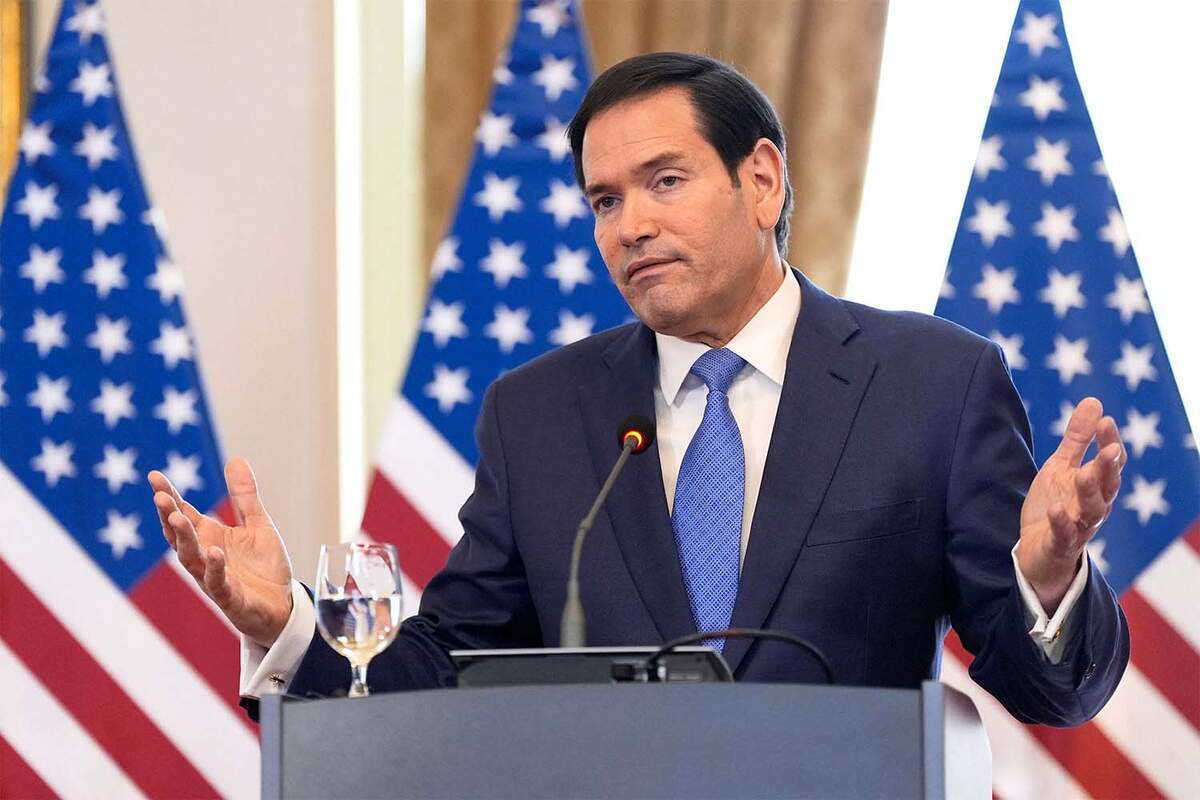
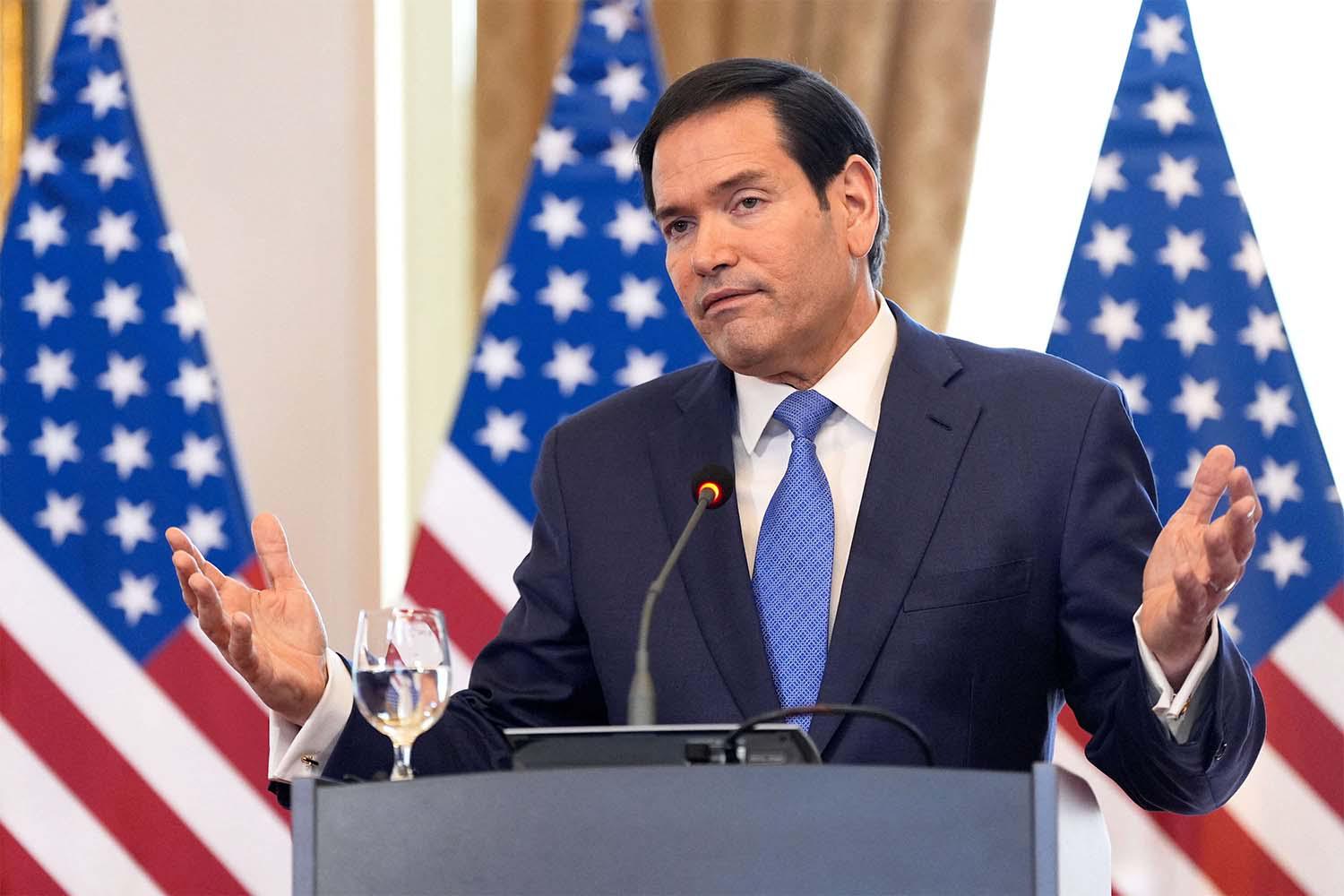
BRATISLAVA – US Secretary of State Marco Rubio announced that his country believes Syria is moving in a positive and constructive direction, expressing Washington's welcome of what he described as the course of events there, despite acknowledging the existence of challenges and risks.
“There’s been some days that have been very concerning, but we like the trajectory,” Rubio said during a joint press conference held in the Slovak capital, Bratislava, alongside Slovak Prime Minister Robert Fico.
“We have to keep it on that trajectory. We’ve got good agreements in place,” he added.
Rubio stressed that a deal between Syrian authorities and the Kurdish minority must now be implemented.
“That’s not going to be easy and there are other such agreements that they need to reach with the Druze, with the Bedouins, with the Alawites – with all the elements of a very diverse society in Syria,” Rubio said.
The US Secretary of State's remarks were not based on making grand promises, but rather seemed more like a description of a transitional phase fraught with possibilities.
Rubio acknowledged that Syria could become a "big problem" if it deviates from its course, but expressed his conviction that the current direction deserves support and preservation, adding that the situation will not be entirely stable, as it will be punctuated by periods of improvement and setbacks. He affirmed that the United States is "satisfied with the course of events in Syria, and we must maintain it."
This approach crystallized after the overthrow of Bashar al-Assad's regime on December 8, 2024, and the emergence of a transitional authority led by President Sharaa. This development was not merely a change in leadership, but rather a reshaping of the internal balance of power, forcing Washington to reassess its calculations after years of a policy characterized by isolation and economic pressure.
The American shift does not signify open engagement or unconditional recognition, but rather reflects a conviction that risk management has become a priority.
Past experience has shown that sudden collapses in countries that have witnessed protracted conflicts create vacuums exploited by extremist networks or armed groups outside state control. From this perspective, the option of limited engagement with the new authority appears aimed at preventing the country from sliding into further chaos that could spill beyond its borders.
Washington also recognizes that the Syrian scene is no longer a purely internal matter, but an arena where the interests of regional and international powers intersect. Therefore, re-engagement—even with careful calculations—grants it greater influence over the shape of future arrangements, rather than merely playing the role of observer.
The announcement of the American position from Bratislava was not a mere protocol detail.
Choosing a European platform reflects a desire to coordinate the vision with partners within the European Union, especially since any security deterioration in Syria will have direct repercussions for the continent, whether through new waves of displacement or cross-border security threats. In this sense, Washington is attempting to forge a unified Western framework that balances caution with engagement.
Inside Syria, the transitional authority faces daunting challenges. Establishing stability requires more than just maintaining security; it necessitates rebuilding state institutions on new foundations, integrating armed factions into a disciplined national structure, and launching a political process that allows for broader representation of all segments of society. Without concrete steps in this direction, any external support will remain limited and conditional.
Beyond the political dimension, the economy stands as one of the greatest challenges. Syria suffers from dilapidated infrastructure and virtually paralyzed productive sectors, in addition to the heavy legacy of sanctions. Therefore, any international opening, including from the United States, could offer a glimmer of hope, but it will remain contingent on tangible progress in reform and stabilization efforts.
Current American rhetoric reflects a "test and evaluate" approach: no long-term commitments, no complete break. Rather, it favors a gradual path subject to continuous review based on developments on the ground. This approach grants Washington political flexibility and prevents it from being drawn into commitments that are difficult to retract.
At the same time, this limited opening sends a message to regional actors that the United States does not intend to relinquish its position in the Syrian equation. This repositioning aims to maintain its ability to influence reconstruction efforts, shape security arrangements, and define the contours of the new balance of power.
As for the Syrian leadership, gaining the trust of the international community will not be achieved through rhetoric alone, but rather through building transparent institutions, respecting pluralism, and preventing a return to the forms of governance that previously fueled the conflict. The international community, and Washington in particular, will rely on actual performance indicators rather than declared intentions.
Ultimately, US policy toward Syria appears to have entered a different phase, characterized by conditional engagement instead of complete rupture, and by managing transitions rather than ignoring them. Caught between the fear of a potential setback and the desire to establish a more stable trajectory, Washington is banking on a flexible approach that keeps its options open and links any further progress to Damascus's ability to transform the transitional period into a viable state-building project.