

Actively strengthening and concealing key military and nuclear-related sites
Satellite images reveal Iran’s rapid fortification of military sites
Iran’s efforts over recent weeks may render the Taleghan 2 facility “fully unrecognisable,” providing significant protection from potential aerial strikes.
Wednesday 18/02/2026
Actively strengthening and concealing key military and nuclear-related sites
LONDON – Satellite imagery has revealed that Iran has recently constructed a concrete shield over a new facility at a sensitive military site, covering it with soil, experts say, as work continues at a location reportedly targeted by Israel in 2024 amid rising tensions with the United States. The images also show that Iran has buried tunnel entrances at a nuclear site previously bombed by the US during Israel’s 12-day war with Iran last year, reinforced other tunnel entrances, and repaired missile bases struck during the conflict.
The images provide a rare glimpse into Iranian activity at some of the sites at the centre of US-Israel concerns, as Washington seeks a negotiated resolution to Tehran’s nuclear programme while warning that military options remain on the table should talks fail.
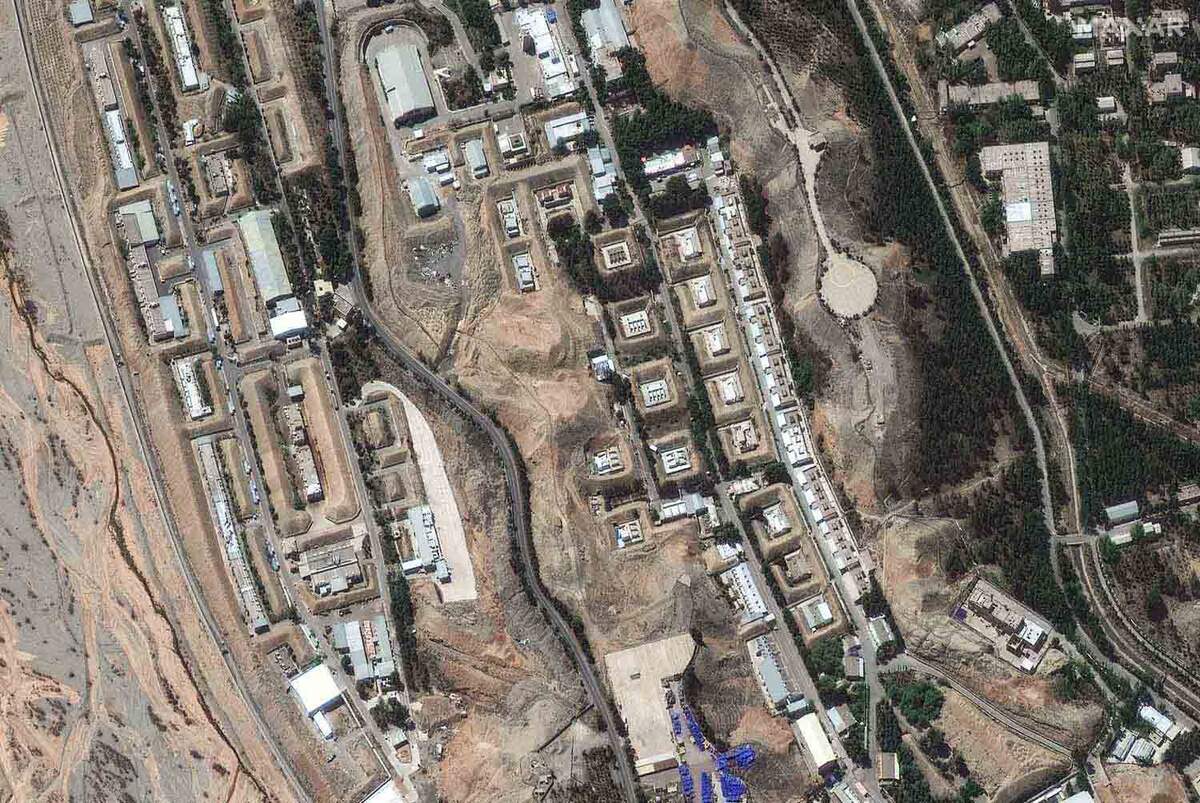
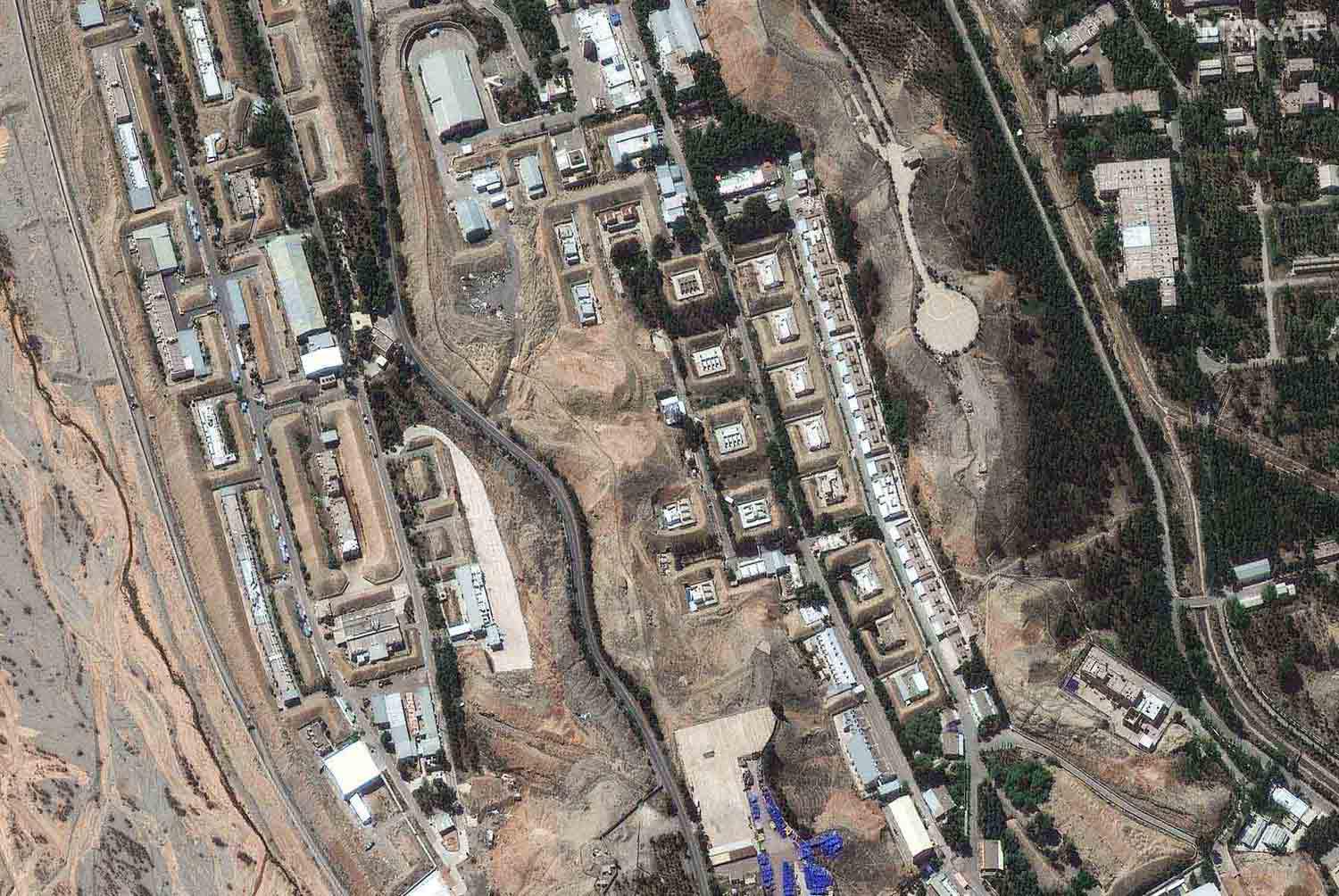
At the Parchin military complex, roughly 30 kilometres southeast of Tehran, satellite imagery shows extensive reconstruction after an Israeli strike in October 2024. Parchin has long been considered one of Iran’s most sensitive military sites, with Western intelligence suggesting it hosted tests relevant to nuclear bomb detonations more than two decades ago, claims Iran consistently denies.
Imagery taken in late 2024 and throughout 2025 indicates substantial redevelopment at the site. By October 12, 2025, the skeleton of a new structure was visible alongside two smaller adjacent buildings, progressing to a metallic roof by mid-November. By December 13, the facility was partly obscured, and by February 16, it was completely hidden beneath what experts identify as a concrete structure.
The Institute for Science and International Security (ISIS) described this as the construction of a “concrete sarcophagus” around a newly built facility, identified as Taleghan 2. Earlier imagery had revealed a long, cylindrical chamber inside the building, possibly a high-explosives containment vessel measuring approximately 36 metres long and 12 metres in diameter. While such vessels are critical to nuclear weapons development, they are also used in conventional weapons programmes.
William Goodhind, a forensic imagery analyst with Contested Ground, noted that the roof’s colour closely matched surrounding soil, likely deliberately obscuring the concrete beneath.
David Albright, founder of ISIS, observed on X that Iran’s efforts over recent weeks may render the Taleghan 2 facility “fully unrecognisable,” providing significant protection from potential aerial strikes.
At the Isfahan uranium enrichment complex, one of three Iranian nuclear sites bombed by the US in June, satellite images reveal that tunnel entrances previously targeted have now been backfilled with soil. By early February, all three entrances were “completely buried,” according to the Institute for Science and International Security, a measure described as complicating potential airstrikes or special forces operations aimed at seizing enriched uranium stored within.
Meanwhile, near the Natanz site, which houses Iran’s other uranium enrichment plants, satellite images indicate ongoing efforts to fortify two tunnel entrances under Pickaxe Mountain. The activity, observed since February 10, involves numerous vehicles, including dump trucks, cement mixers, and heavy machinery, although the facility’s purpose remains unclear.
Further south, at the Shiraz missile base, one of 25 primary medium-range ballistic missile sites, satellite comparisons between July 3, 2025, and January 30 show reconstruction and clearance of the main logistics and command compound.
Experts say the base has yet to return to its full operational capacity prior to last year’s strikes. Similarly, at the Qom missile base, roughly 40 kilometres north of the city of Qom, images show a new roof over a damaged building, with repairs likely completed by late November 2025, reflecting Iran’s ongoing efforts to restore its missile infrastructure.
Taken together, the satellite imagery portrays a country actively strengthening and concealing key military and nuclear-related sites in the aftermath of strikes by Israel and the United States. These developments come as nuclear negotiations with Washington remain stalled, highlighting Tehran’s strategic focus on fortifying sensitive facilities while preserving the option to continue its nuclear and missile programmes.