


Living canvases of national pride
Saudi Arabia marks Founding Day with nationwide cultural festivities
The anniversary this year coincided with the holy month of Ramadan, giving celebrations a distinct cultural atmosphere as evening events unfolded in a Ramadan setting.
Monday 23/02/2026
Living canvases of national pride
RIYADH – Saudi Arabia on Saturday marked Founding Day, commemorating the establishment of the first Saudi state in 1727 by Muhammad bin Saud bin Muhammad bin Muqrin in Diriyah, an event regarded as the starting point of nearly three centuries of unity, stability and state-building that laid the political, social and economic foundations of the modern kingdom.
Celebrated annually on February 22 following a royal decree issued in 2022 by Custodian of the Two Holy Mosques King Salman bin Abdulaziz Al Saud, Founding Day has become a major national occasion distinct from Saudi National Day. While National Day marks the unification of the kingdom in 1932 by King Abdulaziz bin Abdulrahman Al Saud, Founding Day symbolises the birth of the first Saudi state in Diriyah and the values upon which it was built.
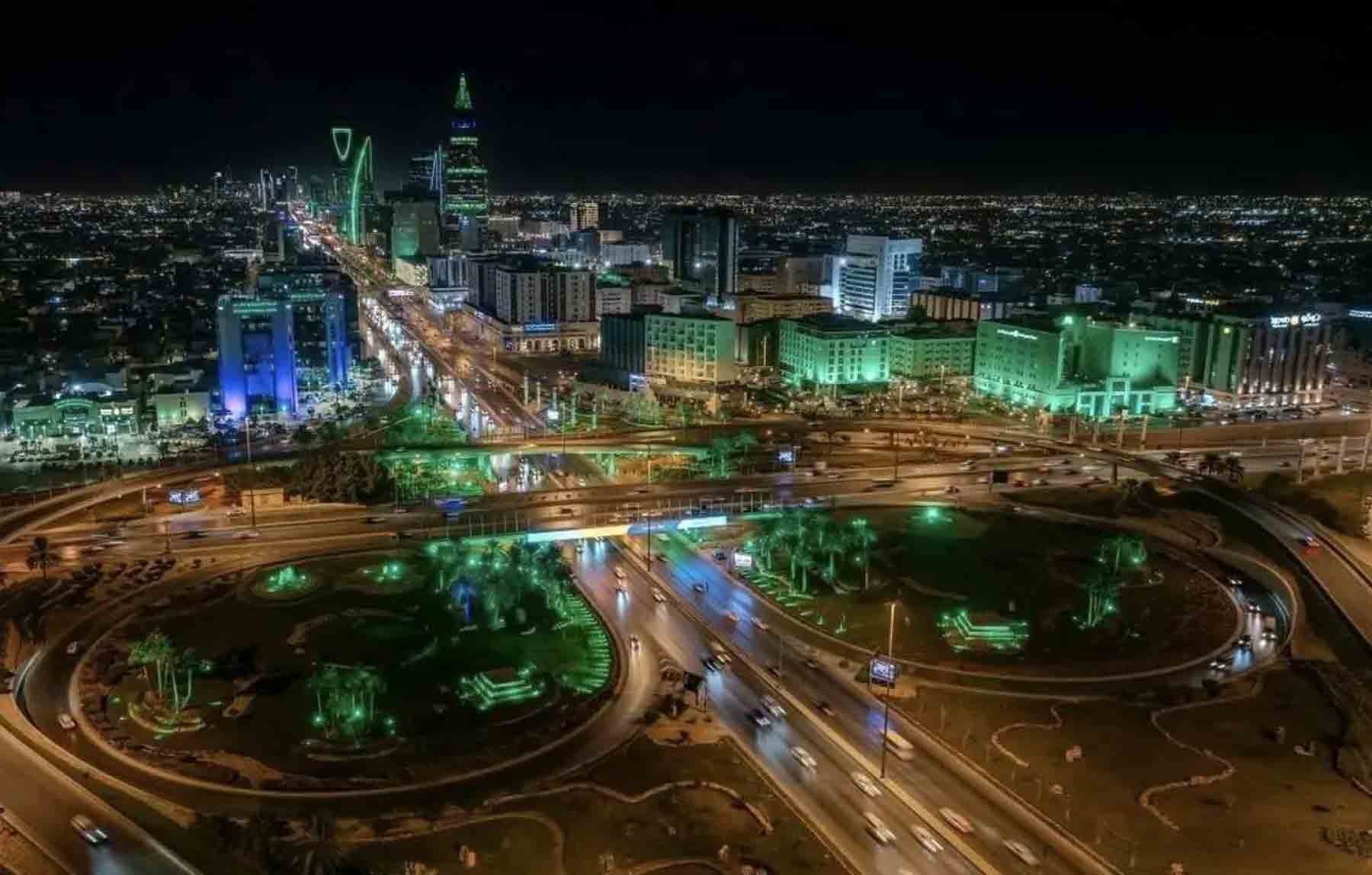
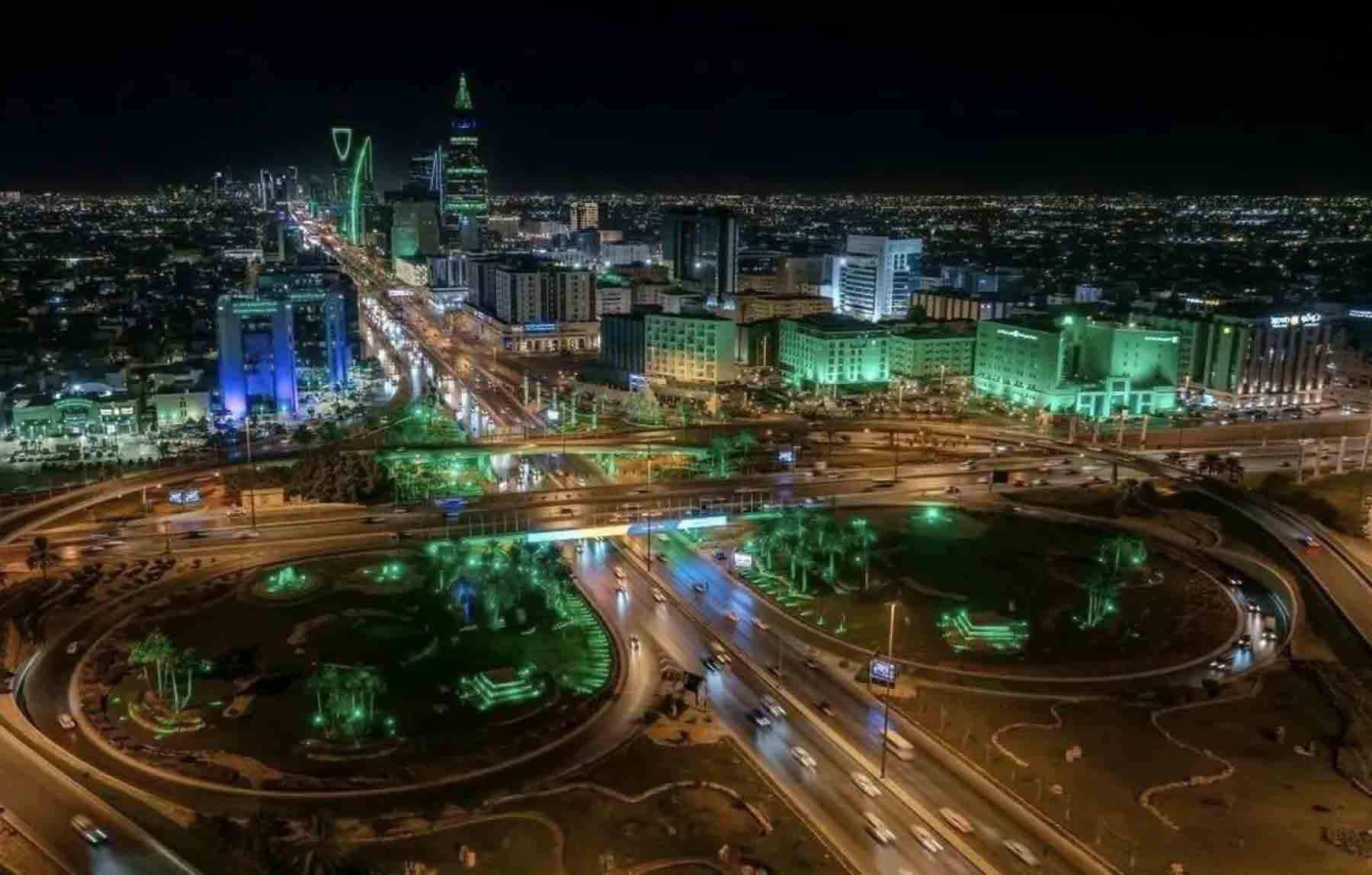
Across the capital and other cities, streets were adorned with green lights and traditional motifs, as thousands of decorative installations illuminated main roads, squares and public spaces. In Riyadh alone, more than 5,000 decorative lighting features were installed along key routes, transforming the capital into what officials described as living canvases of national pride. Roads and public squares became illuminated tributes to 299 years of construction and achievement, reflecting loyalty to the leadership and the kingdom’s enduring journey.
The anniversary this year coincided with the holy month of Ramadan, giving celebrations a distinct cultural atmosphere as evening events unfolded in a Ramadan setting. Cities across the kingdom expressed pride in the state’s deep-rooted origins and the enduring bond between citizens and their leaders since the founding of the first Saudi state three centuries ago.
Historic Diriyah, the birthplace of the Saudi state, took centre stage. The At-Turaif district, a UNESCO World Heritage Site, hosted a wide range of cultural events organised by the Diriyah Gate Development Authority. Visitors were offered immersive experiences exploring the foundations of the state, including heritage workshops for children, storytelling sessions recounting Diriyah’s history, academic discussions on the expansion of the Saudi state, Arabian horse displays and guided historical tours tracing themes of leadership, unity and collective contribution.
Speaking about the significance of the day, Faisal al-Amer of the Diriyah Gate Development Authority said: “On February 22, 1727, this nation was founded on unity and a shared vision for prosperity. Nearly three centuries later, we commemorate the stories of our heroes, their sacrifices and the remarkable efforts through which they laid the foundations of what we are today as Saudis.
“We celebrate, and we carry their legacy forward. We honor the individuals who shaped our history and the values they embodied: generosity, steadfastness, resilience, courage and loyalty. As we celebrate our founders, we are reminded to appreciate what we have and to value it in the present.”
The historical narrative of Founding Day centres on Imam Mohammed bin Saud’s vision at a time when central Arabia was marked by fragmentation and instability. He unified the two parts of Diriyah under a single authority after governance had been divided between two centres, strengthened internal administration, organised economic resources and established a new district in Samhan known as Al-Turaifiya, moving the seat of power from Ghasiba after many years.
Under his leadership and that of subsequent imams, Diriyah evolved into the capital of an expanding state that achieved political independence and resisted external influence. The city became an economic, social and intellectual hub, attracting scholars who contributed to education and writing, giving rise to new schools of calligraphy and manuscript copying. The state supported neighbouring towns to enhance regional stability and secured pilgrimage routes, consolidating its role across the Arabian Peninsula.
Although the first Saudi state eventually came to an end, its legacy endured. The state was re-established in 1824 by Imam Turki bin Abdullah, founder of the second Saudi state, and later restored by his descendant King Abdulaziz in 1902, culminating in the proclamation of the kingdom of Saudi Arabia in 1932. From its origins to the present day, Saudi Arabia has remained an Arab state in its leadership and people.
Founding Day celebrations have expanded significantly since becoming an official holiday. Early editions featured fireworks, drone displays and concerts, including the “Founding Operetta”, alongside events at the National Museum. In subsequent years, historical marches, exhibitions and interactive activities showcasing traditional clothing, music and cuisine have drawn growing public participation, with many citizens donning heritage attire to express pride in their roots.
Events extended beyond Riyadh to all 13 regions of the kingdom. In Jeddah, multi-day programmes included falconry and equestrian displays, handicrafts, children’s workshops and heritage exhibitions. In Tabuk, more than 20 national, cultural and heritage events were organised with participation from public and private institutions. Schools and universities held educational programmes, workshops and lectures highlighting the history of the first Saudi state, aiming to deepen younger generations’ awareness of their country’s historical foundations and the values of stability, justice and social cohesion upon which it was built.
Public buildings and landmarks were illuminated with Founding Day visual identity designs, while national slogans and messages spread across streets and media platforms. In Saudi homes, families gathered to recount historical stories passed down through generations and prepare traditional dishes reflecting the kingdom’s regional diversity. Private sector institutions also joined the celebrations through themed campaigns and special initiatives.
What began as a historical commemoration has evolved into a deeply-embedded cultural and social occasion linking heritage with the kingdom’s modern transformation under Vision 2030. As Saudi Arabia looks to the future, Founding Day serves as a reminder that the stability and development enjoyed today are rooted in a journey that began three centuries ago in Diriyah, a journey defined by unity, resilience and an enduring sense of national identity.