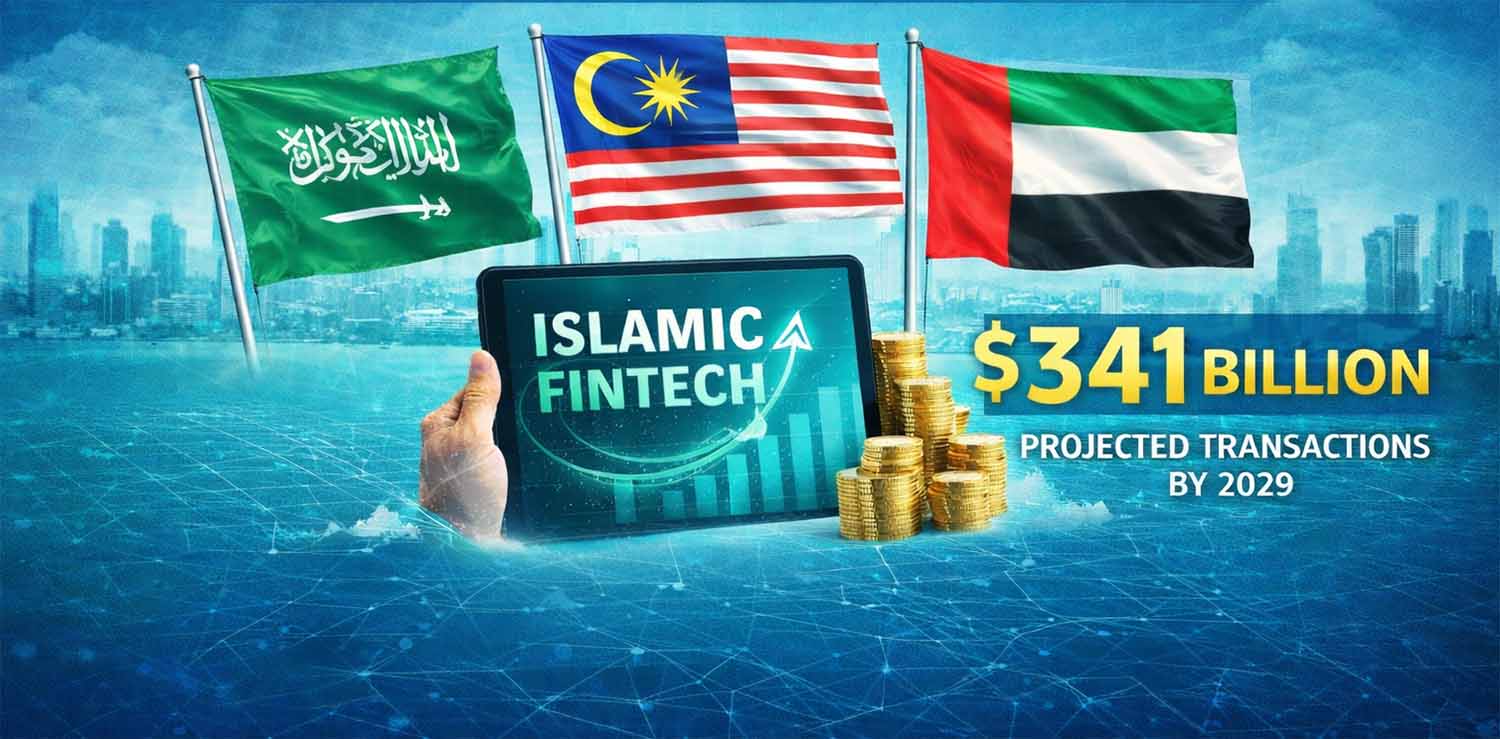
Saudi Arabia, Malaysia, UAE lead global Islamic Fintech growth
The newly released Global Islamic Fintech Report 2025/26 projects that transaction volumes in the Islamic financial technology sector will reach $341 billion by 2029.
Tuesday 24/02/2026

RIYADH — Saudi Arabia, Malaysia and the United Arab Emirates are leading the global expansion of Islamic financial technology, according to the newly released Global Islamic Fintech Report 2025/26, which projects that transaction volumes in the sector will reach $341 billion by 2029.
The report highlights rapid digital transformation across Shariah-compliant financial services, driven by regulatory innovation, strong government backing and increasing consumer demand for ethical, asset-backed financial solutions.
Rapid Expansion of a Digital Islamic Economy
Islamic fintech — which combines financial technology with Shariah-compliant banking and investment principles — has grown significantly in recent years. The report notes that the sector has moved beyond early-stage experimentation into mainstream financial infrastructure, particularly in Gulf and Southeast Asian markets.
Saudi Arabia emerged as a key growth engine, benefiting from regulatory reforms aligned with Vision 2030, increased venture capital activity and the expansion of digital banking licenses. Malaysia continues to play a pioneering role with its mature Islamic finance ecosystem and regulatory clarity, while the UAE has positioned itself as a regional fintech hub through innovation-friendly policies and international partnerships.
Collectively, these three markets account for a significant share of global Islamic fintech activity, particularly in digital payments, crowdfunding, peer-to-peer financing, and Shariah-compliant wealth management platforms.
$341 Billion by 2029
The projection of $341 billion in transaction volume by 2029 reflects both organic growth and deeper financial inclusion across Muslim-majority and minority markets. Analysts attribute this expansion to a rising smartphone penetration, growing demand for ethical investment products, increased cross-border digital payments, the expansion of Islamic digital banking platforms and regulatory sandboxes encouraging innovation.
The report indicates that Islamic fintech adoption is accelerating not only in core markets but also in emerging economies across Africa and South Asia.
Regulatory Support as a Catalyst
A key factor behind the leadership of Saudi Arabia, Malaysia and the UAE is proactive regulatory engagement. Authorities in these countries have introduced fintech sandboxes, digital licensing frameworks and Shariah governance standards that allow innovation while maintaining compliance.
Industry observers note that regulatory clarity is particularly important in Islamic finance, where product structures must align with religious principles prohibiting interest (riba), excessive uncertainty (gharar) and speculative activity.
Competitive Positioning in the Global Market
The report suggests that Islamic fintech is increasingly competing on a global stage, with some platforms attracting non-Muslim users interested in ethical finance models. Venture capital investment in Islamic fintech startups has also expanded, signaling confidence in long-term growth prospects.
As the broader global fintech sector faces tightening funding conditions, Islamic fintech appears to benefit from strong sovereign backing and alignment with national diversification strategies in Gulf economies.
Future Outlook
While the sector remains smaller than conventional fintech, its projected growth trajectory indicates a structural shift in how Islamic financial services are delivered. Digital onboarding, AI-driven risk assessment and blockchain-based smart contracts are expected to play larger roles in the coming years.
With transaction volumes projected to hit $341 billion within the next four years, the report concludes that Islamic fintech is transitioning from a niche segment into a core pillar of the digital Islamic economy.