

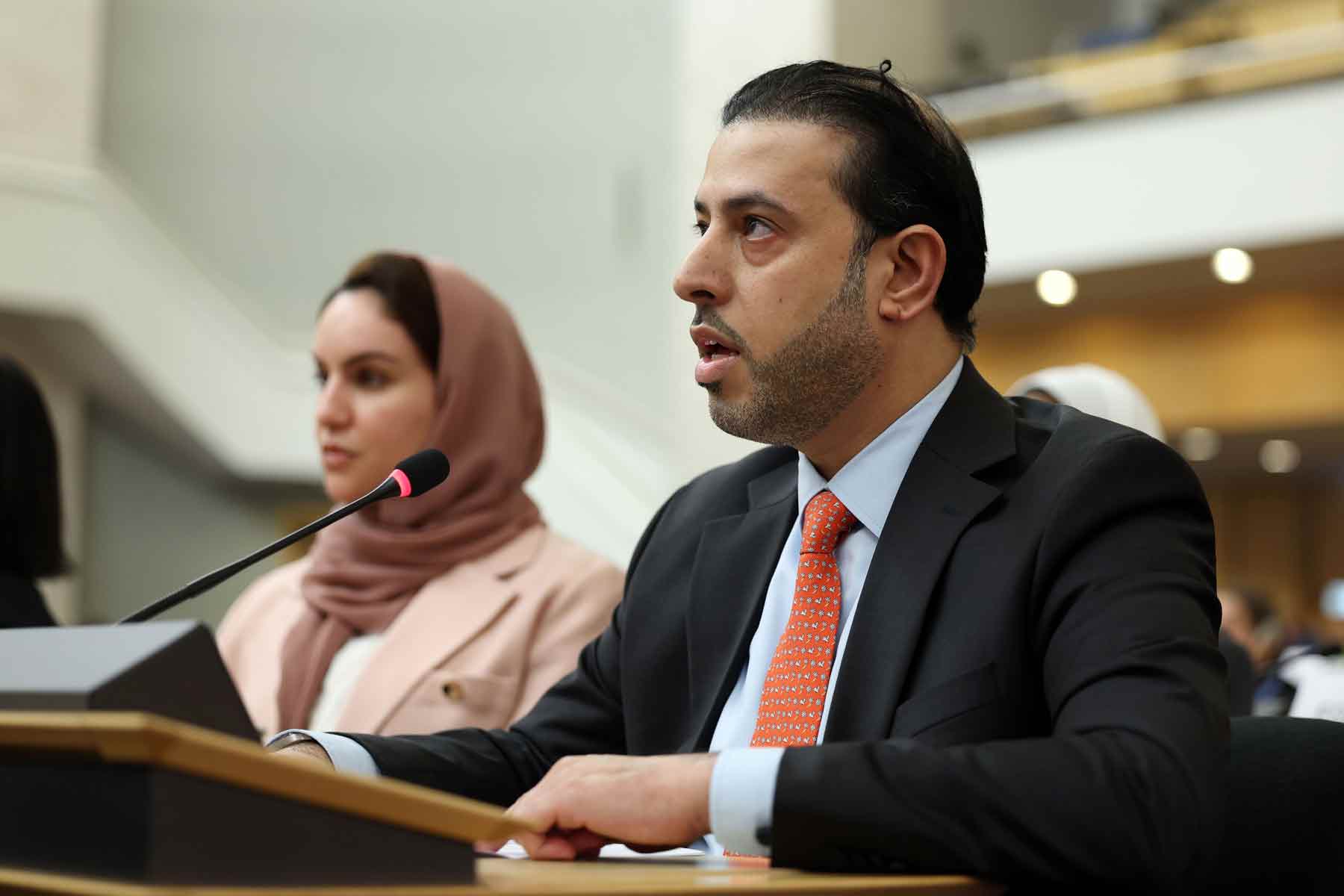
Khalifa al-Mazrouei: The UAE has condemned all violations in the Sudanese conflict
UAE pushes for accountability of all parties in Sudan conflict
The UAE highlighted a series of atrocities attributed to Sudanese forces, citing evidence of systematic attacks on hospitals, markets and educational institutions.
Friday 27/02/2026
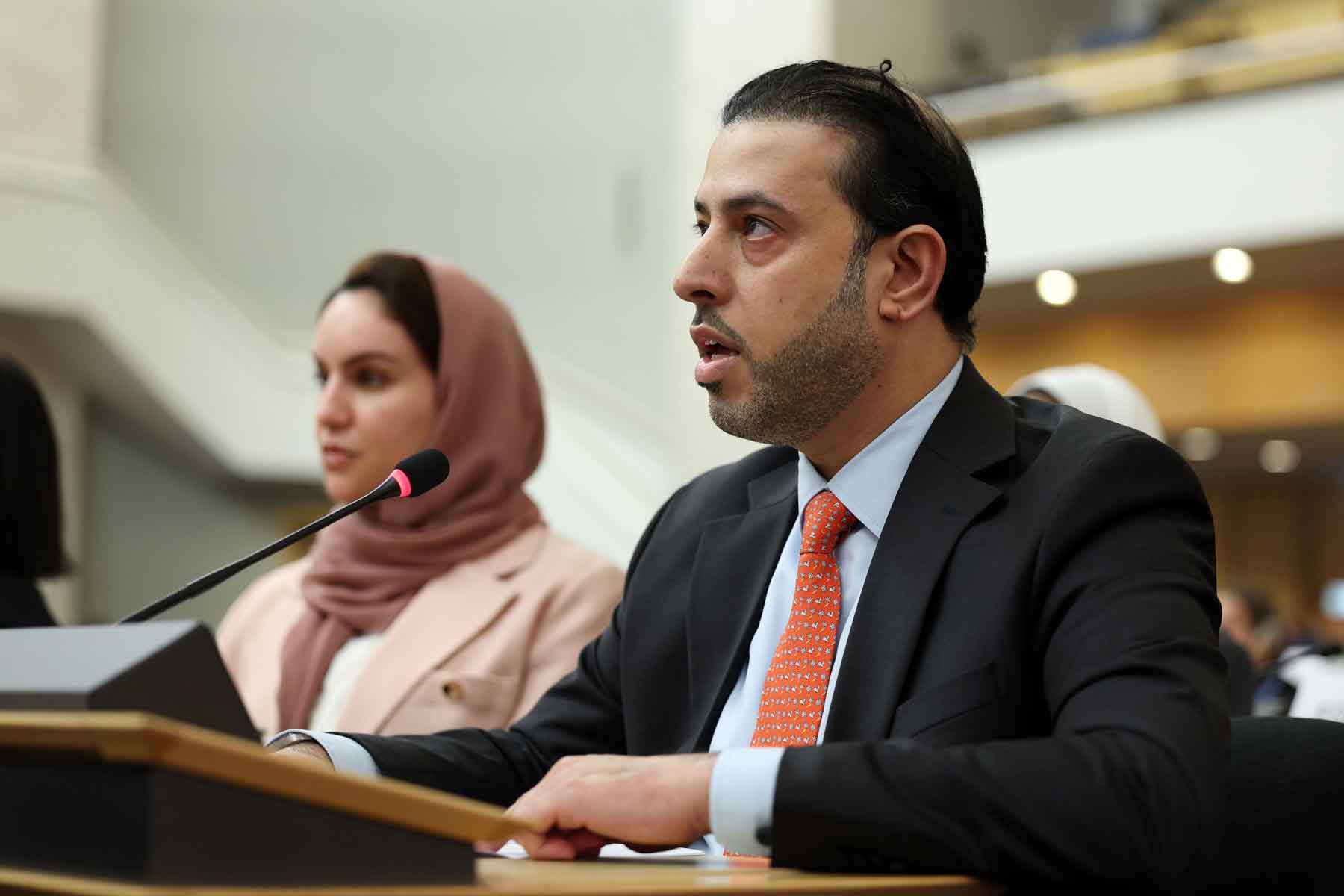
Khalifa al-Mazrouei: The UAE has condemned all violations in the Sudanese conflict
GENEVA – The United Arab Emirates firmly rejected on Thursday what it described as unfounded allegations concerning its role in Sudan, delivering its official response during the 61st session of the United Nations Human Rights Council in Geneva.
Khalifa al-Mazrouei, Counsellor at the UAE Permanent Mission in Geneva, invoked the UAE’s formal “Right of Reply,” condemning accusations from one of the warring parties in Sudan as baseless and misleading. He said the claims were part of an attempt to divert international attention from the real responsibilities in the conflict, namely the failure of Sudanese forces to protect civilians and comply with international humanitarian law.
“Instead of engaging in genuine efforts to protect the rights of the Sudanese people and to mitigate the humanitarian crisis, the Sudanese Armed Forces (SAF) continue to direct attention away from their core obligations,” Mazrouei said. “This is a transparent political manoeuvre aimed at avoiding accountability for serious violations documented in multiple official reports.”
The UAE diplomat highlighted a series of atrocities attributed to Sudanese forces, citing evidence of systematic attacks on hospitals, markets and educational institutions using drones, as well as credible reports suggesting the use of chemical weapons. Mazrouei also referenced extrajudicial killings, arbitrary detentions and widespread sexual violence targeting women, girls, medical personnel and humanitarian workers in areas under the SAF’s control.
He stressed that while the UAE has unequivocally condemned all violations in the Sudanese conflict, the party accusing the UAE had remained silent on these documented atrocities, reflecting a pattern of selective accountability and double standards.
“This party has systematically avoided responsibility, including for links to extremist groups such as those associated with the Muslim Brotherhood,” Mazrouei said.
Mazrouei further questioned the independence of Sudan’s National Committee tasked with investigating violations, citing repeated instances of impunity linked to SAF elements. He criticised Sudanese authorities for refusing to cooperate with international investigative mechanisms, framing it as evidence of a broader effort to evade international oversight.
The UAE’s statement underscored that addressing Sudan’s humanitarian crisis requires a focus on ending hostilities and resuming political dialogue, rather than engaging in diplomatic blame games.
“Holding others responsible will not protect civilians or alleviate their suffering,” Mazrouei said, calling for warring parties to assume their legal and ethical obligations and to engage seriously in peace initiatives.
The diplomat concluded by asserting that the credibility of the accusing party has been undermined, given its history of seizing power by force alongside the Rapid Support Forces, obstructing humanitarian aid and repeatedly blocking peace efforts.