



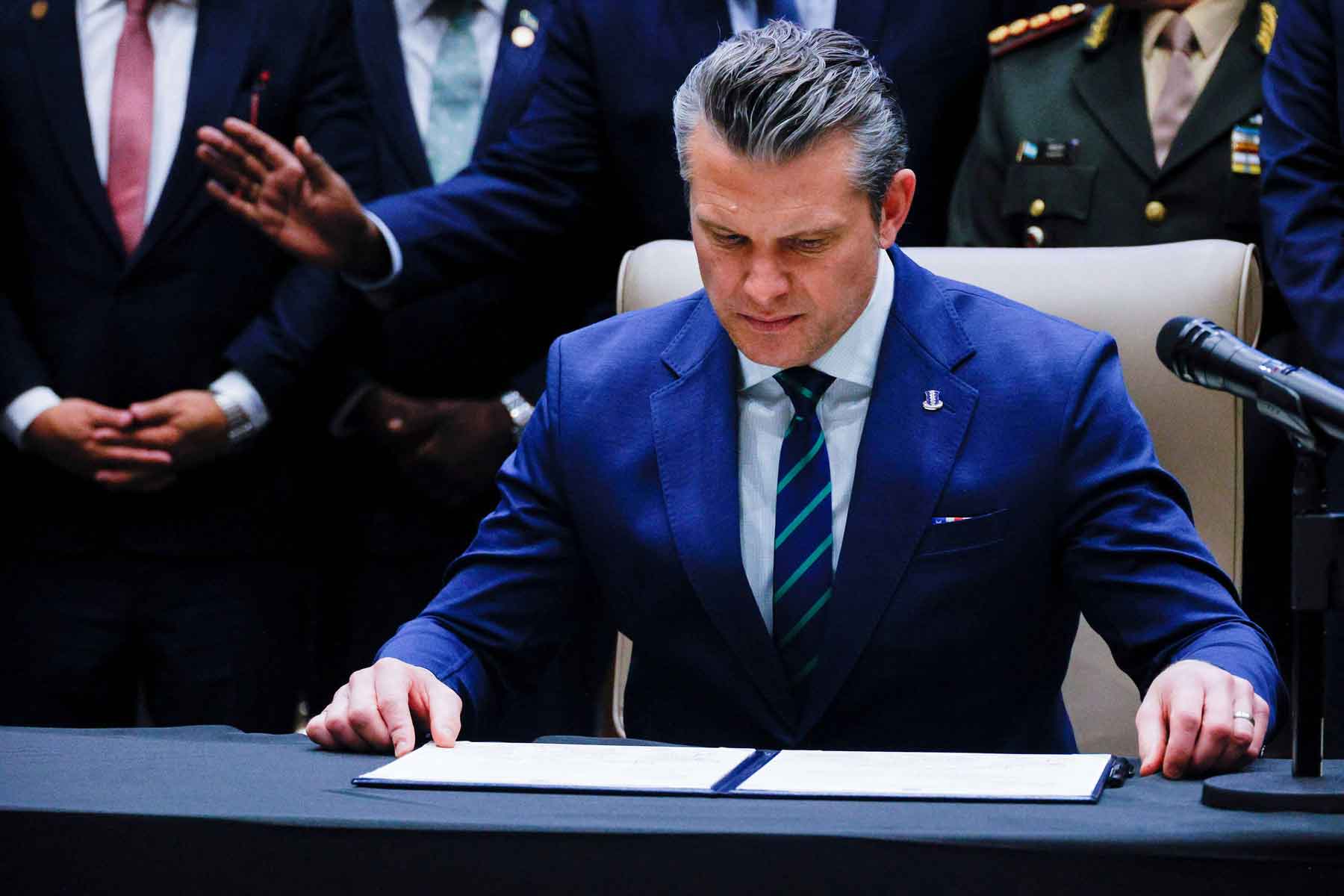
Hegseth: We know exactly what we’re trying to achieve
Pentagon holds line on war goals as strikes cripple Iran’s military assets
On Friday, Qatar Ministry of Defence said a drone attack on Al Udeid Air Base, the largest US military installation in the Middle East, had been intercepted and thwarted.
Friday 06/03/2026
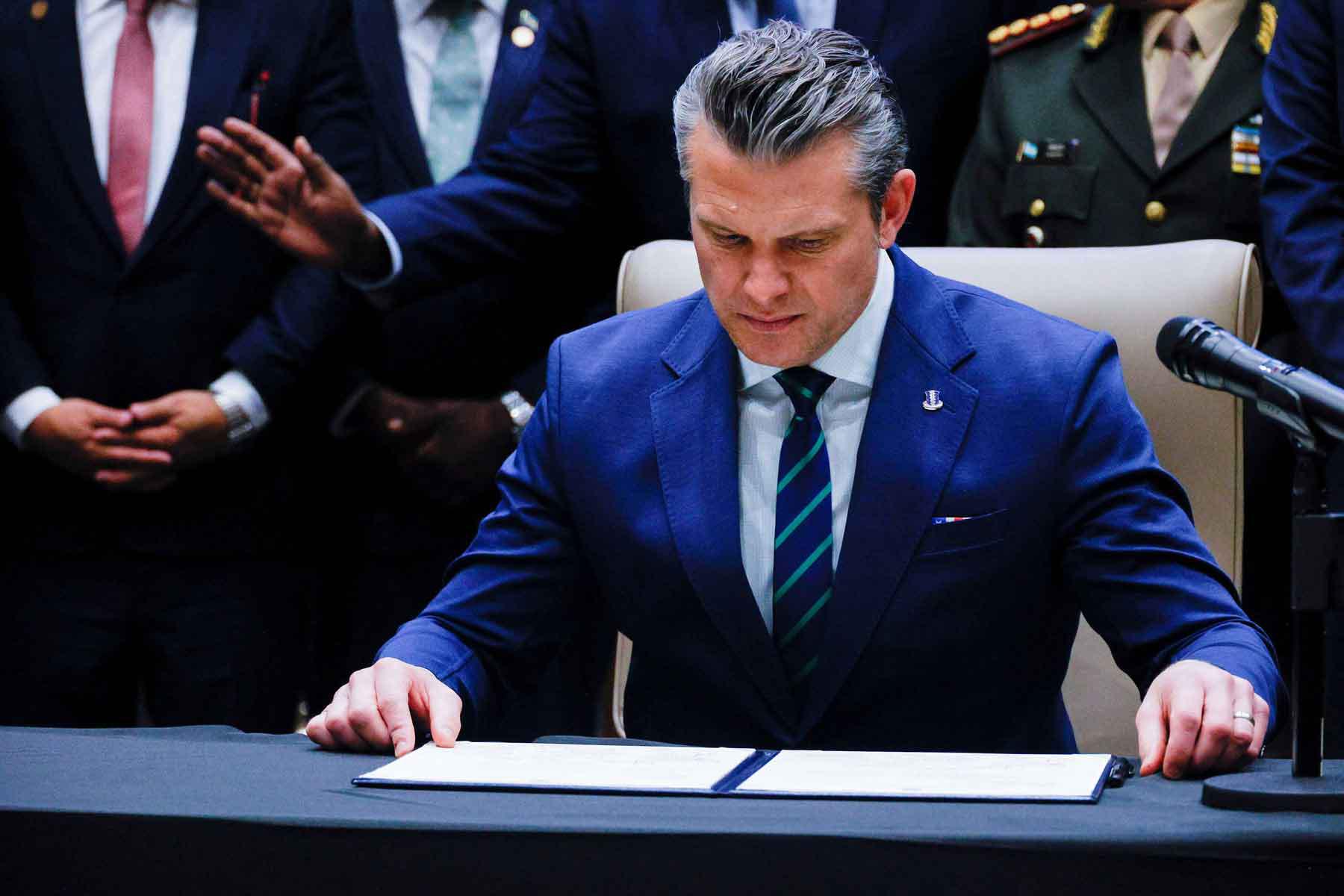
Hegseth: We know exactly what we’re trying to achieve
TAMPA, Florida – US Defence Secretary Pete Hegseth said on Thursday that Washington was not expanding its military objectives in Iran, even as President Donald Trump suggested the United States should have a say in choosing the country’s next leader.
The remarks came as the US-Israeli campaign against Iran entered its first week, with Washington reporting extensive strikes on Iranian military assets and a sharp drop in missile attacks against regional targets.
Speaking in Florida, Hegseth said the Pentagon’s goals remained narrowly focused despite escalating rhetoric about Iran’s political future.
“There’s no expansion in our objectives. We know exactly what we’re trying to achieve,” he said.
Earlier this week the Pentagon said the operation, dubbed Operation Epic Fury, aims to destroy Iran’s offensive missile systems, dismantle missile production capabilities and neutralise the country’s naval forces, while ensuring Tehran cannot acquire a nuclear weapon.
Hegseth added that Trump was nonetheless exerting enormous influence over the country’s future as the war unfolds.
“The president is having a heck of a say in who runs Iran given the ongoing operation,” he said.
Trump signals role in Iran’s future leadership
In a separate telephone interview with Reuters, Trump said Washington would need to play a role in determining who leads Iran after the current leadership is removed.
“We’re going to have to help pick the next person,” the president said, signalling an ambition to shape Iran’s political future even as the administration insists the military campaign is limited in scope.
The comments highlight a tension within the US messaging: while military officials emphasise clearly defined operational objectives, political leaders have increasingly hinted at the possibility of regime change in Tehran.
Massive strikes across Iran
According to US officials, the scale of the assault on Iran has been extensive.
American forces have struck more than 2,000 targets across the country during the first six days of the war, including missile launch facilities, military bases and naval vessels.
The United States also reported significant success against Iran’s maritime forces.
The US military said it had sunk more than 30 Iranian ships, including a drone carrier vessel that was left ablaze during the attacks.
Brad Cooper, the admiral who leads US forces in the Middle East as head of United States Central Command, told reporters that Iran’s retaliatory missile strikes had fallen dramatically since the campaign began.
Ballistic missile launches by Iran have dropped by about 90 percent compared with the first day of the conflict, he said, attributing the decline to the destruction of launch systems and related infrastructure.
Regional tensions remain high
Despite the reported reduction in missile attacks, tensions across the Middle East remain acute as Iran continues to target US assets in the region.
On Friday, Qatar Ministry of Defence said a drone attack on Al Udeid Air Base, the largest US military installation in the Middle East, had been intercepted and thwarted.
The base, located in Doha, hosts thousands of US troops and serves as a major command hub for operations run by United States Central Command.
Iran has been launching drones and missiles towards US bases across the region since Israeli and US strikes began on Saturday. Those attacks killed several of the Islamic Republic’s top military and political leaders, dramatically escalating tensions and triggering a broader regional conflict.
While US officials say the destruction of Iran’s missile capabilities is beginning to blunt its retaliatory capacity, the attempted strike on Al Udeid underscores the continued risk to American forces and allies throughout the region.
For now, Washington insists its objectives remain strictly military. Yet Trump’s comments about influencing Iran’s future leadership suggest the conflict could carry far-reaching political consequences well beyond the battlefield.