


History in the making
Marita and Gotion betting on Africa’s energy future
The Moroccan industrial powerhouse and the Chinese Battery Giant form a strategic alliance to power Africa’s green energy revolution.
Thursday 02/04/2026
History in the making
RABAT – From the industrial port of Trieste to the sun-drenched savannas of sub-Saharan Africa and the mineral-rich deserts of Morocco’s Atlas Mountains, a quiet revolution is taking shape. At its center is a strategic alliance between Marita Group, a Moroccan industrial powerhouse founded in Rabat in 1994, and Gotion High-Tech, one of the world’s leading battery manufacturers.
The partnership is not just another North-South or South-South deal. It is a deliberate fusion of African market knowledge and Chinese technological excellence, designed to prove that large-scale sustainability and strong profitability can go hand in hand on a continent long starved of reliable, affordable energy.
Gotion High-Tech: World-Class Technology Made in Africa
Gotion High-Tech, headquartered in China, has earned Tier 1 status from Bloomberg NEF – the highest benchmark in the global energy storage industry. Its strengths are formidable: next-generation LFP batteries, the GoGo Grid storage systems, and a fully operational Gigafactory in Kenitra, Morocco, with an annual capacity of 20 GWh. For the first time, a complete battery value chain – from cell production to grid integration – is anchored on African soil.
Gotion’s ambition is clear: it does not want to simply export technology to Africa; it wants a trusted local partner capable of opening the entire continent.
Marita Group: Thirty Years of African Trust
Marita Group provides exactly that. Born from the 1994 acquisition of Columbin (then the world’s second-largest cork producer), the Moroccan company has quietly expanded into eight diversified sectors: mining, cybersecurity, real estate, sustainable agriculture, and more. With 32 offices across four continents, Marita’s real asset is intangible – three decades of deep governmental relationships and on-the-ground credibility across Africa.
When Gotion searched for a partner that could translate its technology into African reality, Marita was already there.
Six Concrete Memoranda of Understanding
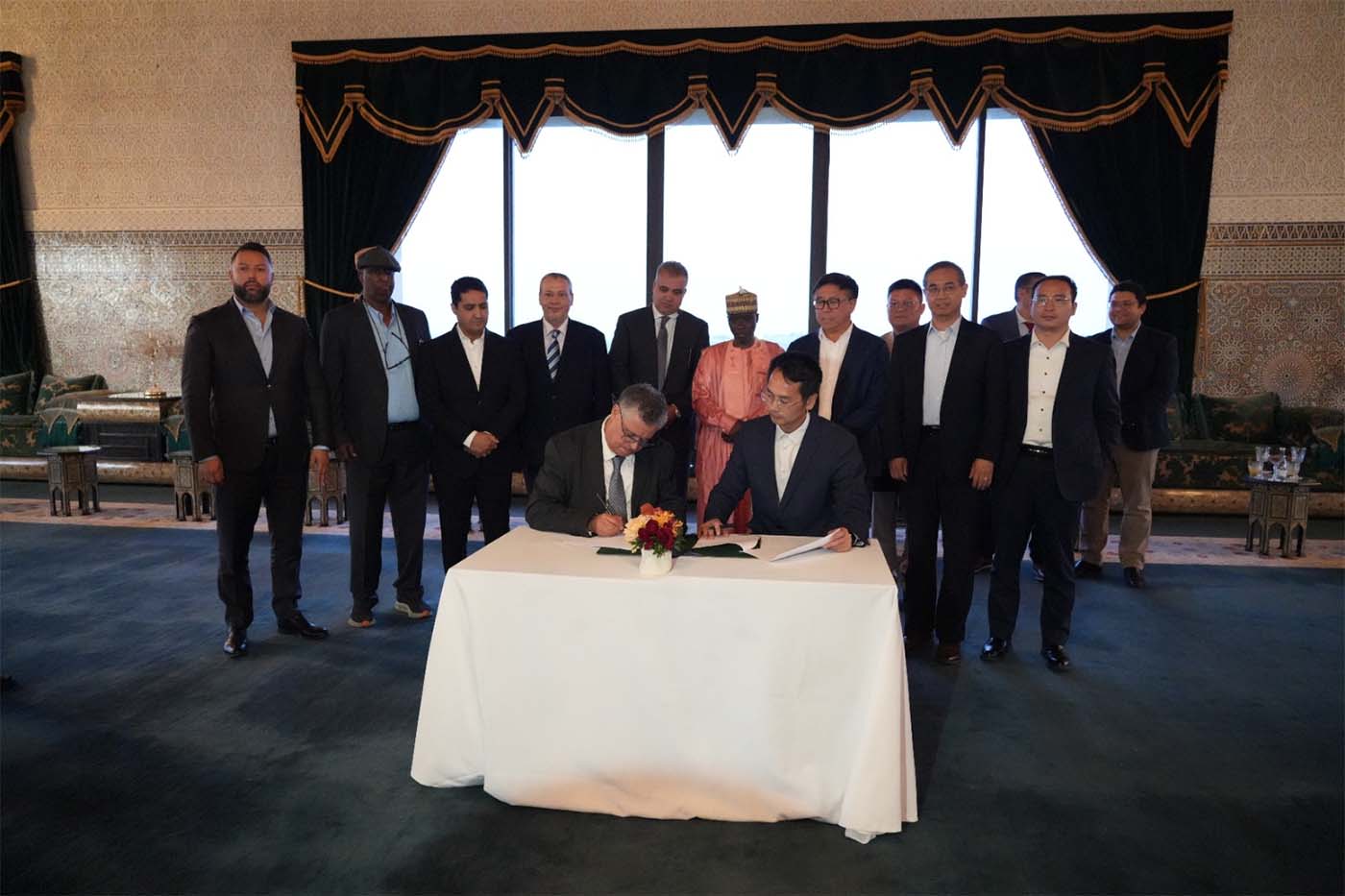
What sets this alliance apart from countless vague framework agreements is its immediate operational depth. The two groups have signed six Memoranda of Understanding covering fully quantified, ready-to-execute projects:
- BESS storage project in Trieste, Italy
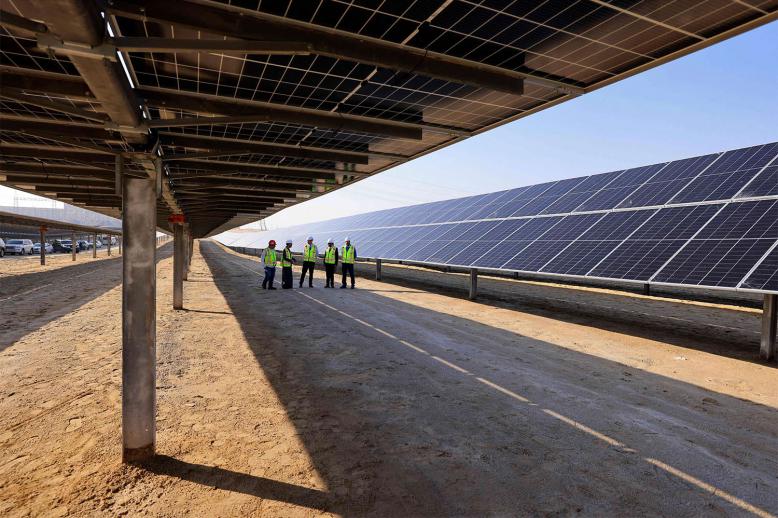
- Solar power plants across Africa
- Electric trucks with 1,000 km range
- Decarbonization of Morocco’s mining industry (Errachidia)
- Plastic-to-Fuel circular economy initiative
- Gotion Smart City in Dar es Salaam, Tanzania
Six documents. Six operational roadmaps. Six bankable projects. In the world of international industrial partnerships, signing six detailed MoUs simultaneously is a powerful signal: Marita and Gotion are not testing the waters – they are building the future.
A European Pilot That Will Shape Africa: Trieste BESS
The alliance’s first major showcase is in Europe. On two disused industrial sites in Trieste (“ex Colombin” and “ex Colorificio Veneziani”), Marita-Gotion is deploying a 2.4 MW photovoltaic plant paired with a high-performance Battery Energy Storage System (BESS). Initial investment (excluding land) stands at $2.5 million, with an additional $40 million land commitment for the pilot phase. Expected CO₂ reduction: 37,840 tons per year.
Phase 2 targets a massive expansion to 7 GW (350 × 20 MW units) for roughly €1.4 billion. Phase 3 will roll out across Puglia, Sicily, and Sardinia. Italy’s national target of 150 GW renewables by 2030 creates a 15 GW storage market, remunerated through long-term MACSE contracts. Trieste is more than a project – it is a replicable, bankable proof-of-concept that African governments and international financiers can see and touch.
Africa: Fifteen Countries, One Tailored Strategy
The African rollout is deliberately nuanced rather than one-size-fits-all.
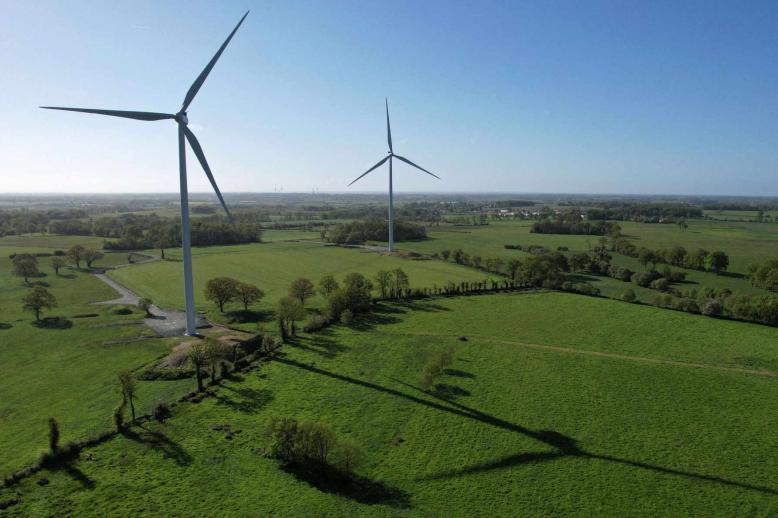
Morocco – The Errachidia PV+BESS plant (30 MWp solar + 68 MWh LFP storage on 38 hectares) will deliver full energy autonomy to an iron-ore processing facility at 1,000 meters altitude. With 6.0 kWh/m²/day solar radiation and over 3,000 sunshine hours annually, the project boasts a competitive LCOE of $35–45/MWh and a projected payback of 6–8 years. National goal by 2030: 2 GW solar and 2 GWh storage to decarbonize the entire mining sector.
West Africa – Advanced negotiations are underway in Nigeria (Africa’s largest market), Ivory Coast, and Ghana to replace diesel generators and stabilize grids plagued by blackouts.
Central and East Africa – Rwanda is targeting 95% electrification of schools by 2029 using solar + storage + digital connectivity. Uganda plans 10–30 MW plants in underserved regions. Confirmed interest exists in DR Congo, Angola, and the Central African Republic, with eleven more countries in advanced talks.
Circular Economy: Turning Waste into Wealth
The partnership’s true originality lies in its integrated circular model.
- Plastic-to-Fuel (with Swiss partner EcoSwiss SA): 12,000 tons of plastic waste processed annually → 10,200 tons of synthetic fuel (70% yield), 20% syngas for self-powering the plant, and just 10% residue. The entire collection chain creates local jobs from street collectors to refinery operators.
- Moulay Bousselham Agro-Ecological Farm: 97 hectares of avocado orchards, sustainable aquaculture, and an eco-tourism village of 20 bungalows, all powered autonomously by 1 MWp solar and 1.2 MWh storage. Results: 52% self-consumption and 230 tons of CO₂ avoided yearly.
- Electric Trucks: Gotion’s G-Series batteries (116 kWh, 175 Wh/kg, 10,000-cycle lifespan) enable 1,000 km range trucks that recharge to 80% in just 12 minutes using G-Current Megawatt technology – a game-changer for freight on a continent still dominated by diesel.
A Symbiosis That Changes Everything
The strength of the Marita-Gotion partnership is elegantly simple: each party supplies what the other cannot easily acquire.
Marita brings irreplaceable local legitimacy, governmental trust, and thirty years of African know-how.
Gotion delivers world-class LFP technology, the Kenitra Gigafactory, and a global supply chain.
Together they are building something rarer than a simple technology transfer: a fully integrated, replicable ecosystem spanning green energy, smart storage, electric mobility, industrial decarbonization, and circular economy – from Casablanca to Kinshasa, Dakar to Kampala.
The African Development Bank has already given its agreement in principle to support the initiative, granting early institutional credibility and opening doors to multilateral financing. In a continent that requires $25 billion in annual energy investment to reach universal electricity access, Marita-Gotion stands out as one of the few truly bankable, scalable, and locally rooted models.
The story is only beginning. Challenges remain – financing costs, logistics, regulatory harmonization. Yet for the first time in years, a major African industrial player and a global technology leader have perfectly aligned their capabilities, capital, and timelines around a single vision.
That vision has a name: Green Africa.