

Financial paralysis
Liquidity crisis chokes daily life in government-held Yemen
Public sector workers, including both civilian and military personnel, report waiting months for their wages.
Tuesday 21/04/2026
Financial paralysis
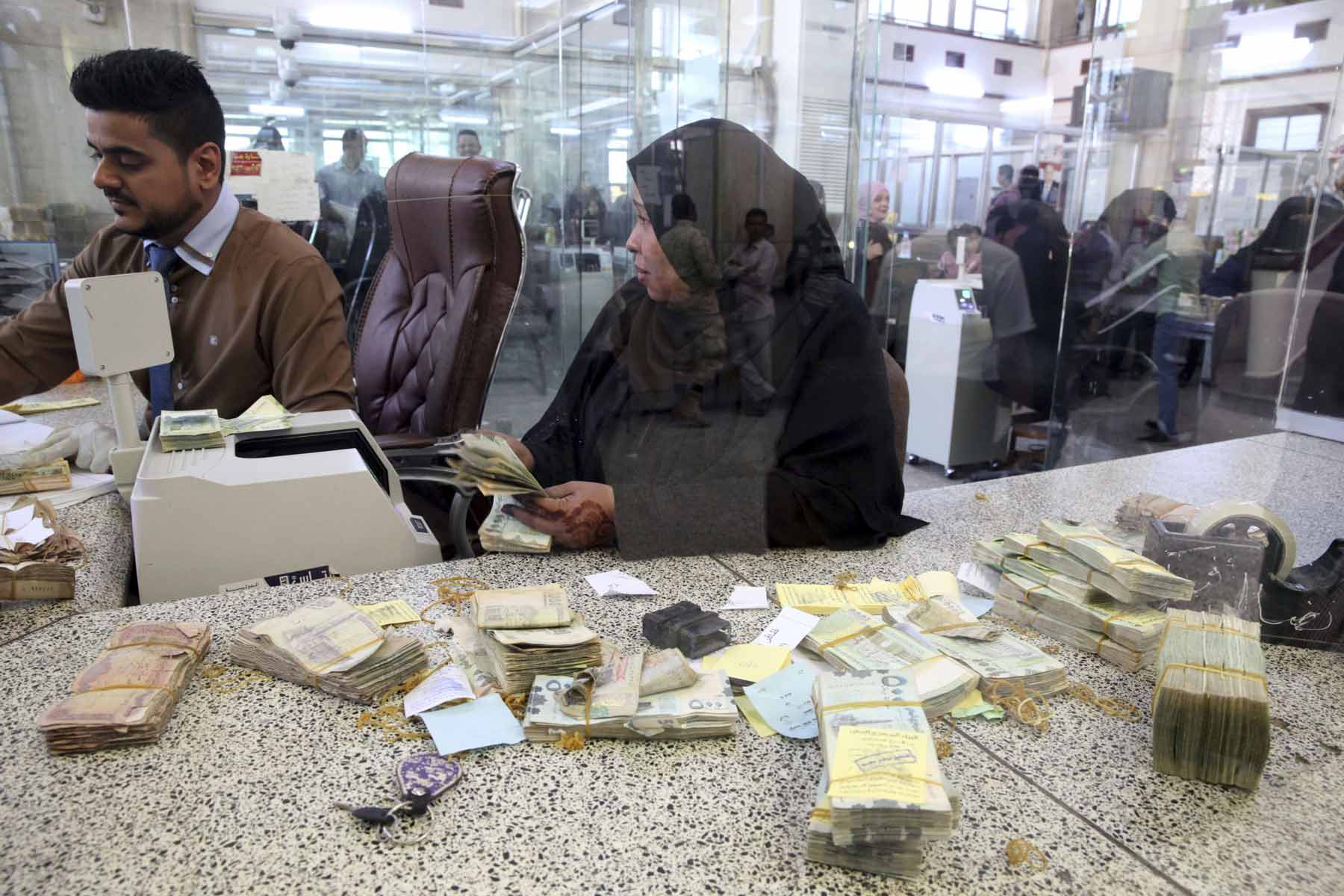
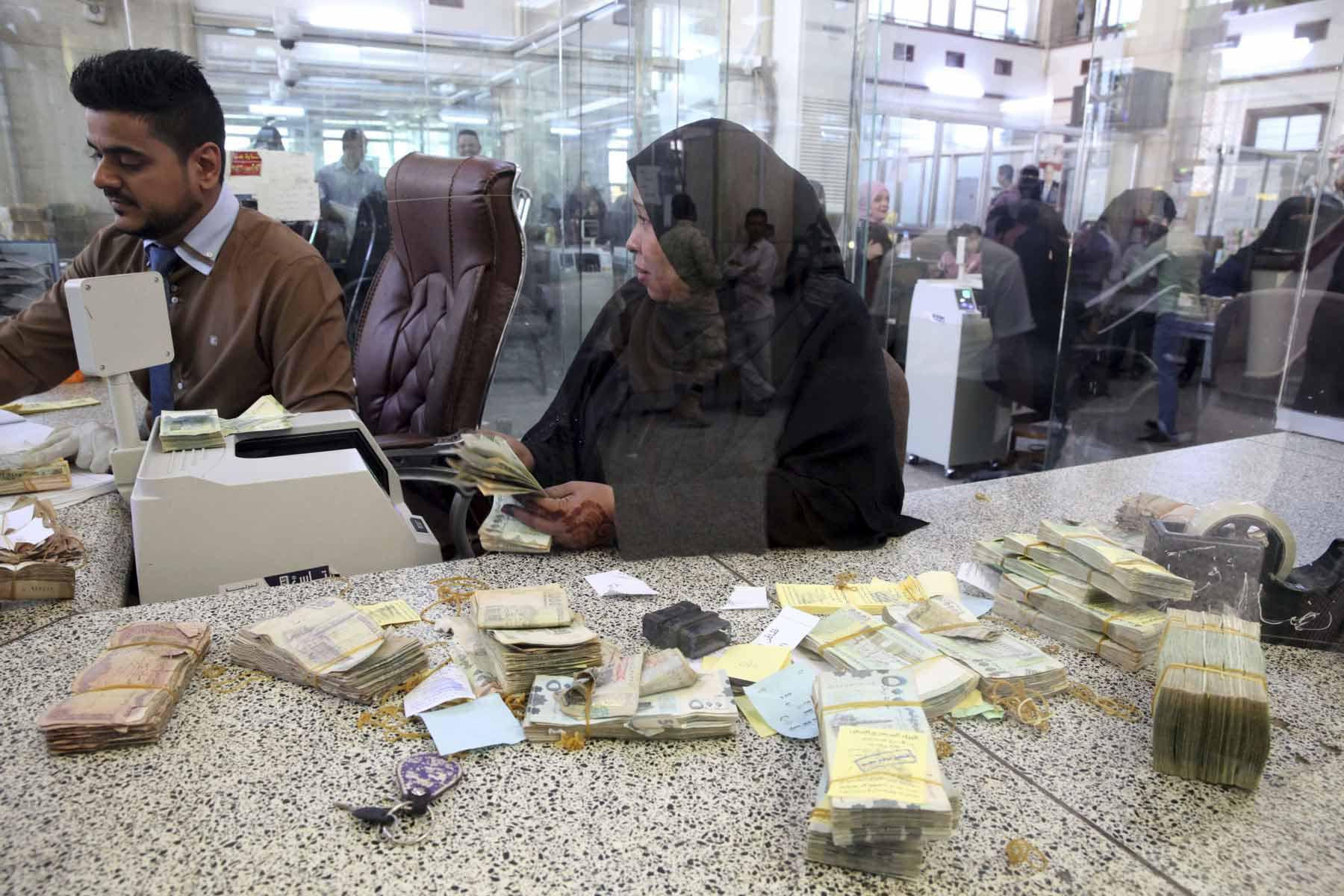
ADEN – A worsening shortage of cash is rapidly tightening its grip on government-controlled cities in Yemen, transforming what was once a financial imbalance into a daily struggle affecting households, traders and public services alike.
At the heart of the crisis lies a twin pressure: prolonged delays in salary payments and increasingly strict limits on cash withdrawals. Together, these factors are compounding hardship across southern and eastern cities such as Aden, Taiz and Mukalla, where residents say access to money, not just income, has become the central challenge of daily life.
Public sector workers, including both civilian and military personnel, report waiting months for their wages. In some cases, salaries have been delayed for up to five months; in others, they are paid partially or in irregular instalments. For thousands of families, this has forced a reliance on unstable informal income or remittances from abroad to meet basic needs.
But even when money is available, in bank accounts or transferred from abroad, it is often out of reach. Banks and exchange firms have imposed tight daily withdrawal limits, sometimes limiting withdrawals to amounts as low as the equivalent of $50 per day. These caps fall far short of covering rent, food and medical expenses, leaving households unable to manage even routine costs.
The result is a form of financial paralysis. Consumers cannot spend, traders cannot operate efficiently, and businesses are increasingly forced to shut or scale back. Yemenis describe spending hours moving between exchange shops trying to convert foreign currency, often unsuccessfully, while others resort to informal arrangements with shopkeepers or accept unfavourable exchange rates on the black market.
For some, the consequences are stark. Access to healthcare has been disrupted in cases where hospitals refuse payment in foreign currency, while exchange firms decline to convert it due to the lack of Yemeni riyals. In rural areas, where financial infrastructure is weaker, the crisis is even more acute.
This liquidity squeeze comes despite a relative stabilisation of the Yemeni riyal in recent months. Measures introduced by the Central Bank of Yemen, including tightening control over exchange operations and curbing currency speculation, helped strengthen the currency from around 2,900 to roughly 1,500 to the dollar. Yet these policies have had unintended consequences, draining cash from the market and fuelling public frustration.
Behind the crisis lies a deeper fiscal strain. Government finances have been under severe pressure since the halt in oil exports in late 2022, a critical source of revenue. This has been compounded by declining public revenues and the failure of some local authorities in resource-rich provinces such as Marib and Hadramout to remit funds to the central treasury, despite official directives.
Officials say the fragmentation of revenues, combined with large volumes of cash circulating outside the formal banking system, has severely weakened the state’s ability to manage liquidity. Significant sums are held by traders and exchange companies beyond regulatory oversight, often used for currency speculation rather than reinvested into the formal economy.
Economists argue that the crisis is not solely a question of scarcity, but also one of governance and trust. Weak revenue collection, limited financial discipline and a lack of confidence in the banking sector have encouraged individuals and businesses to hoard cash outside banks, further tightening liquidity within the banking system.
Attempts by the authorities to address the problem, including raising interest rates on local currency deposits to attract funds back into banks, have so far had limited impact. Without broader reforms, analysts warn, such measures are unlikely to tackle the structural roots of the crisis.
Meanwhile, international warnings of continued inflationary pressures add to the bleak outlook. As prices rise and access to cash remains constrained, more families are expected to reduce food consumption and adopt increasingly severe coping strategies.
For ordinary Yemenis, the crisis has moved beyond economics into the fabric of daily existence. Between unpaid salaries, restricted withdrawals and shrinking public revenues, access to cash has become as critical, and as elusive, as access to basic goods.
In that sense, Yemen’s liquidity crunch is no longer a temporary monetary distortion. It is a visible symptom of a broader breakdown: a crisis of resource management and eroding confidence in state institutions. Until that trust is restored and financial governance rebuilt, the shortage of cash is likely to persist, and with it, the slow erosion of economic life.