


A need for readiness in an evolving security environment
African Lion 2026 opens in Morocco with focus on AI, cyber warfare
This year’s edition places unprecedented emphasis on advanced warfare domains, including satellite operations, electronic warfare, cyber defence and space-based systems
Thursday 23/04/2026
A need for readiness in an evolving security environment
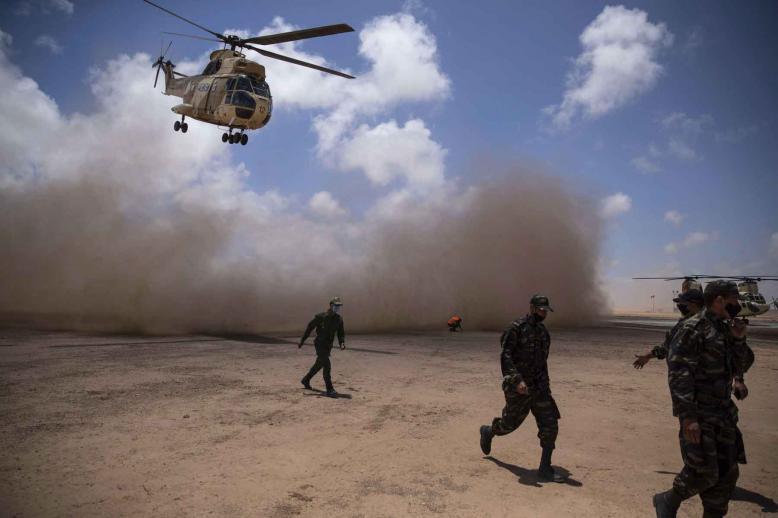
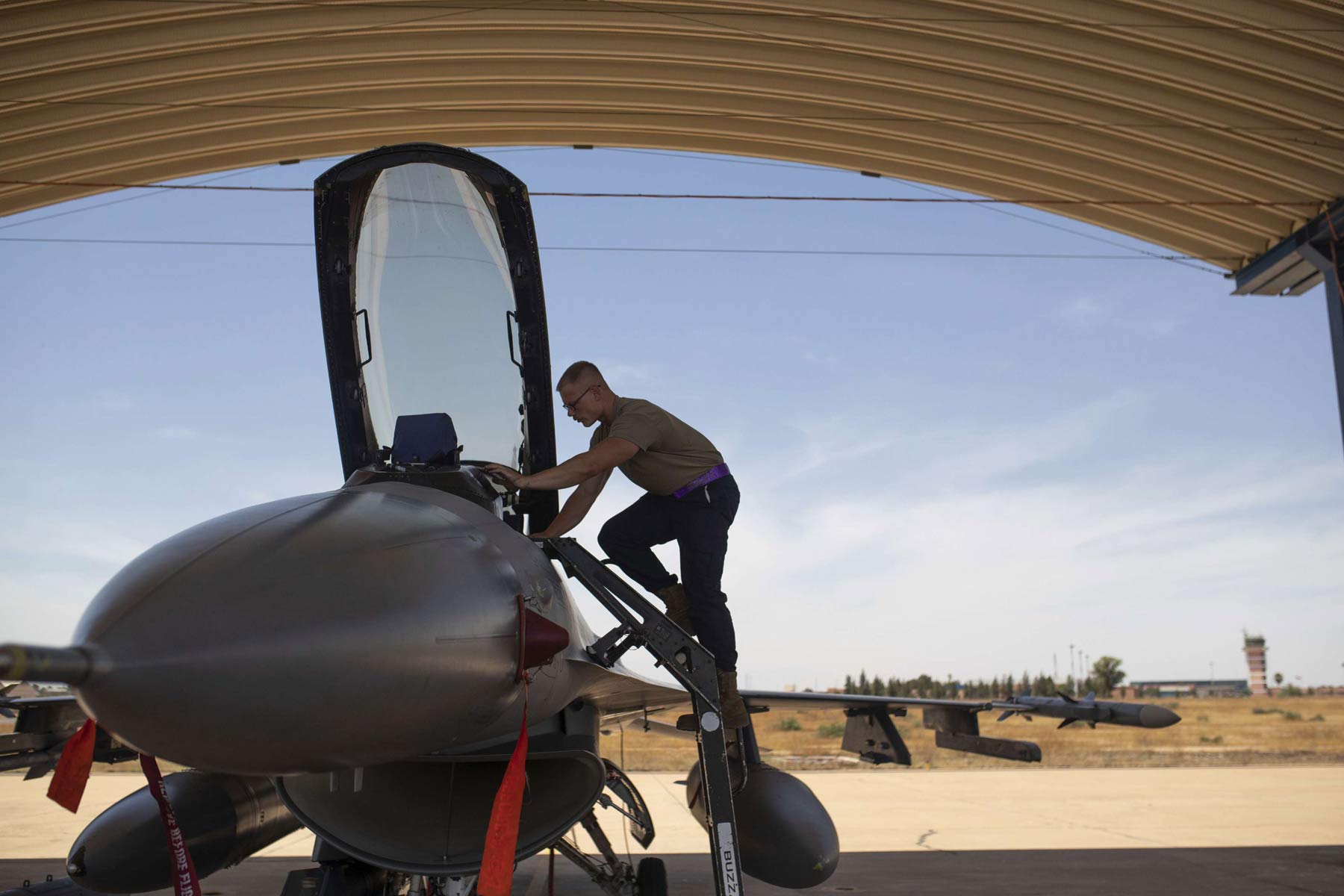
AGADIR, Morocco – The academic phase of the African Lion 2026 military exercises has begun in the Moroccan city of Agadir, bringing together more than 5,600 personnel from over 40 countries in what is billed as the largest annual multinational military drill in Africa and a key test of future warfare capabilities.
The exercise, led in coordination with the United States and Morocco, is being held at Southern Zone Headquarters from 20 April to 1 May, and forms the intellectual and operational foundation for the wider manoeuvres scheduled to continue across Morocco, Ghana, Senegal and Tunisia.
This year’s edition places unprecedented emphasis on advanced warfare domains, including satellite operations, electronic warfare, cyber defence and space-based systems, reflecting a broader shift towards preparing for technology-driven conflict.
According to US military sources, the integration of space and electronic warfare represents one of the most significant developments in this year’s iteration, as participating forces seek to adapt to rapidly evolving battlefield conditions.
Training for a multi-domain battlefield
The academic programme includes 22 intensive courses designed to prepare personnel for modern operational challenges. These range from basic instruction to advanced mission planning, with a strong focus on integrating unmanned aerial systems, strengthening cyber resilience and incorporating space capabilities into military operations.
US Marine Corps Major Keefe Murtaugh, academic coordinator for African Lion 2026, said the programme is designed to “enhance technical expertise, accelerate decision-making and improve operational effectiveness,” all of which are considered critical in reducing decision-making timelines in modern conflict.
He stressed that faster decision cycles, improved operational efficiency and enhanced technical understanding are now essential in warfare increasingly shaped by digital systems and networked command structures.
Drone training forms a central pillar of the exercise, covering both operational fundamentals and the integration of unmanned systems into broader mission planning. Participants are being trained on multiple drone platforms, including four distinct systems used for field operations.
Cyber defence is also a major component, with a 10-day course led by US specialists focusing on protecting digital infrastructure and identifying network vulnerabilities. The training spans multiple operating systems, including Windows, Linux and cloud-based environments, reflecting the complexity of modern cyber threats.
US Army First Lieutenant Mason Elizondo, speaking through US military channels, said the programme teaches participants to detect intrusions, understand attacker behaviour and track persistence within systems, skills increasingly vital for safeguarding military networks and critical infrastructure.
Artificial intelligence and the changing nature of warfare
The integration of artificial intelligence and emerging technologies into African Lion 2026 marks a significant shift from traditional training exercises towards simulations of future warfare environments.
The programme is designed to allow senior commanders, including Morocco’s Royal Armed Forces, to transition from hierarchical command structures to more flexible, network-based systems supported by AI-driven analysis, unmanned platforms and robotic systems used for explosive detection and battlefield awareness.
Military officials say the exercise provides rare opportunities to test command-and-control systems under pressure, including scenarios involving communications disruption, electronic interference and data manipulation.
Interoperability and coalition warfare
According to the US Defence Visual Information Distribution Service (DVIDS), the exercise is also focused on aligning modern military capabilities with joint training scenarios and improving interoperability between US forces, Morocco’s Royal Armed Forces and other participating nations.
The drills are intended to assess the ability of multinational task forces to operate seamlessly in complex, multi-domain environments, a capability viewed as essential for regional security cooperation.
US Air Force Lieutenant General Jason Hinds said the exercise is a critical opportunity to strengthen readiness and operational integration with African and international partners.
A major milestone was achieved earlier this year when US and Moroccan forces successfully tested secure Link-16 tactical communications, enabling encrypted voice and data exchange between coalition forces for the first time with an African partner nation. The system is designed to withstand jamming and ensure secure battlefield communication.
Morocco as a regional training hub
Morocco is also set to become the first African country to host a dedicated US-backed drone training centre, part of a broader effort to build long-term regional defence capabilities.
US Army General Christopher Donahue said the initiative aims to establish a “sustainable, enduring capability” that can later be expanded across the continent once proven effective. The centre will focus on small drones, loitering munitions, counter-drone systems and electronic warfare integration.
The development aligns with Morocco’s growing defence-industrial base, particularly in the Benslimane region near Casablanca, which is emerging as a hub for unmanned systems and aerospace technologies.
The area is already hosting multiple defence investments, including production facilities for loitering munitions and drone systems, alongside planned maintenance centres for Western military aircraft fleets.
Expanding defence cooperation
The exercise follows renewed defence cooperation between Washington and Rabat, including a 10-year roadmap signed covering 2026–2036, which expands collaboration into cybersecurity and defence industry development.
Officials say African Lion 2026 will serve as a proving ground for deeper integration of advanced systems and coalition warfare capabilities, particularly as militaries adapt to increasingly complex hybrid threats.
US and Moroccan officers involved in the programme emphasised the mutual benefits of the training, with personnel on both sides highlighting shared operational challenges and the importance of readiness in an evolving security environment.
As training continues in Agadir, the exercise is being closely watched as a marker of how rapidly global militaries are adapting to the realities of AI-enabled, digitally contested and multi-domain warfare.