


‘No matter how much the enemy threatens, we will not retreat’
Hezbollah rejects direct Lebanon-Israel talks, warns of ‘instability spiral’
Qassem’s remarks represent one of the most forceful statements yet from the Hezbollah leader on the issue.
Monday 27/04/2026
‘No matter how much the enemy threatens, we will not retreat’
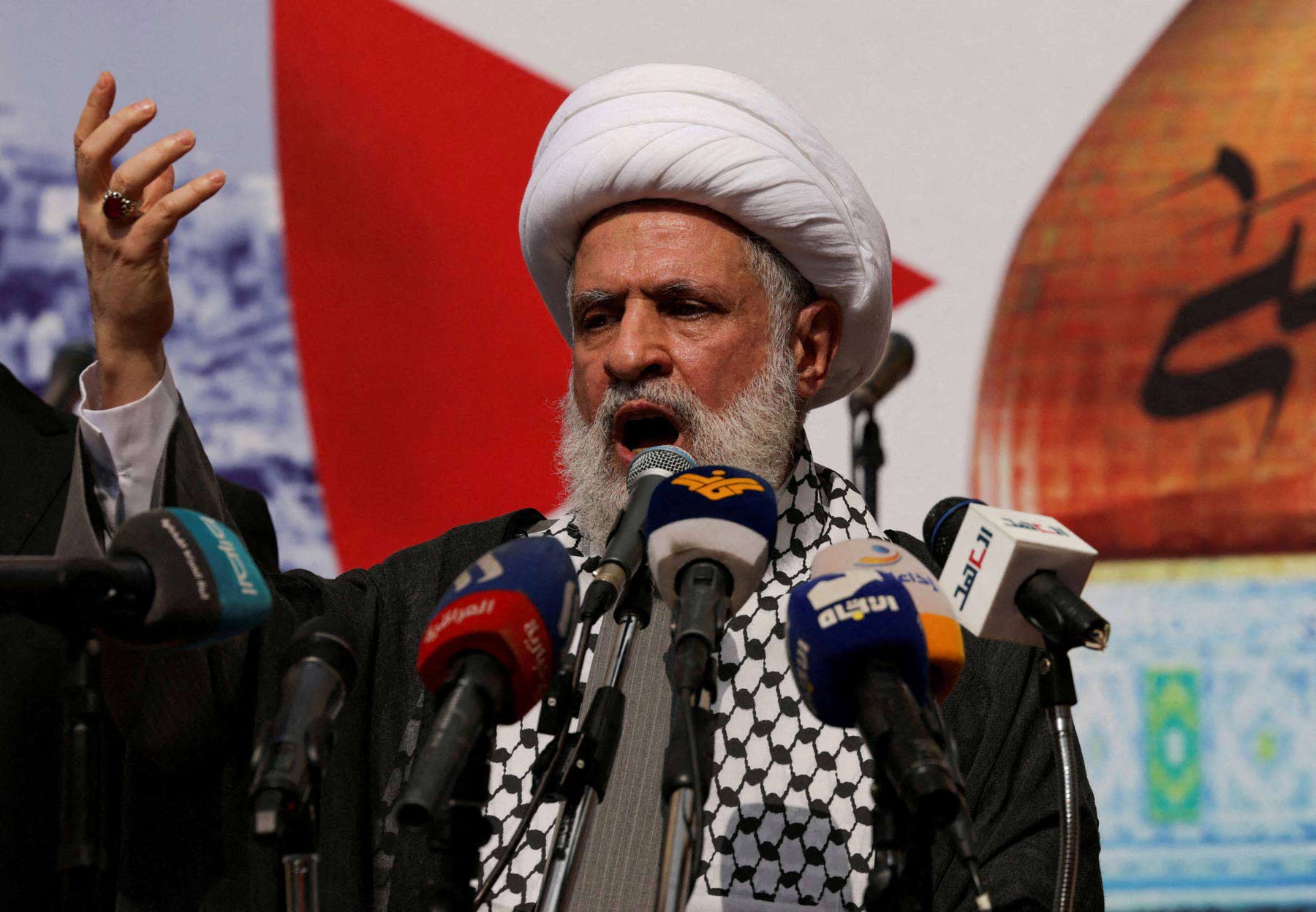
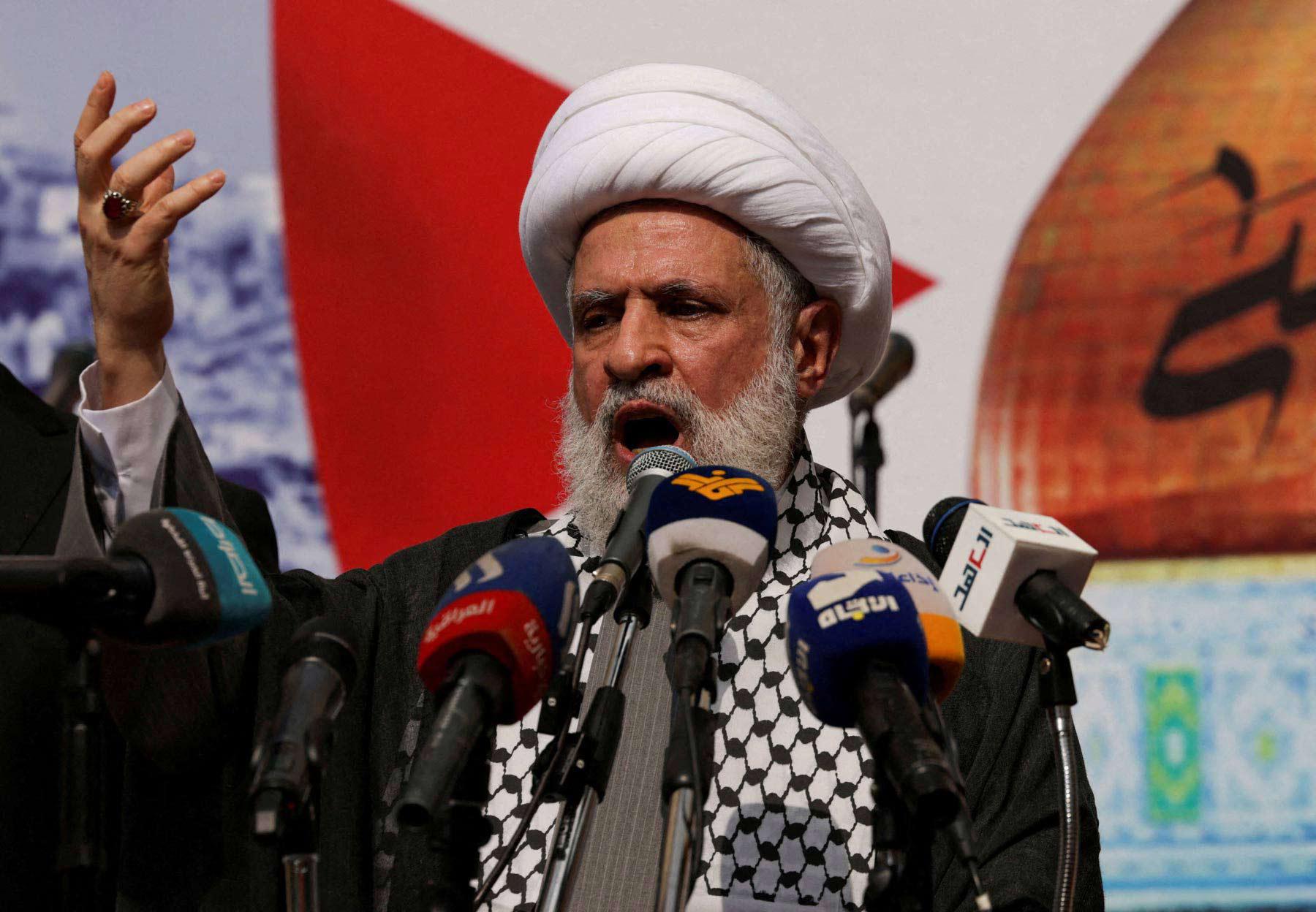
BEIRUT – Hezbollah’s Secretary-General Sheikh Naim Qassem on Monday issued a sharp warning against any direct negotiations between the Lebanese state and Israel, describing such talks as a “grave sin” and cautioning that they could plunge Lebanon into a “spiral of instability.”
His remarks represent one of the most forceful statements yet from the Hezbollah leader on the issue, going beyond the group’s traditional political objections to touch on explicit warnings over Lebanon’s fragile internal balance. The timing has raised concerns over the risk of renewed domestic confrontation in a country still scarred by past political and sectarian violence, including the 2008 clashes in Beirut.
In a televised statement carried by Hezbollah’s Al-Manar channel, Qassem said: “We categorically reject direct negotiations, and let those in authority know that their conduct will benefit neither Lebanon nor themselves.”
He added that the current leadership “cannot continue while it squanders Lebanon’s rights, concedes land, and confronts its own resistant people”, calling on the authorities to “retract their dangerous mistakes that are placing Lebanon in a spiral of instability, halt direct negotiations with the Israeli enemy, and adopt indirect negotiations instead.”
The comments come against the backdrop of limited, US-backed diplomatic contacts between Lebanon and Israel, including indirect and intermediary-facilitated talks held in Washington in recent months, aimed at stabilising the situation along the southern border and managing ceasefire arrangements following intensified cross-border violence.
Lebanese officials have consistently said the purpose of diplomatic engagement is to secure a halt to hostilities, Israeli withdrawal from southern Lebanon, and the return of displaced civilians after more than a million people were uprooted during recent escalations.
Qassem, however, dismissed the ongoing diplomatic track entirely, saying: “These direct negotiations and their outcomes are as if they do not exist for us, and they do not concern us in any way.”
He further warned: “We will continue our defensive resistance for Lebanon and its people … We will respond to Israeli aggression and confront it. No matter how much the enemy threatens, we will not retreat, we will not bow and we will not be defeated.”
He also insisted that Hezbollah would not abandon its weapons, stating that “we will not relinquish our arms or our defence,” and adding that Israeli forces “will not remain on a single inch of our occupied land.”
Rising tensions and historical parallels
Analysts say Qassem’s use of the term “grave sin” goes beyond political disagreement and enters the realm of ideological red lines, signalling that Hezbollah views direct state-to-state talks as a strategic threat to its role and legitimacy.
The language has revived comparisons with Lebanon’s 2008 crisis, when Hezbollah forces briefly seized parts of Beirut following a dispute over the group’s communications network and security infrastructure.
While today’s context differs significantly, observers warn that escalating rhetoric could still translate into internal paralysis or confrontation.
Unlike 2008, however, Hezbollah is now operating under far greater strain, including sustained Israeli military pressure in the south, economic collapse across Lebanon, and large-scale displacement in areas traditionally considered its support base. These constraints, analysts say, may limit its willingness or ability to escalate into open internal conflict, even as its rhetoric remains uncompromising.
Still, Qassem’s warning that instability could follow government decisions is widely seen as a form of internal deterrence, aimed at discouraging Beirut from deepening or formalising any direct diplomatic engagement with Israel.
Fragile ceasefire and ongoing violence
Despite a declared ceasefire arrangement, Israel continues to carry out air and artillery strikes in southern Lebanon, alongside demolition operations in border villages. Beirut has accused Israel of repeatedly violating the truce, while Israel says it retains the right to act in self-defence.
Hezbollah has continued to claim attacks on Israeli positions in northern Israel and along the border area, arguing that its actions are defensive in nature.
The ceasefire framework, supported by the United States, has not ended hostilities entirely. According to Lebanese health authorities, thousands have been killed since the latest round of conflict began, with continued casualties reported even after the truce took effect.
Internal political pressure
Qassem also questioned Lebanon’s political direction, asking: “Has the authority decided to work alongside the Israeli enemy against its own people?”
His comments underline mounting friction between Hezbollah and Lebanon’s governing institutions over how to manage negotiations, sovereignty, and security policy.
The Hezbollah leader’s intervention is likely to further complicate already fragile political calculations in Beirut, where officials are attempting to balance international pressure for diplomatic engagement with internal divisions and the risk of destabilisation.
For now, Lebanon’s political trajectory appears increasingly contested, with the government’s negotiating approach facing open rejection from one of the country’s most powerful armed and political actors, raising fresh uncertainty over whether diplomacy or confrontation will define the next phase of the conflict.