

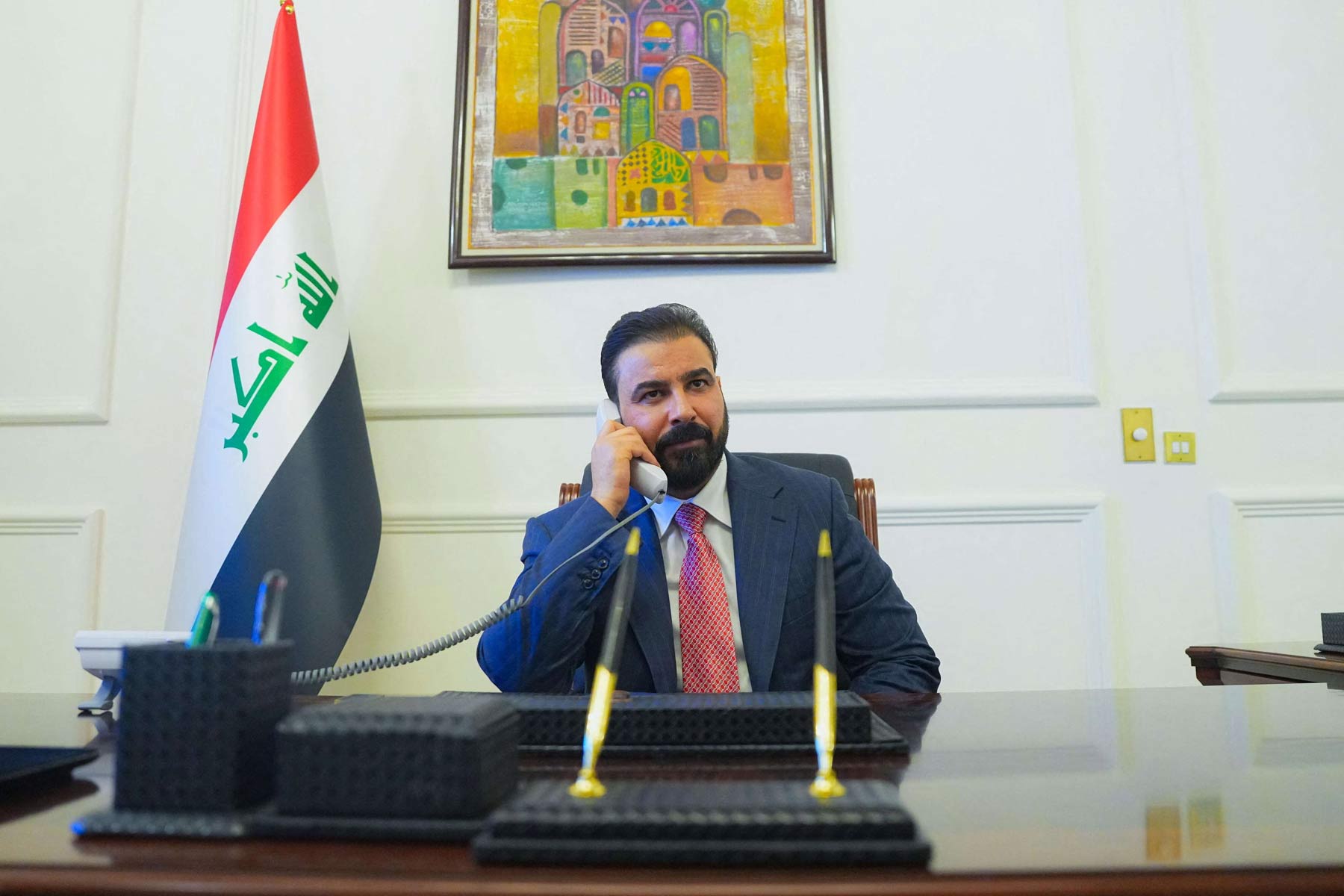
A compromise figure rather than a traditional political heavyweight
Iraq moves to form government but faces entrenched quota disputes
Zaidi said he intended to work “with all political forces” but observers expect negotiations to remain highly contentious given entrenched rivalries and competing external alignments.
Wednesday 29/04/2026
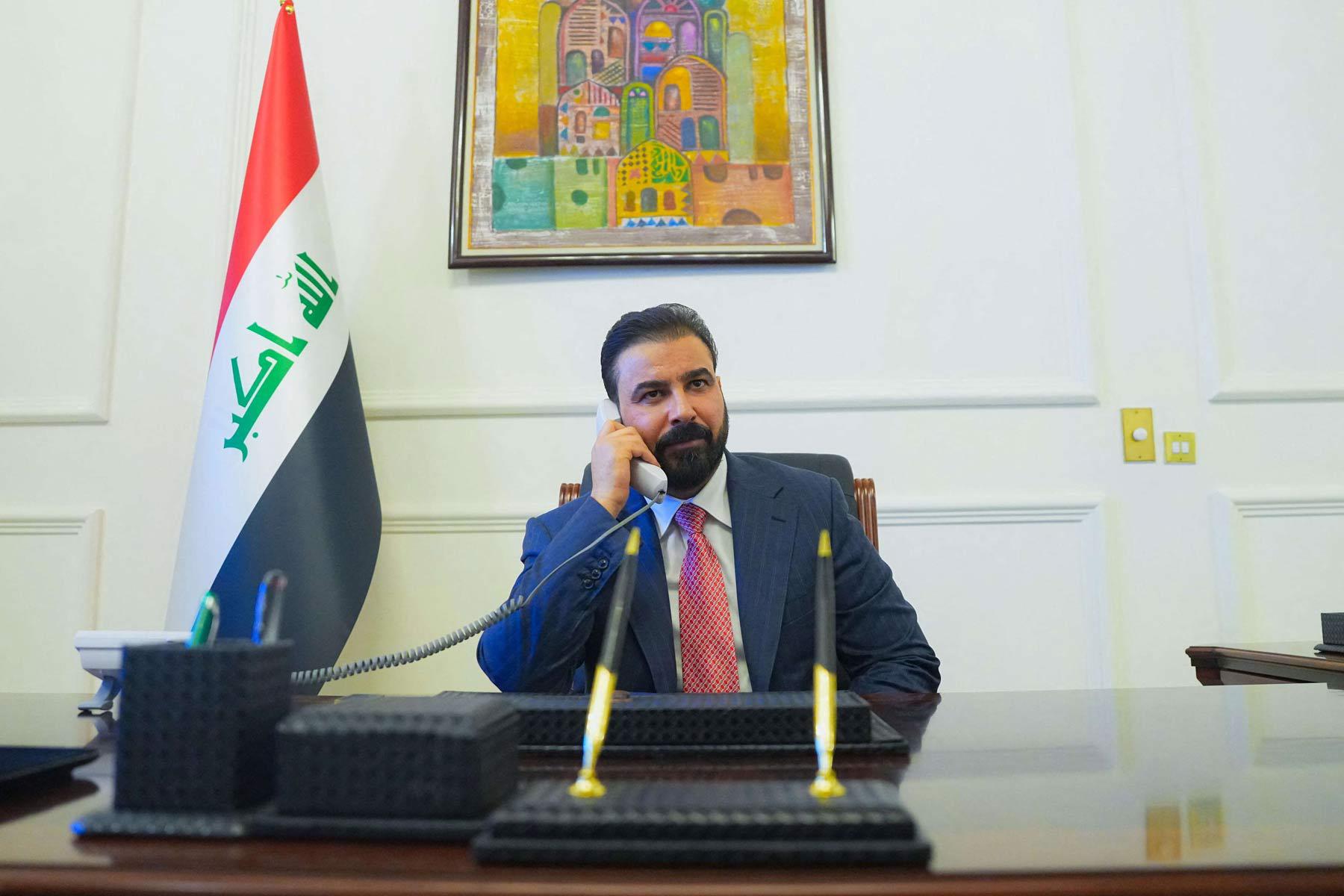
A compromise figure rather than a traditional political heavyweight
BAGHDAD – Iraqi political leaders have begun difficult and highly sensitive negotiations to form a new government after President Nizar Amedi formally tasked Ali al-Zaidi with assembling a cabinet, opening a 30-day constitutional window to complete one of the country’s most contested political processes.
The nomination, confirmed on Monday, follows more than five months of political deadlock after Iraq’s latest parliamentary elections, reflecting deep divisions over power-sharing among the country’s major Shiite, Sunni and Kurdish blocs.
Zaidi, a businessman in his 40s with interests in banking, supply chains and media ownership, is seen as a compromise figure rather than a traditional political heavyweight. He has not previously held senior government office, and his relative political neutrality was a key factor in his selection after months of deadlock.
His appointment follows intense political competition that delayed government formation for more than five months after the election, underscoring once again how Iraq’s system of power-sharing continues to produce prolonged negotiations over cabinet posts and institutional control.
Despite agreement on Zaidi as a nominee, officials acknowledge that the most difficult phase is now beginning: dividing ministerial portfolios among competing political blocs in a system still shaped by sectarian and party-based quotas.
Iraq’s political structure allocates the presidency to a Kurd, the premiership to a Shiite politician, and the parliamentary speakership to a Sunni figure, a formula designed to prevent sectarian conflict but which has entrenched complex political bargaining.
The current political crisis began after the November parliamentary elections, when competing blocs failed to agree on a governing coalition. Earlier efforts to nominate a candidate backed by the Coordination Framework, the largest Shiite parliamentary alliance, were blocked amid strong external pressure.
Former prime minister Nouri al-Maliki, a key figure within the Coordination Framework and a two-term premier with close ties to Iran, had initially been seen as a frontrunner for a return to power. However, his candidacy was ultimately abandoned after sustained political resistance.
US President Donald Trump intervened directly in the debate at the time, describing Maliki as a “failure” during his previous tenure and accusing him of supporting Iran-aligned militias. He also warned that US cooperation with Baghdad could be affected if Maliki returned to office.
Since the 2003 US-led invasion, Iraq has remained caught between competing American and Iranian spheres of influence, a dynamic that continues to shape government formation and political stability.
A political source told AFP that Zaidi’s nomination was agreed only after consultations involving representatives linked to the United States, highlighting the continued external dimension of Iraq’s domestic political process.
Victoria J. Taylor, director of the Iraq Initiative at the Atlantic Council, wrote on X that the Coordination Framework “would not have nominated al-Zaidi unless it believed the United States would accept the appointment,” adding that Washington would likely have reacted strongly to any repeat of earlier disputes involving al-Maliki.
She noted that Trump’s earlier opposition to Maliki had been “embarrassing” for Iraqi political actors, and that the bloc was keen to avoid a similar confrontation.
Zaidi’s selection also comes shortly after a visit to Baghdad by Esmail Qaani, commander of Iran’s Quds Force, who met Iraqi political leaders as part of Tehran’s ongoing engagement with allied factions in the country.
The timing underscores the continued balancing act facing Iraq’s political system, as it navigates competing regional influences while attempting to stabilise its domestic governance structure.
The new government formation process is unfolding under mounting pressure from both security and economic challenges. Iraq’s political instability has intensified in the aftermath of regional conflict involving Iran, Israel and the United States, during which Iraqi Shiite armed groups aligned with Tehran targeted US interests inside the country.
Those attacks increased diplomatic pressure on Baghdad to rein in armed factions operating outside state control, highlighting the overlap between Iraq’s domestic politics and broader regional security dynamics.
At the same time, Iraq faces growing financial strain linked to disruptions in oil export routes, which remain the country’s primary source of state revenue. Any delay in forming a stable government risks deepening economic uncertainty.
Zaidi said he intended to work “with all political forces” in order to form a government within the constitutional timeframe, but observers expect negotiations to remain highly contentious given entrenched rivalries and competing external alignments.
If successful, he will succeed outgoing Prime Minister Mohammed Shiaa al-Sudani, whose relations with the United States had been broadly stable, but whose prospects for a second term weakened amid tensions linked to regional conflict and militia activity inside Iraq.
For now, Baghdad is entering yet another familiar phase: a delicate political balancing act shaped by internal divisions and external pressures, with the outcome likely to define Iraq’s direction for years to come.