


Rising violence
EU launches new plan to protect Palestinians as Israeli violence surges
According to Palestinian data, violence in the West Bank has surged since October 2023, with more than 1,150 Palestinians reported killed, thousands injured, and around 22,000 detained.
Thursday 30/04/2026
Rising violence
WASHINGTON / RAMALLAH – The European Union has unveiled a new programme aimed at assisting and protecting Palestinians affected by escalating settler violence in the West Bank, signalling a shift in Brussels’ approach as conditions on the ground continue to deteriorate.
The initiative comes amid growing international calls for concrete action to curb rising violence and provide more effective protection for Palestinian civilians.
During a visit to the village of Al-Mughayyir, east of Ramallah, EU representative to Palestine Alexandre Stutzmann described settler attacks as a “wake-up call” requiring urgent intervention. While acknowledging that not all incidents can be prevented, he said the EU is working to ensure such attacks do not recur through a combination of political and humanitarian measures.
The announcement was made during a field visit involving several foreign ambassadors and Christophe Bigot, the EU’s Special Representative for the Middle East Peace Process. The delegation assessed conditions in areas affected by repeated attacks, against a backdrop of intensifying security and humanitarian tensions.
The programme adopts a multi-layered approach. It includes the establishment of on-the-ground mechanisms to assist victims, direct support for affected communities, and consideration of volunteer-based groups that could provide a form of “preventive protection” for civilians in high-risk areas. While details remain under discussion, the concept points to a more active, albeit indirect, European presence on the ground.
In parallel, the EU is examining tougher political measures within its institutions aimed at increasing pressure to curb settler violence, which European officials say has escalated sharply in recent months. The initiative reflects a broader strategy combining humanitarian assistance with diplomatic and political tools.
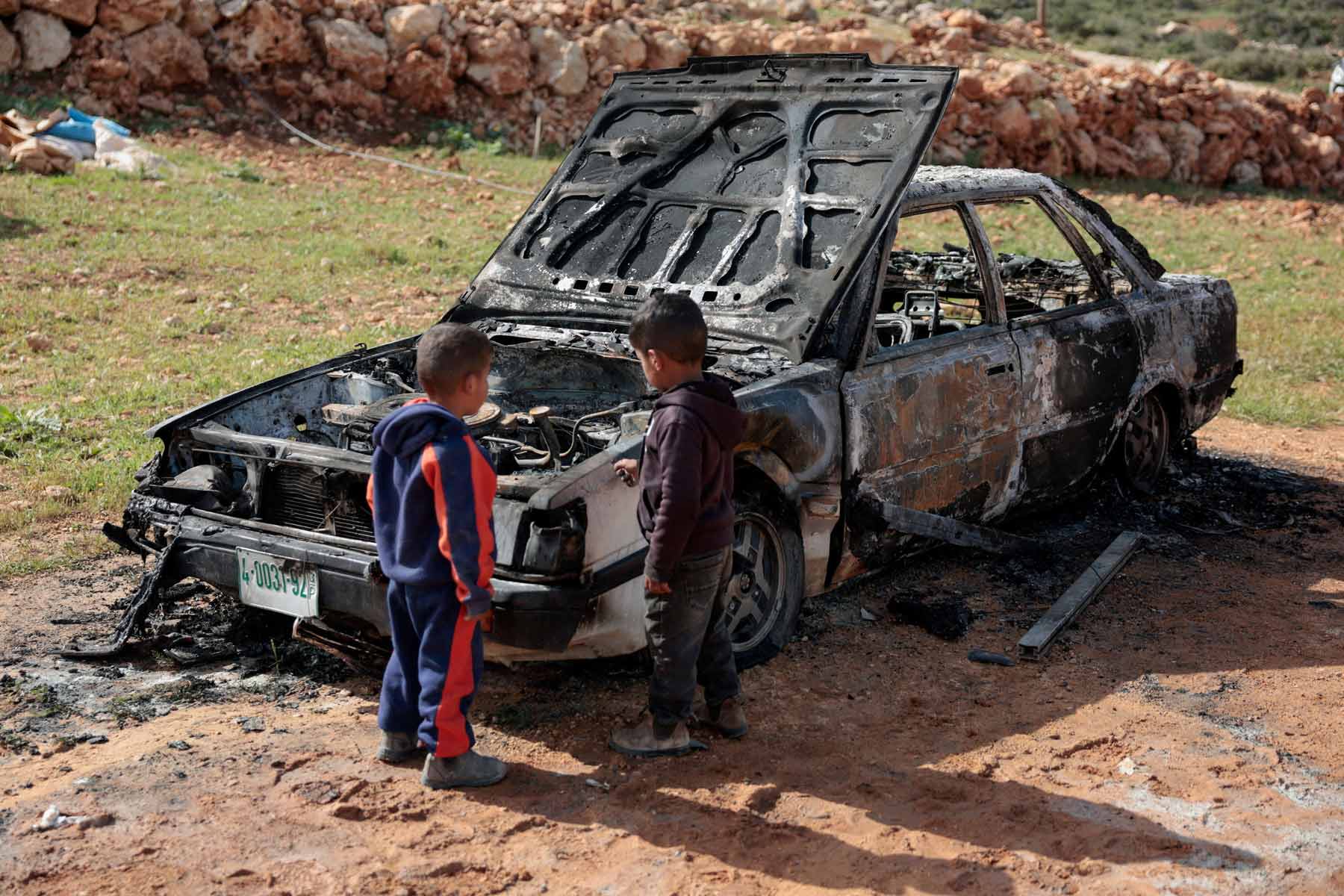
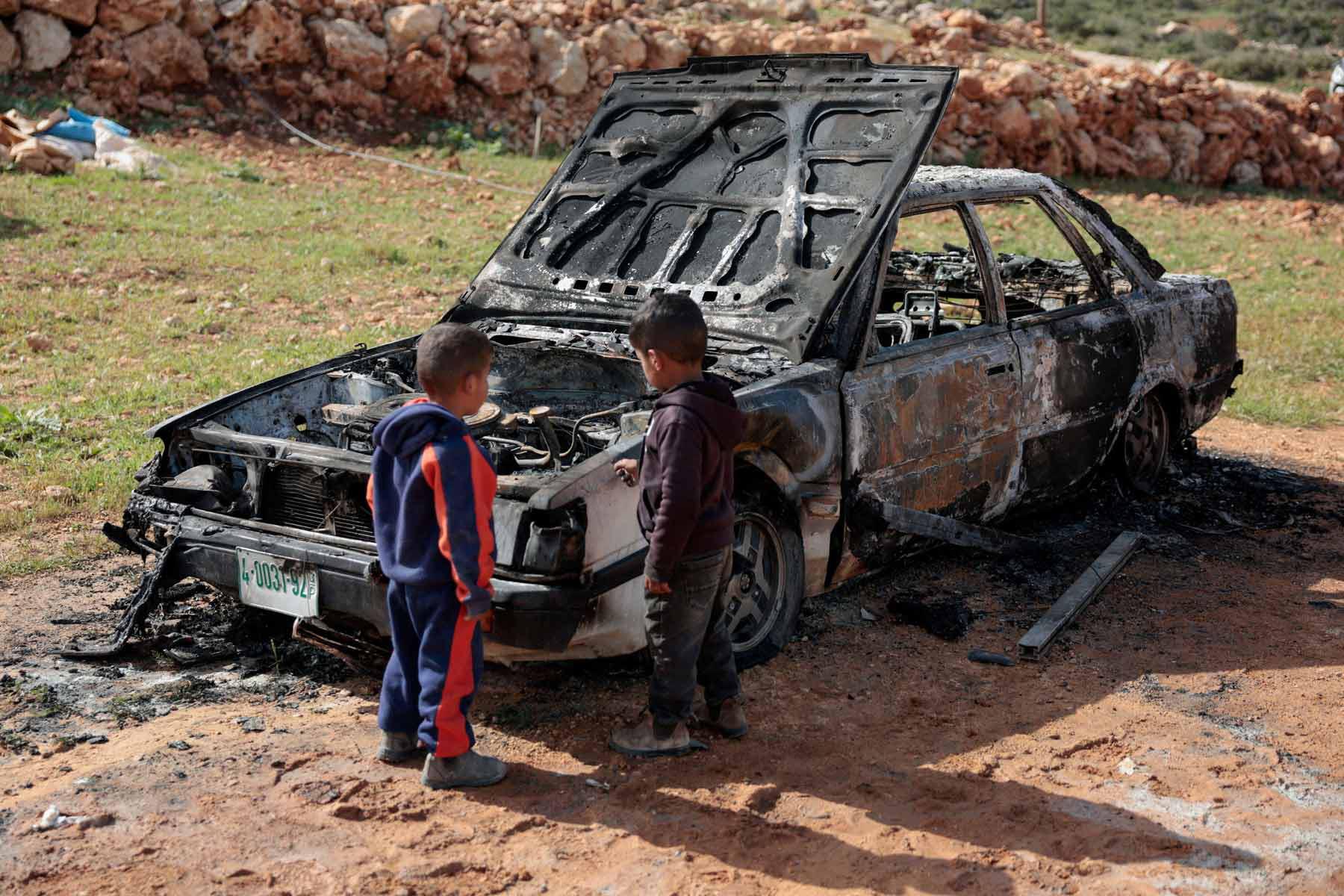
According to Palestinian data, violence in the West Bank has surged since October 2023, with more than 1,150 Palestinians reported killed, thousands injured, and around 22,000 detained. Attacks on villages and agricultural areas have intensified, triggering internal displacement and worsening living conditions.
The incident in Al-Mughayyir has become emblematic of this escalation. Palestinian sources say two people, including a child, were killed in a settler attack there, prompting widespread condemnation and helping galvanise European diplomatic engagement.
EU officials warn that the continuation of such violence poses a direct threat to stability not only in the Palestinian territories but across the wider region. This has driven a move beyond traditional statements of condemnation towards more practical, field-based responses, with “preventive protection” emerging as a key concept.
The initiative also reflects mounting internal pressure within Europe for a clearer and more assertive stance on developments in the West Bank. Brussels is seeking to reinforce its role as both a political and humanitarian actor, while improving coordination between its various policy tools.
The move comes against a complex regional and international backdrop, where security concerns intersect with diplomatic efforts to revive a stalled peace process. Despite continued EU support for a two-state solution, ongoing violence continues to undermine prospects for a sustainable political settlement.
In parallel diplomatic efforts, Palestinian Prime Minister Mohammad Mustafa met Bigot in Ramallah to discuss the worsening situation. He highlighted what he described as escalating Israeli measures, expanding settlements and the humanitarian crisis in the Gaza Strip, worsened by restrictions on aid.
Mustafa also pointed to mounting economic strain caused by the withholding of Palestinian tax revenues by Israel, calling on the EU to increase political and financial support and to press for the release of the funds.
Bigot reiterated the EU’s opposition to settler violence and expressed support for renewed efforts to advance peace based on a two-state framework. He also reaffirmed continued European assistance to Palestinians, including humanitarian and development aid, alongside efforts to stabilise ceasefire arrangements in Gaza.
While the EU hopes the new programme will help ease tensions and improve safety for vulnerable communities, significant challenges remain. These include coordination on the ground and the practical limits of enforcing protection amid a volatile security environment.
Ultimately, the success of the initiative will depend on cooperation from all parties involved and on the EU’s ability to translate political commitments into tangible action.
The programme marks a gradual shift in European policy, from largely declaratory positions to attempts at building operational mechanisms for protection and support. Yet with violence persisting and no clear political horizon in sight, the situation in the Palestinian territories remains highly uncertain.