


Sharif: Pakistan will always stand firmly with Saudi Arabia
Pakistan’s PM meets Saudi crown prince, expresses ‘full solidarity’
The visit of the Pakistani premier to Saudi Arabia comes after he held a phone talk on Wednesday with Iranian President Masoud Pezeshkian.
Friday 13/03/2026
Sharif: Pakistan will always stand firmly with Saudi Arabia
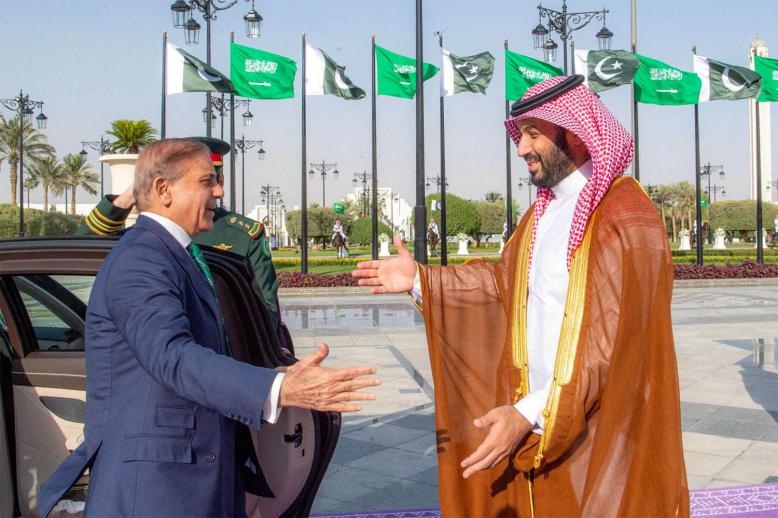
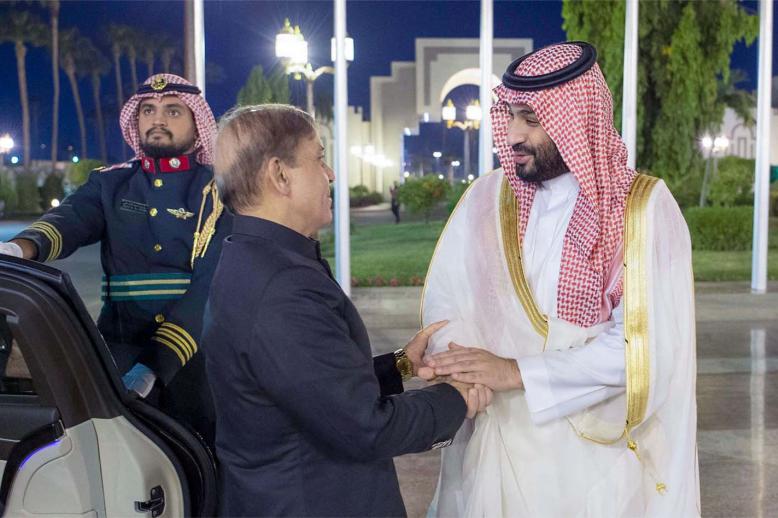
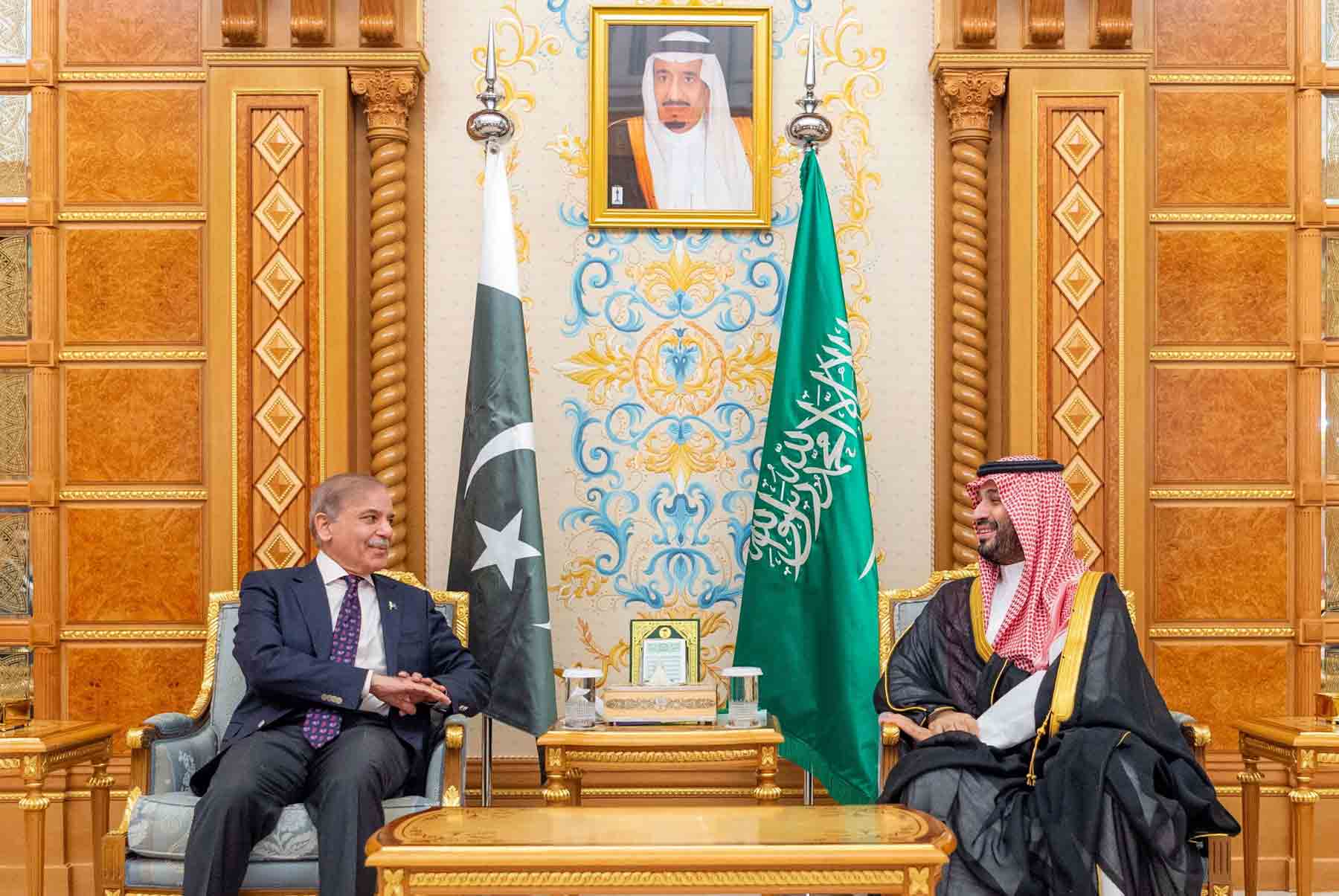
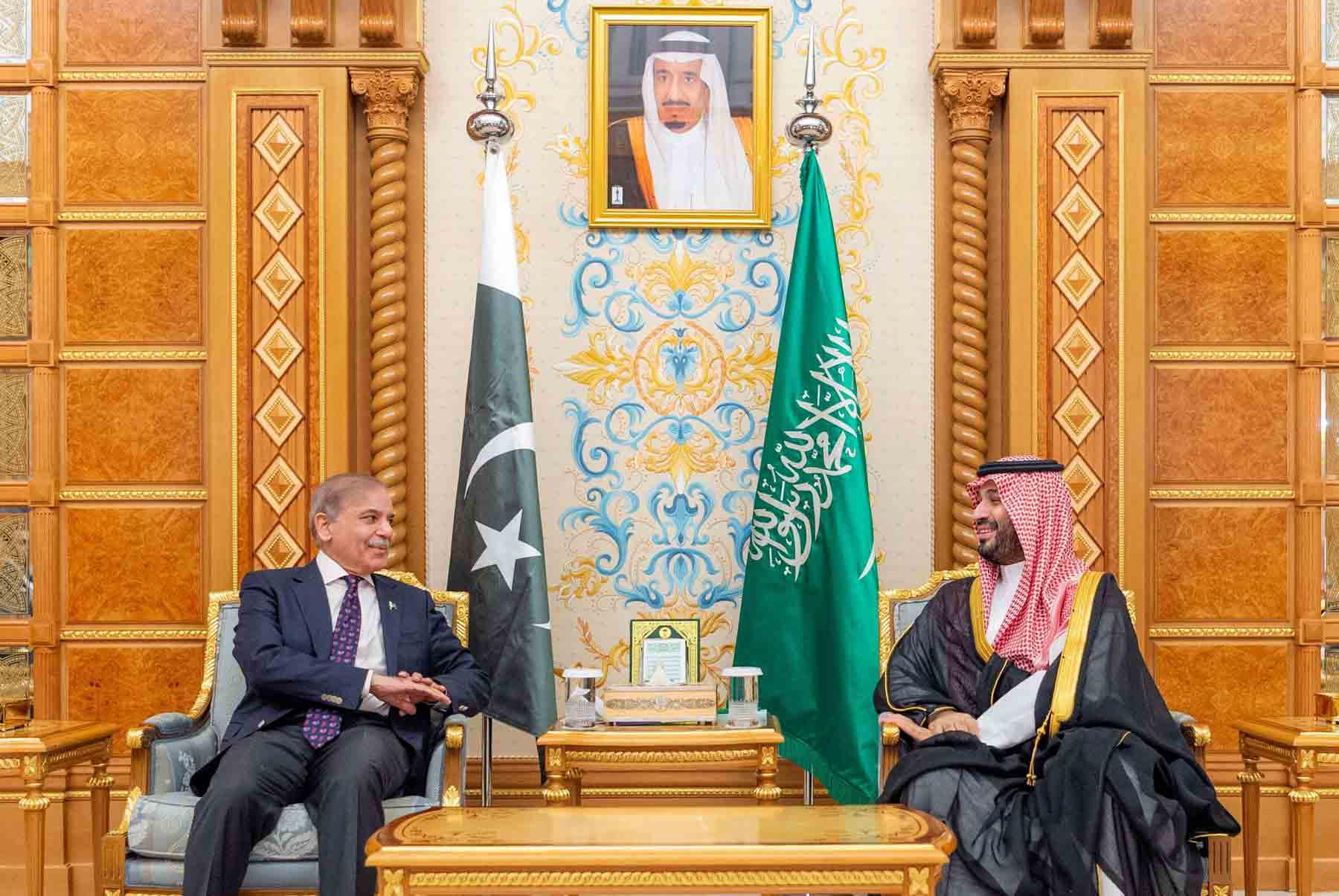
RIYADH – Pakistan’s Prime Minister Shehbaz Sharif met Saudi Crown Prince Mohammed bin Salman in Jeddah on Thursday, where the two leaders discussed regional developments, the prime minister’s office said.
The meeting comes as the Middle East grapples with escalating conflict, including tensions involving Israel, the United States and Iran.
“The Prime Minister expressed Pakistan’s full solidarity and support for the Kingdom of Saudi Arabia in these challenging times,” Mosharraf Zaidi, a spokesman for Sharif, shared a press release from his office on X, adding that the two leaders held an in-depth exchange of views on recent regional developments and agreed to work together for peace and stability.
Sharif also assured the crown prince that Pakistan would always stand firmly with Saudi Arabia, the post read.
The visit of the Pakistani premier comes after he held a phone talk on Wednesday with Iranian President Masoud Pezeshkian, who told him that the only way to end the ongoing conflict between the US, Israel and Iran is through recognising his country’s “legitimate rights” and firm international guarantees against “future aggression."
Last September, Pakistan and Saudi Arabia signed a mutual defence pact pledging that any attack on one country would be treated as an attack on both.
As a flurry of diplomacy continued, Pakistan's Foreign Minister Ishaq Dar on Thursday held a phone call with his Azerbaijani counterpart Jeyhun Bayramov.
The top diplomats discussed the latest regional developments and bilateral matters of mutual interest, Dar said on US social media company X.
The escalation in the Middle East flared since Israel and the US launched a joint attack against Iran on February 28, killing more than 1,300 victims to date, including then-Supreme Leader Ayatollah Ali Khamenei and over 150 schoolgirls.
Iran has retaliated with drone and missile strikes targeting Israel, Jordan, Iraq, and Gulf countries hosting US military assets, killing at least eight US service members and injuring some 140 others.
At least three Pakistani citizens have also lost their lives amid the ongoing conflict in the Middle East.
Iran has also closed the Strait of Hormuz since around March 1, sending oil prices surging. The narrow shipping lane handles about 20 million barrels of oil daily and roughly 20 percent of the global liquefied natural gas trade.
Pakistan, which relies on oil imports, has hiked petroleum prices since and is in talks with Saudi Arabia to secure oil shipments from the Red Sea route.