

Kuwait holds the Iraqi government ‘fully and directly responsible’
Rocket strike, consulate assault push Kuwait-Iraq relations to brink
For Kuwait and Iraq, the episode revives old wounds that neither side has fully overcome.
Thursday 09/04/2026
Kuwait holds the Iraqi government ‘fully and directly responsible’
KUWAIT CITY/BAGHDAD – A violent assault on Kuwait’s consulate in Basra and competing claims over a deadly missile strike near the Kuwaiti border have plunged Kuwait and Iraq into a new diplomatic confrontation, exposing how the wider Iran-linked regional war is inflaming already fragile relations between the two neighbours.
The crisis erupted after missiles struck a house in the Al Zubair district of Basra province on Tuesday, killing at least three civilians and injuring several others. Iraqi officials said the attack came from the direction of Kuwait, though Kuwait categorically denied that any strike was launched from its territory.
Kuwait’s Foreign Ministry insisted the Gulf state was “not a party to any regional or international dispute, and it has not and will not allow its territory to be used to launch an attack on any country.”
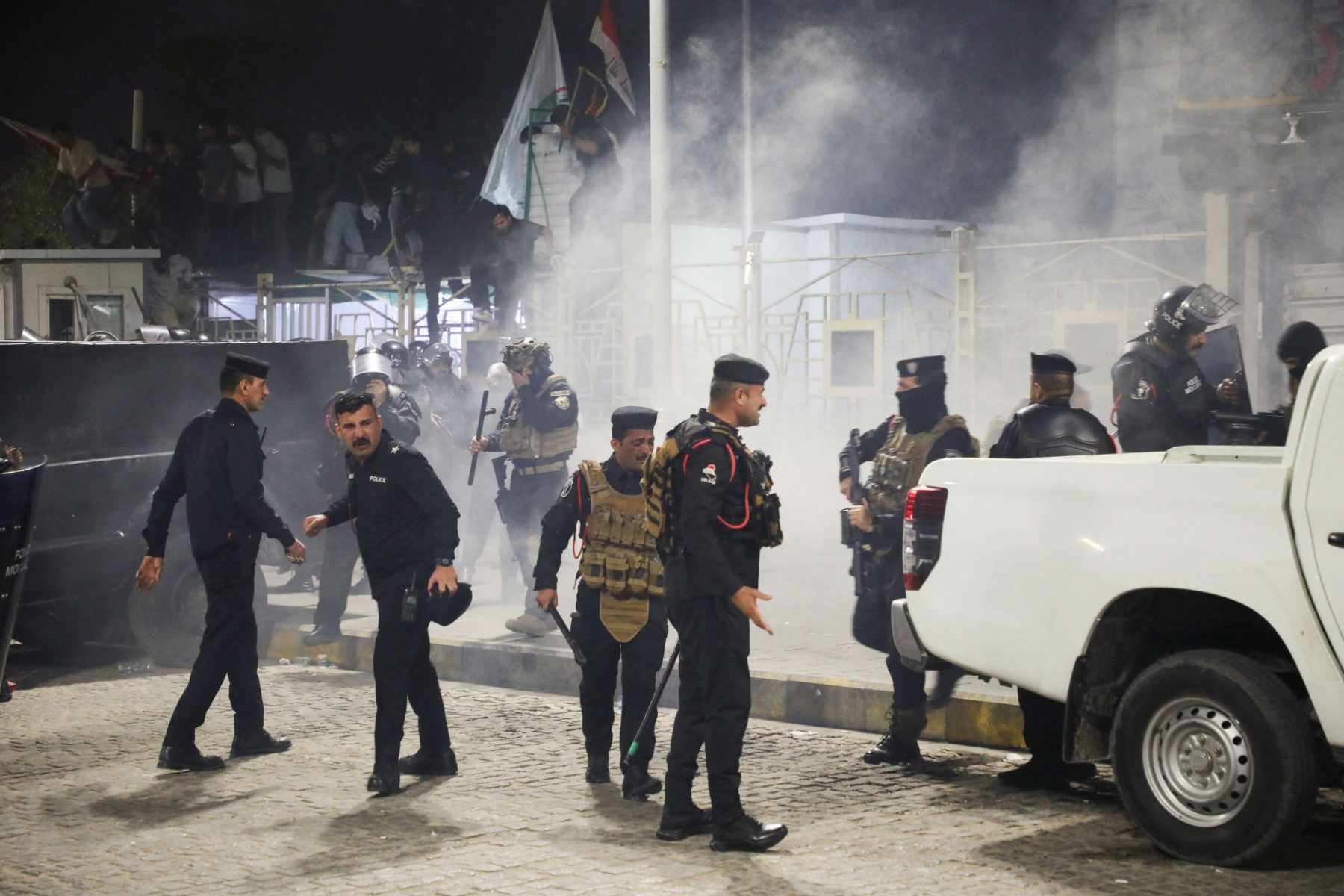
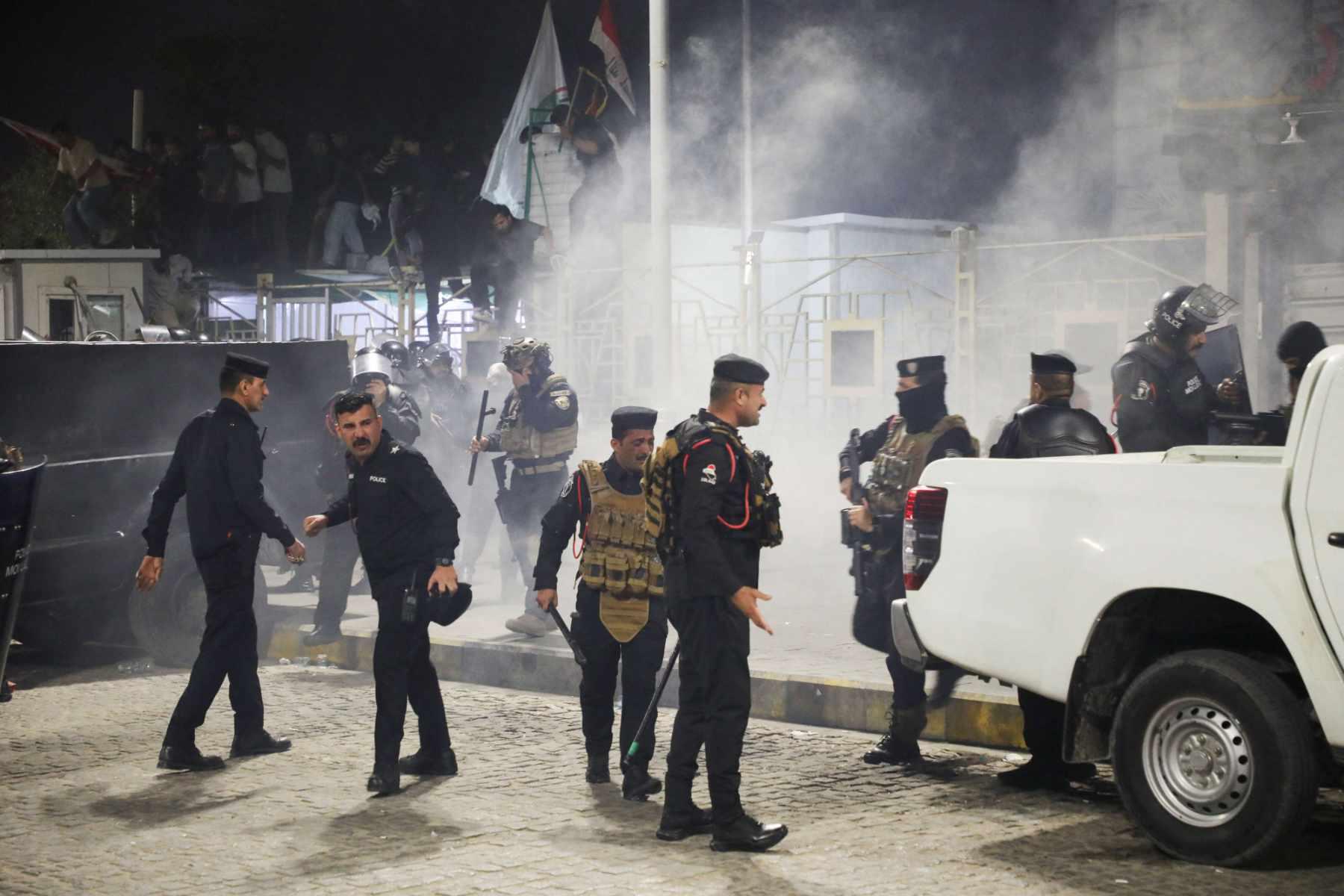
Hours after the strike, angry crowds gathered outside Kuwait’s consulate in Basra. Protesters, many carrying flags of the Popular Mobilisation Forces and Kataib Hezbollah, attempted to storm the building. Some climbed onto the roof and pulled down the Kuwaiti flag before riot police dispersed them with tear gas.
In response, Kuwait summoned Iraq’s chargé d’affaires and lodged an official protest, condemning what it called “acts of vandalism and destruction” targeting the consulate and warning that the incident constituted a grave violation of international diplomatic norms.
“The Kuwaiti government holds the Iraqi government fully and directly responsible for this attack and any negligence in taking necessary measures to protect diplomatic and consular missions on its territory,” the ministry said.
Baghdad, meanwhile, condemned the assault on the consulate and said it “strongly rejects any transgression or violation of diplomatic and consular missions.” Iraq’s Foreign Ministry announced that a special investigative committee had been formed by the Interior Ministry to examine the circumstances surrounding the attack.
At the same time, Iraq also denounced the missile strike in Basra, calling it “a dangerous and unacceptable escalation,” and urged respect for Iraqi sovereignty and territorial integrity.
The diplomatic rupture comes against the backdrop of a wider Middle East war that has drawn Iraq increasingly into the line of fire. Since US and Israeli attacks on Iran began on February 28, Iran-backed militias grouped under the so-called Islamic Resistance in Iraq have launched repeated drone and rocket attacks on US-linked targets in Iraq and across the region.
Some of those militias have also claimed attacks on targets in Kuwait, Jordan, Saudi Arabia and Bahrain, heightening regional alarm and prompting Gulf states to pressure Baghdad to curb armed groups operating from Iraqi soil.
Basra, Iraq’s oil-rich southern province bordering Kuwait, Iran and Saudi Arabia, has become a focal point of escalating tension. Powerful Tehran-linked militias, especially Kataib Hezbollah, wield considerable influence there, and recent weeks have seen repeated missile and drone incidents affecting energy infrastructure.
The United States has also struck back against Iraqi militia positions, including Popular Mobilisation Forces units, with more than 100 fighters reportedly killed since the regional conflict began.
In a potentially calming development, the Islamic Resistance in Iraq announced on Wednesday that it was suspending military operations during the newly-brokered two-week ceasefire between Iran, the United States and Israel.
Even so, analysts warn that the Basra consulate assault reflects how easily regional confrontation can spill into bilateral disputes. For Kuwait and Iraq, the episode revives old wounds that neither side has fully overcome, while underlining how the Gulf war’s aftershocks continue to destabilise fragile regional relationships.