


Sharaa: Europe needs Syria as much as Syria needs Europe
Sharaa links EU’s security to Syria, calls for firm response to Israel
Sharaa warned that instability in Syria and the broader region was already reverberating far beyond its borders.
Friday 24/04/2026
Sharaa: Europe needs Syria as much as Syria needs Europe
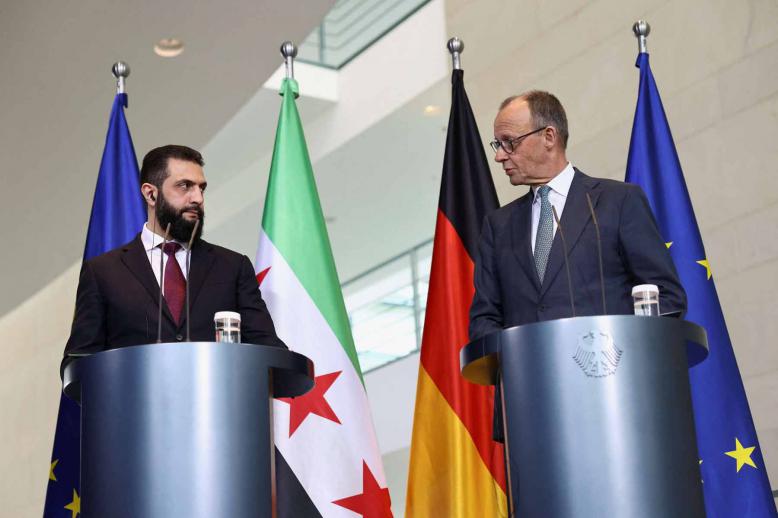
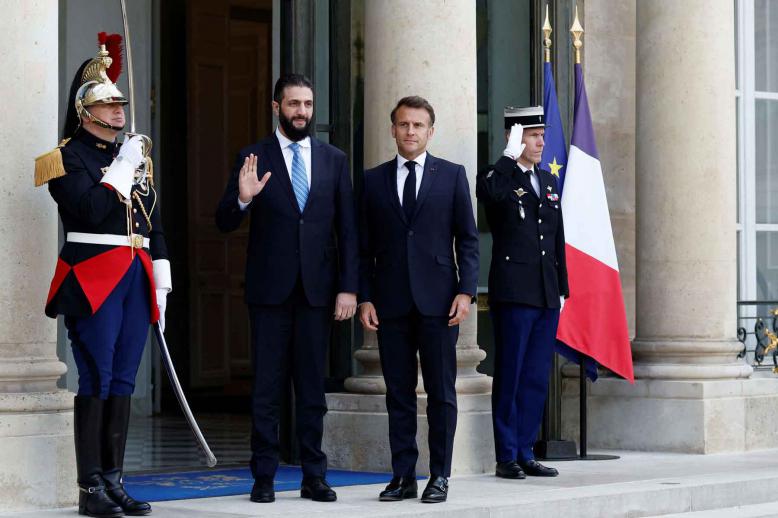
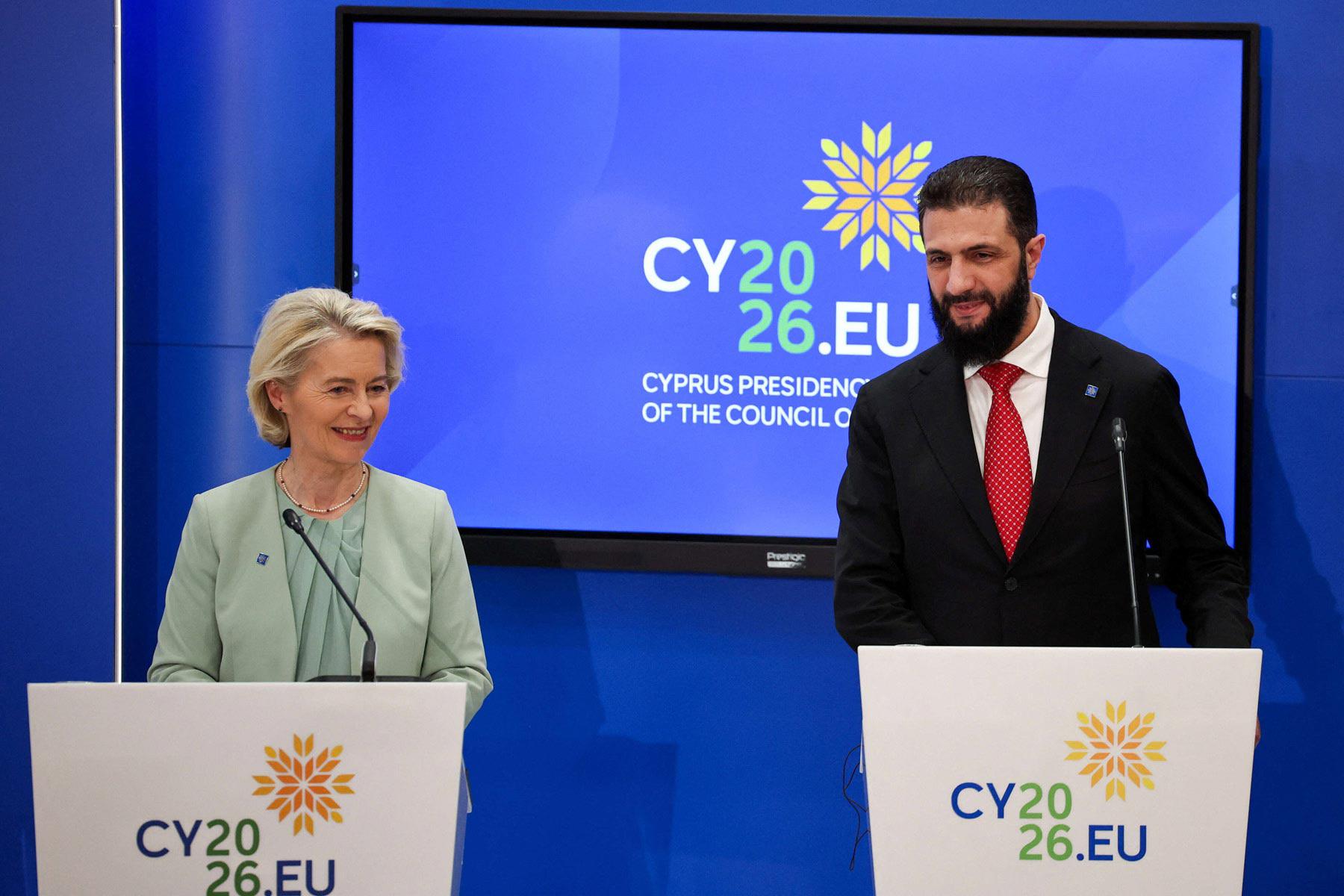
NICOSIA – Syrian President Ahmed al-Sharaa has urged the European Union to take a “firm stance” against Israeli attacks on Syria, warning that continued violations risk undermining regional stability, reconstruction efforts and global energy security.
Speaking after an emergency summit of EU leaders and regional partners in Nicosia on Friday, Sharaa framed Syria’s security as inseparable from that of Europe, calling for a renewed strategic partnership amid escalating tensions across the Middle East.
“The security of the European continent and our region represents an indivisible geopolitical balance, which requires us to act in a spirit of partnership,” he said. “I place the European Union before its responsibility regarding Israeli violations of Syrian territory, and these attacks target stability, security and reconstruction efforts in Syria.”
Sharaa’s intervention comes against the backdrop of intensifying Israeli military activity in southern Syria, where raids, checkpoints and arrests of civilians, including children and shepherds, have been reported almost daily in recent months. Since the collapse of Bashar al-Assad’s regime in December 2024, Israel has declared the 1974 disengagement agreement void and moved to occupy the Syrian buffer zone, while launching repeated air strikes that have killed civilians and destroyed military infrastructure.
At the summit, which gathered European leaders alongside counterparts from the Middle East and the Gulf, Sharaa pressed for stronger international action, reiterating his call for a return to the 1974 framework that had long governed the separation of forces between Syria and Israel.
“I would like to invite the international community to assume its responsibility vis-a-vis all the Israeli aggressions of all types … that are striking in our lands and territories,” he said.
Linking the crisis to wider geopolitical and economic pressures, Sharaa warned that instability in Syria and the broader region was already reverberating far beyond its borders, particularly through disruptions to global trade and energy flows.
“We are facing a historic moment that requires us to innovate a strategy from within our region, amid harsh challenges that affect the security of our citizens and communities and strike at the heart of global trade, as the closure of the Strait of Hormuz poses a major risk,” he said.
The Syrian leader argued that closer European engagement was not only desirable but necessary.
“Europe needs Syria as much as Syria needs Europe,” he said, describing Euro-Mediterranean and Arab-European cooperation as “the inevitable path and safe haven to sustain energy flows and ensure global supply security.”
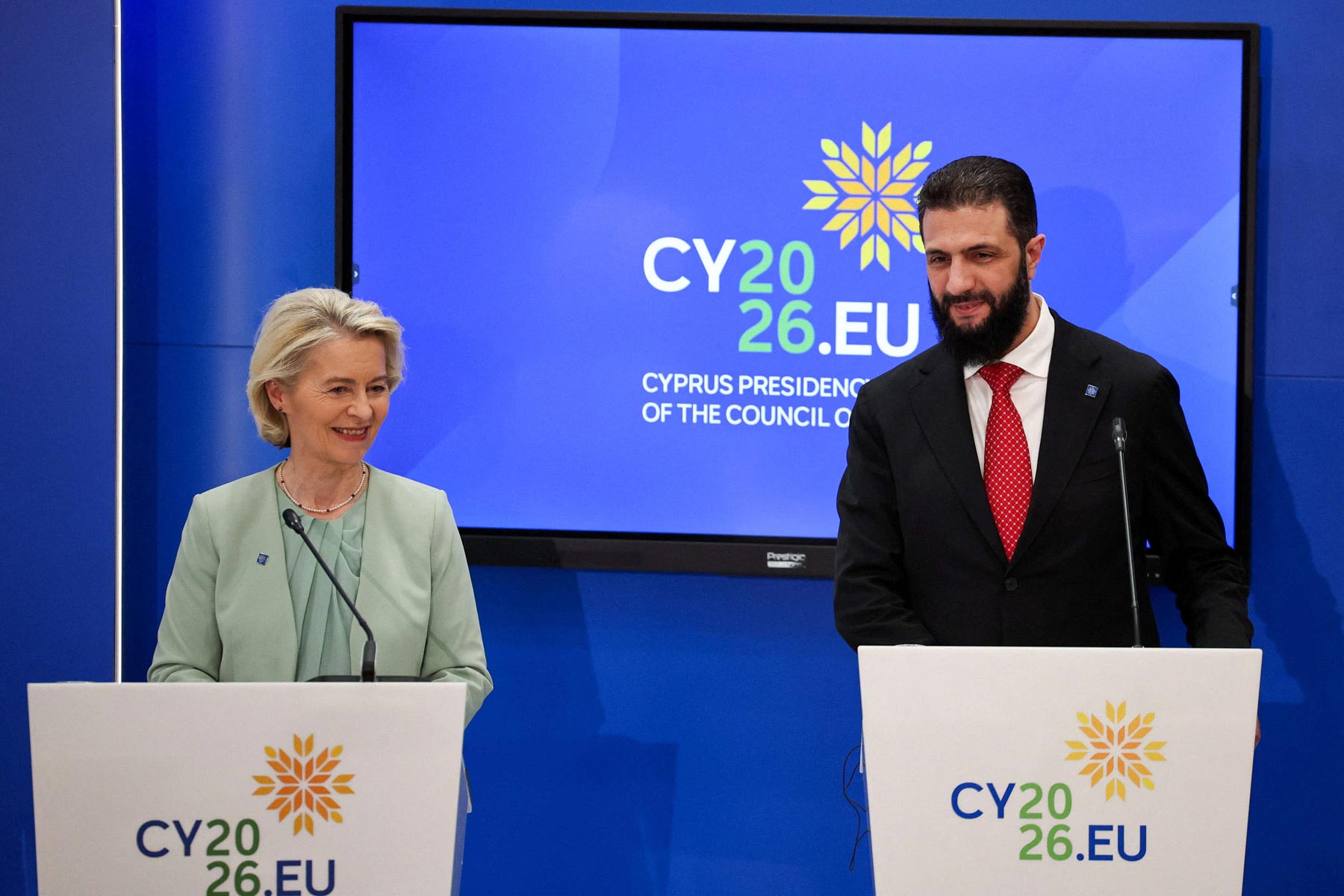
European officials echoed concerns over the widening impact of regional conflicts. European Commission President Ursula von der Leyen said a recent pause in hostilities in Lebanon was insufficient, warning that only a durable political solution could stabilise the region.
“A temporary pause is not enough. We need a permanent path to peace,” she said, stressing that instability in Lebanon, the Gulf and the wider Middle East is deeply interconnected.
European Council President Antonio Costa also called for de-escalation and the reopening of the Strait of Hormuz “without restrictions”, describing freedom of navigation as vital to global economic stability.
Despite the tensions, Sharaa signalled that diplomatic channels remain open, noting in earlier remarks that negotiations with Israel had “not reached a dead end” but were proceeding with “great difficulty,” largely due to Israel’s insistence on maintaining a presence on Syrian territory.
He also sought to position Syria as a potential hub for regional connectivity and energy security, unveiling what he described as the Four Seas Initiative and its nine corridors. “We place at the disposal of our partners in the Mediterranean and the Arab Gulf the Four Seas Initiative and its nine corridors, so that Syria represents the alternative and safe artery linking Central Asia and the Gulf to the heart of the European continent,” he said.
Friday’s summit, convened to address the fallout from a deepening energy crisis triggered in part by disruptions in the Strait of Hormuz, brought together a wide range of regional leaders, including those from Egypt, Lebanon and Jordan, alongside Gulf Cooperation Council officials.
Sharaa described the talks as “a good start” and pointed to a forthcoming high-level political dialogue between Syria and the European Union in Brussels on May 11 as a key milestone. “What we have achieved today is a confident beginning that paves the way for our larger event in Brussels … where we will launch the high-level Syrian-European political dialogue,” he said.
“Ahead of us are seventeen days of intensive work, through which we proceed with firm determination to consolidate Syria’s role as a strategic partner that contributes to building the future of the European continent and ensuring the stability of our region.”
Presenting Syria as emerging from years of conflict with a renewed strategic vision, al-Sharaa said the country was seeking to redefine its regional role. “Syria, which was once an arena for the conflicts of others, today chooses, through the will of its people and institutions, to be a bridge of security and a cornerstone of the solution. Geography is our destiny, and partnership is our choice.”
However, analysts note that the gap between diplomatic rhetoric and realities on the ground remains stark. Continued Israeli operations in Syria, coupled with broader regional tensions linked to the war involving Iran and disruptions to critical trade routes, have left the region in a fragile and uncertain equilibrium.
For Europe, increasingly exposed to the economic and security spillovers of Middle East conflicts, the summit underscored a growing recognition that crises once seen as regional are now directly tied to global stability.