

Most significant territorial realignment since Assad’s fall
Syria takes control of Shaddadi as US pullback reshapes power balance
The transfer of Shaddadi follows a “comprehensive agreement” announced on January 30 between the Syrian government and the SDF aimed at ending years of division.
Sunday 15/02/2026
Most significant territorial realignment since Assad’s fall
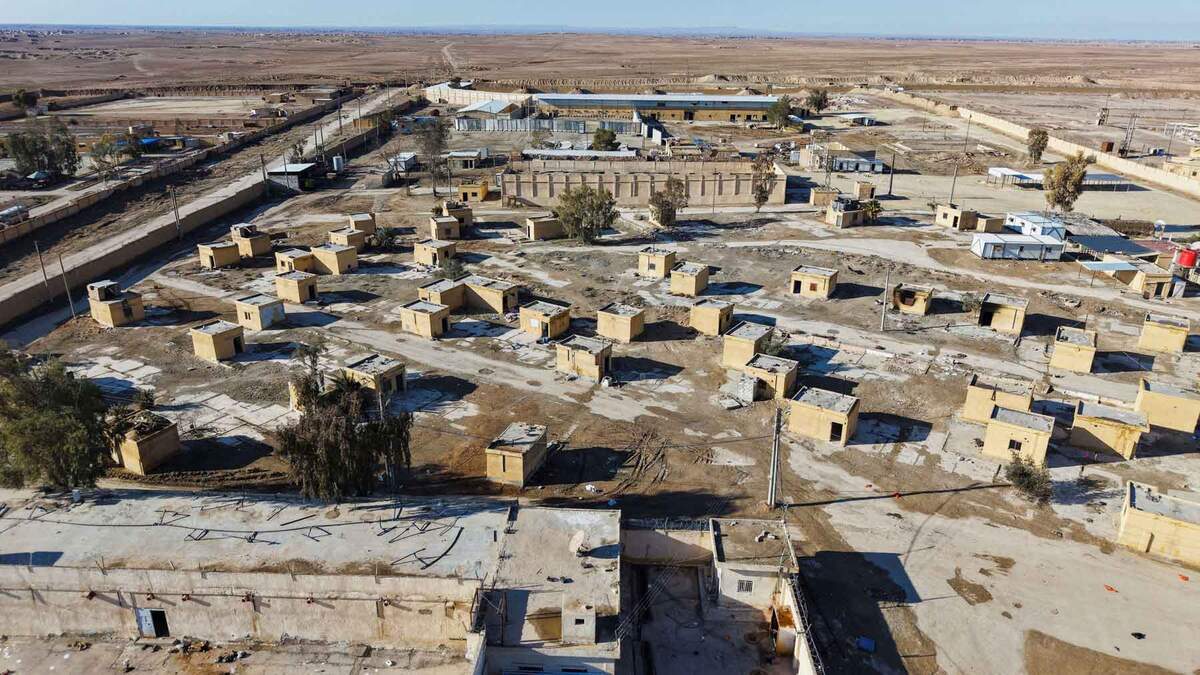
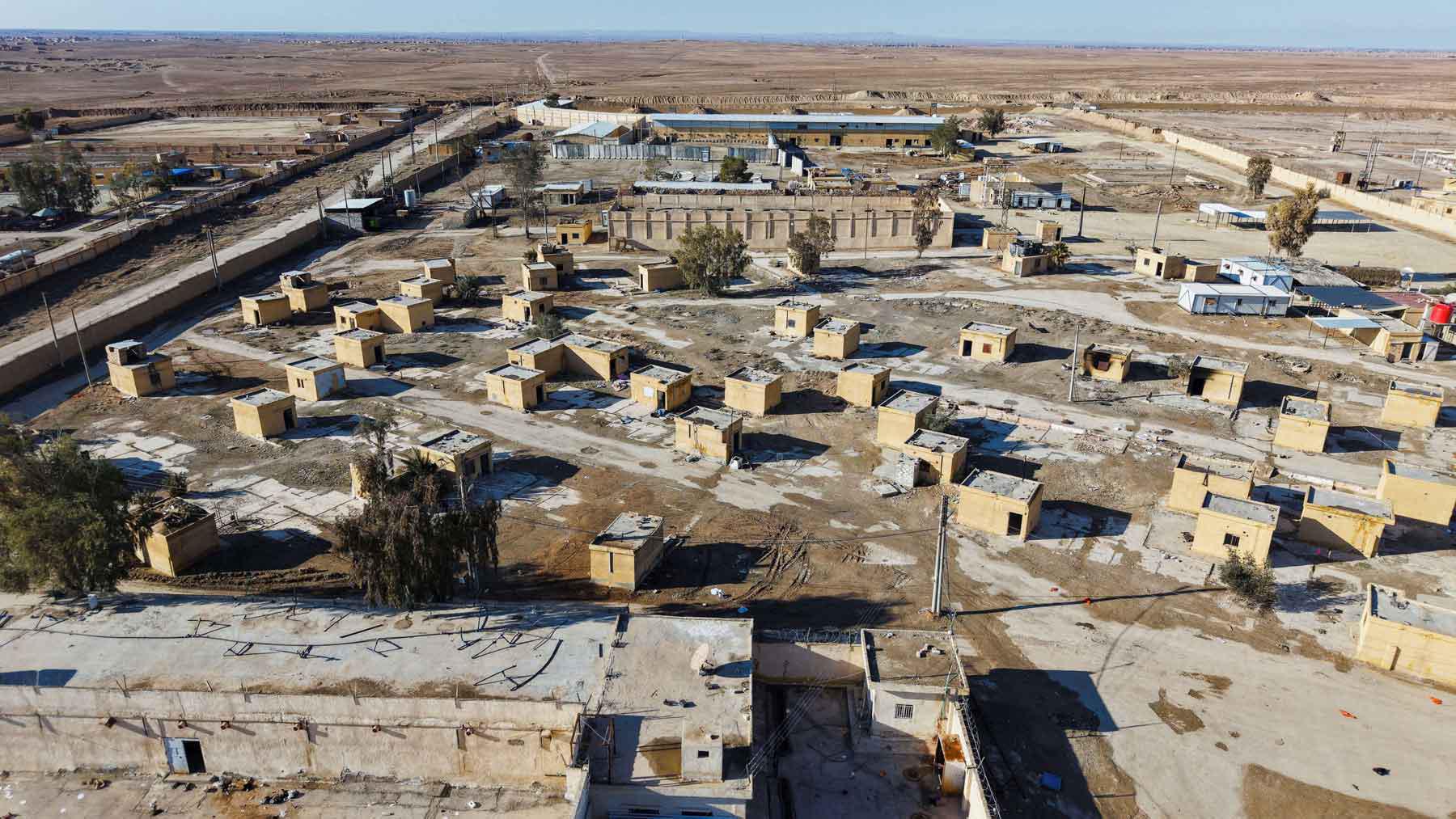
DAMASCUS – The Syrian army has taken control of the strategic Shaddadi military base in northeastern Syria following coordination with the United States, in what officials described as a significant step towards restoring state sovereignty over resource-rich and long-contested territory.
The defence ministry said in statements carried by the state news agency Syrian Arab News Agency that government forces had assumed control of the base in the countryside of Hasakah province after coordination with the US side, without providing further details.
The development comes days after Washington confirmed its withdrawal from the al-Tanf base near Syria’s borders with Iraq and Jordan, and amid a broader U.S.-brokered agreement to integrate the Kurdish-led Syrian Democratic Forces (SDF) into central state institutions.
The Shaddadi base is one of the most prominent strategic positions in Syria’s Jazira region, linking Hasakah and Deir Ez-Zor provinces, areas that have formed the backbone of Kurdish-led control in the northeast.
Located on the outskirts of the town of Shaddadi, the site had been under the control of the US-led international coalition since 2016, after Islamic State was expelled. It was used as a central hub for operations and for securing nearby oil fields.
Shaddadi also lies close to a detention facility where Kurdish forces previously held Islamic State militants, before government forces advanced into the area in January.
Local observers say the handover represents a significant blow to the SDF, which has increasingly felt that its main international backer is recalibrating its position in favour of understandings with Damascus.
In recent days, US forces were seen withdrawing equipment from Shaddadi, with convoys entering from Iraq via the al-Yarubiyah crossing to transport military matériel. Witnesses reported that coalition forces were also evacuating the Kharab al-Jir base near Rmeilan, detonating parts of the facility during their departure.
The transfer of Shaddadi follows a “comprehensive agreement” announced on January 30 between the Syrian government and the SDF aimed at ending years of division and launching a new phase of integration.
The deal, which builds on an earlier accord signed on January 18, covers the cities of Hasakah and Qamishli and outlines plans for the integration of SDF fighters into the national army.
Under the agreement, the defence ministry is to establish a new division for the northeast, incorporating SDF forces into three brigades. It also stipulates the deployment of government security vehicles into SDF-held cities and the beginning of the integration of Kurdish internal security forces.
President Ahmed al-Sharaa has framed the arrangement as part of a broader effort to reunify Syria after 14 years of war, which intensified following the ousting of former leader Bashar al-Assad in December 2024.
Earlier this year, Sharaa issued Presidential Decree No. 13 of 2026 recognising the cultural and linguistic rights of Syrian Kurds and addressing long-standing civil and property disputes, a move officials said reflected a commitment to building an inclusive state.
Despite largely incident-free deployments so far, major questions remain unresolved.
Officials from both sides say talks continue over how exactly SDF fighters will be integrated, the fate of heavy weapons, and control of key oil fields near Qamishli, including Rmeilan and Sweidiya, as well as Qamishli airport, all of which the SDF is required to hand over under the agreement.
Noah Bonsey of the International Crisis Group said that while further progress appeared the most likely scenario, the risk of miscalculation remained high.
“The risk of missteps, and thus ultimately the risk of renewed escalation, is still significant,” he said.
SDF commander Mazloum Abdi has said that the three brigades formed from SDF fighters would be based in Qamishli, Hasakah and Derik near the Iraqi border. However, officials acknowledge that only one location has been tentatively agreed, with Damascus objecting to proposals to station forces on Mount Abdelaziz overlooking Hasakah.
Abdulkarim Omar, a senior Kurdish official, said Kurdish Asayish security forces would ultimately fall under the interior ministry but continue to protect the region from within, adding that “lengthy discussions” were needed to finalise implementation mechanisms.
A Western official said Washington, which has withdrawn some forces from Syria this week, is broadly satisfied with progress towards integration and has urged Damascus to show flexibility towards Kurdish demands.
US envoy Tom Barrack said the agreement could pave the way for lasting peace for all Syrians.
Simultaneously, the United States announced it had transferred more than 5,700 Islamic State detainees formerly held by Kurdish forces to Iraq to ensure they remain in secure detention facilities. The commander of US Central Command, Brad Cooper, said American forces remained ready to respond to any resurgence of Islamic State, noting that 30 targets linked to the group had been struck in February alone.
Turkey, meanwhile, continues to voice concern. Foreign Minister Hakan Fidan said the withdrawal of the Kurdish YPG militia, the backbone of the SDF, had created a “healthier” security environment, but insisted Ankara’s concerns would only be fully addressed if the group severed links with the Kurdistan Workers’ Party (PKK).
The struggle for Syria’s northeast has produced the most significant territorial realignment since Assad’s fall. With Shaddadi now under government control and US forces scaling back their footprint, Damascus appears closer than at any point in more than a decade to restoring authority over nearly all Syrian territory.
Yet the durability of that restoration will depend on whether the fragile balance between central authority and Kurdish aspirations can be translated from battlefield coordination into a sustainable political settlement.