

Which countries contributed?
Trump says ‘Board of Peace’ has pledged $5 billion in funding
The US President says the "Board of Peace" is committed to deploying thousands of personnel for stabilization missions.
Monday 16/02/2026
Which countries contributed?
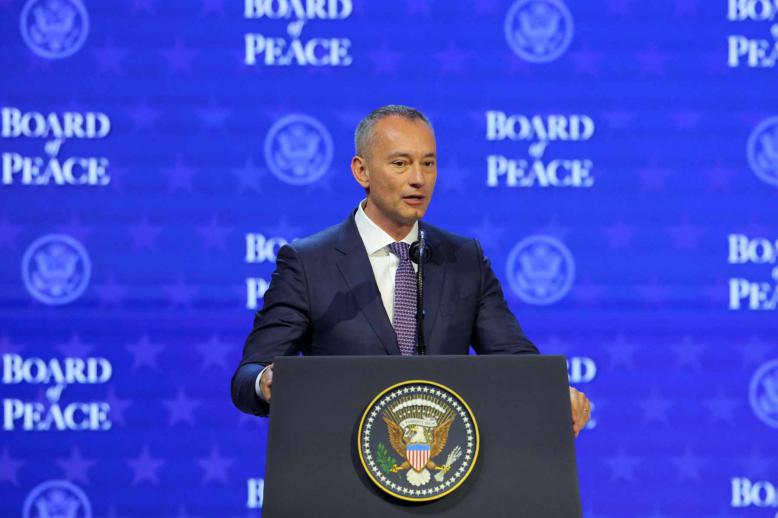
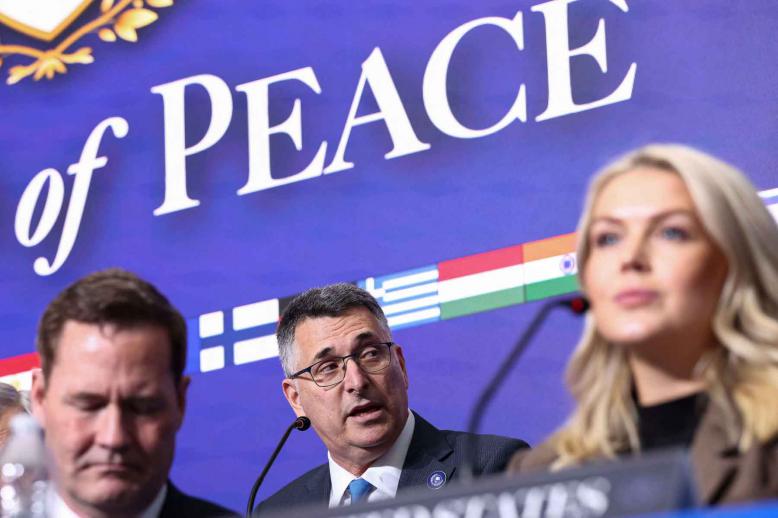
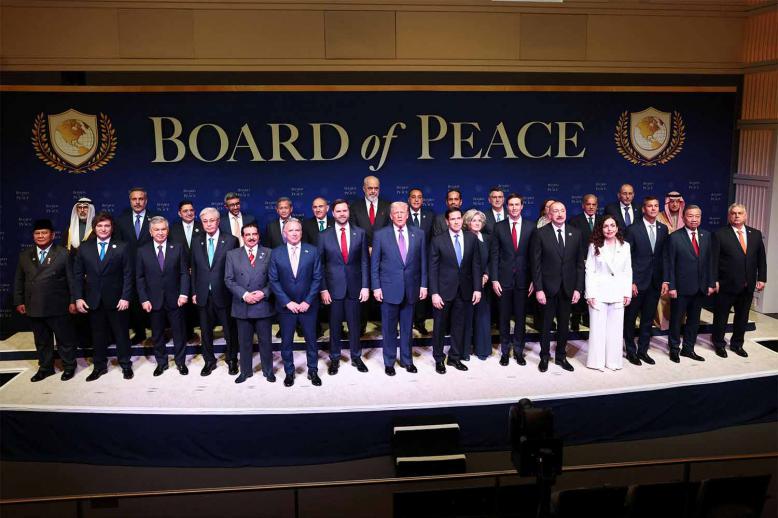
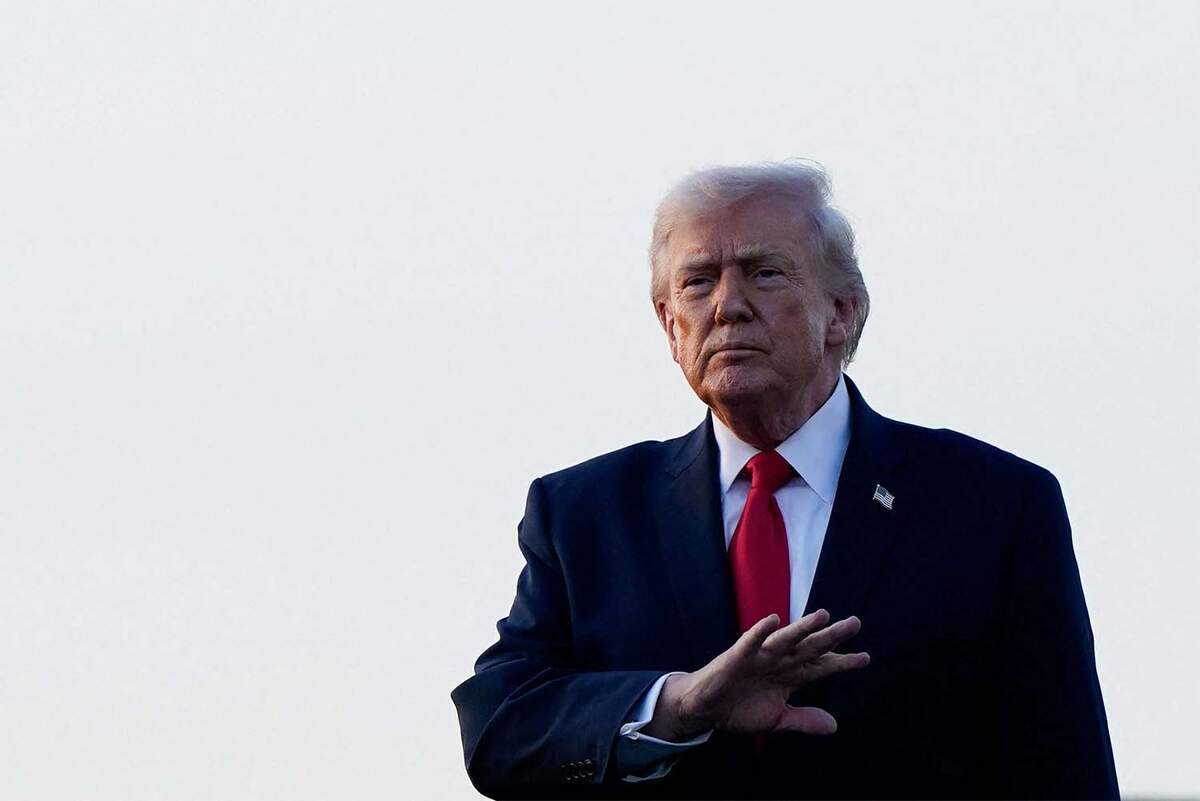
WASHINGTON — US President Donald Trump announced on Sunday a major new international initiative aimed at the post-war reconstruction of the Gaza Strip, revealing that a coalition known as the "Board of Peace" has pledged $5 billion in funding and committed to deploying thousands of personnel for stabilization missions.
The announcement marks one of the most significant external interventions proposed for the enclave since the cessation of major combat operations. Speaking from his resort in Mar-a-Lago, Trump framed the initiative as a "historic burden-sharing agreement" that would see regional allies, rather than American taxpayers, footing the bill for Gaza's recovery.
The Financial Pledge: $5 Billion for Rebuilding
According to the President, the "Board of Peace"—a consortium of nations that reportedly includes key Gulf states and signatories of the Abraham Accords—has secured initial commitments of $5 billion.
"We have tremendous commitments," Trump stated. "The Board of Peace has stepped up. They are putting up $5 billion—that’s with a ‘B’—to rebuild the homes, the schools, and the hospitals. They want to see a beautiful Gaza, and they are going to pay for it."
While the White House has not yet released an itemized list of donors, analysts suggest the funding is likely heavily anchored by contributions from Gulf Arab countries, consistent with Trump’s long-standing foreign policy doctrine of demanding that regional partners finance regional security.
"Boots on the Ground": A Policing Mission
Perhaps more significant than the financial pledge is the security component of the plan. Trump indicated that the initiative would involve the deployment of "thousands" of international personnel to Gaza.
The President specified that these forces would focus on "stabilization and policing," tasked with maintaining law and order, securing aid convoys, and preventing a security vacuum that could allow for a resurgence of militant groups.
"These are not American soldiers fighting a war," Trump clarified. "These are peacekeepers, police officers, and stabilization experts from the Board of Peace nations. They will be there to keep the peace and make sure the construction happens safely."
A New Security Architecture?
The proposal appears to address one of the most contentious issues of the post-war landscape: who governs and secures Gaza?
Israel's Stance: The Israeli government has repeatedly stated it will not accept the return of Hamas to power, nor does it wish to permanently reoccupy the strip civilly.
The "Board" Solution: By introducing a third-party international force (likely comprised of Arab and possibly European or private security personnel), the Trump administration is attempting to thread the needle—providing security acceptable to Israel without requiring a long-term IDF presence on every street corner.
Challenges Ahead
While the announcement offers a concrete roadmap, questions remain regarding the implementation.
It is unclear who will command the international police force and what their rules of engagement will be.
The reception of foreign troops—even from Arab nations—by the Palestinian populace in Gaza remains a critical variable. Despite the degradation of its military capabilities, it is uncertain how remaining factions in Gaza will react to an international policing presence.
The "Board of Peace" initiative is expected to be formally presented to the UN Security Council later this week, where the US will seek a resolution to mandate the mission.