



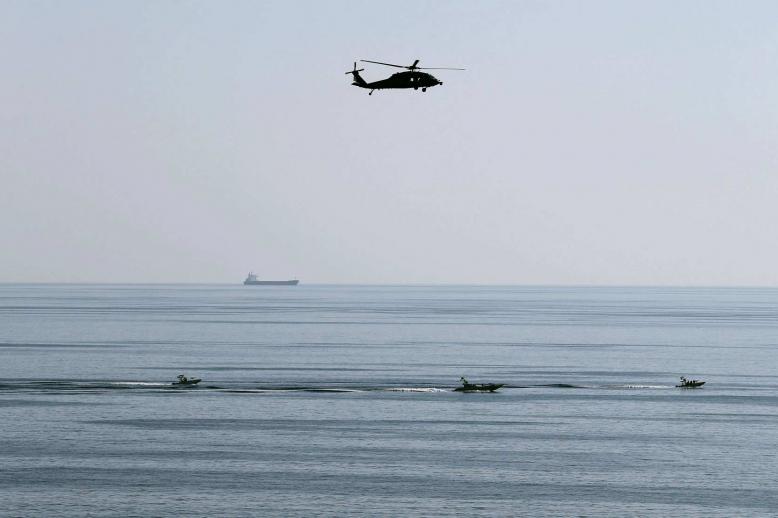
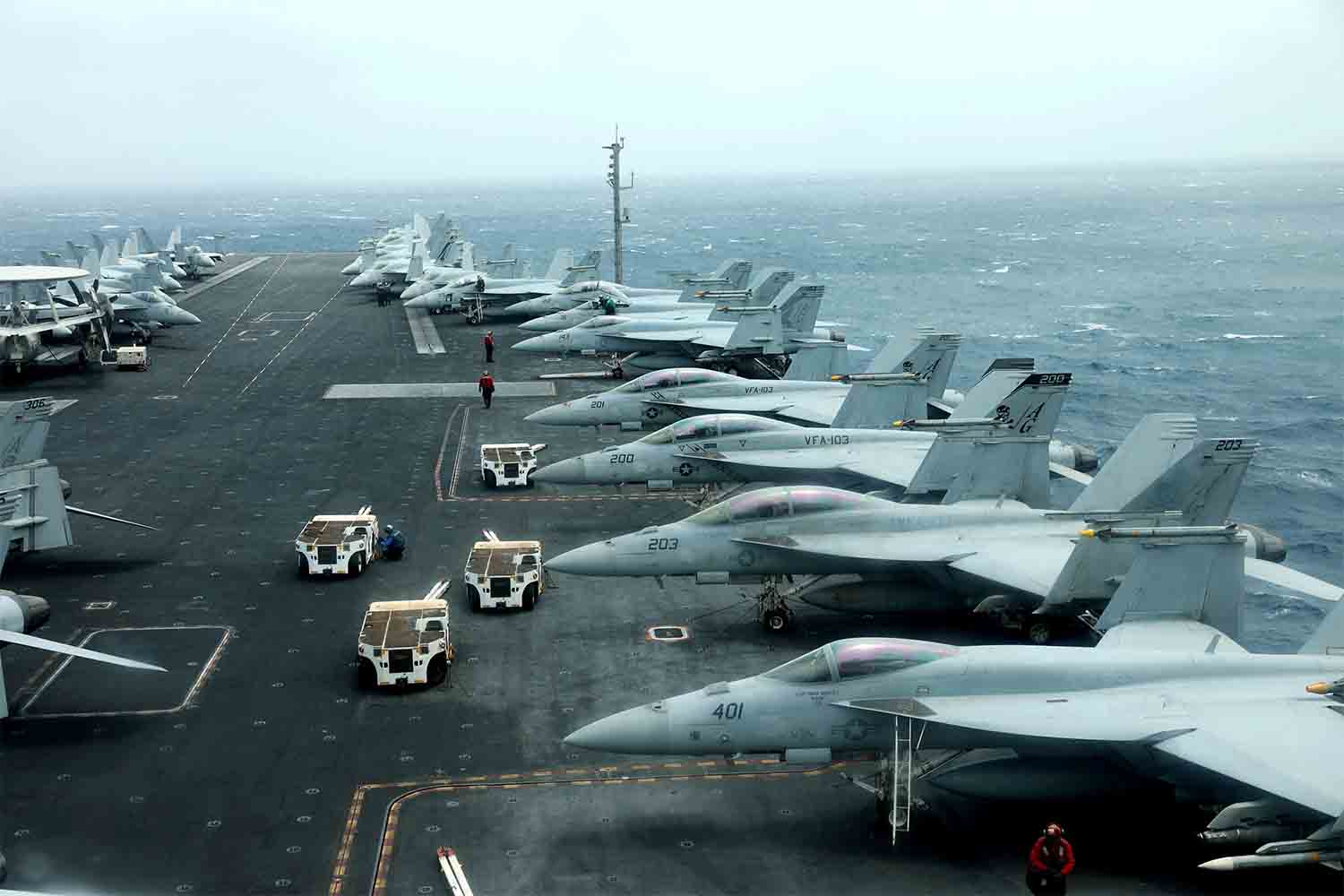
Ready to protect the ships along the Strait of Hormuz
Trump says US would escort ships in Strait of Hormuz 'if needed'
Senior Pentagon officials tell the Wall Street Journal that the US was actively considering the deployment of additional warships to the Strait of Hormuz to escort commercial oil tankers.
Friday 13/03/2026
Ready to protect the ships along the Strait of Hormuz
WASHINGTON - President Donald Trump said the United States would escort vessels through the Strait of Hormuz if needed, adding in a Fox News interview that aired on Friday that the US would strike Iran "very hard over the next week."
Asked about helping oil tankers pass through the key shipping strait, Trump said: "We would do it if we needed to. But, you know, hopefully things are going to go very well. We're going to see what happens." He gave no other details. "We're going to be hitting them very hard over the next week," he added in the interview with Fox News Radio's "The Brian Kilmeade Show."
Trump’s comments come as the United States and other countries face spiking oil and gas prices with the US-Israel war entering its 14th day.
Senior Pentagon officials told The Wall Street Journal that the US was actively considering the deployment of additional warships to the Strait of Hormuz to escort commercial oil tankers, as Iranian missile and drone attacks on Gulf energy infrastructure raise fears of a direct threat to one of the world’s most critical shipping chokepoints.
Citing defence sources familiar with the deliberations, the newspaper reported that the US Navy’s Fifth Fleet — headquartered in Bahrain — has already increased patrols and is preparing contingency plans to provide armed escorts for tankers carrying crude and LNG from Saudi Arabia, the UAE, Kuwait and Oman.
The move comes after Iranian strikes in the past 72 hours hit fuel tanks in Bahrain’s Muharraq Governorate, downed six power transmission lines in Kuwait with drone debris, and killed two civilians in Oman’s Sohar Industrial Port.
“Freedom of navigation is a core national interest,” a senior US defence official was quoted as saying. “We will not allow Iran to turn the Strait of Hormuz into a no-go zone.” The Pentagon has not yet made a final decision, but options include redeploying destroyers and frigates currently in the Mediterranean and Red Sea, as well as accelerating the arrival of the USS Abraham Lincoln carrier strike group already en route to the region.
Oil prices surged past $105 per barrel on Friday — the highest level since the 1979 crisis — as traders priced in the risk of attacks on shipping lanes that carry nearly 20 percent of global oil trade. The Tehran explosion during Quds Day marches has further heightened tensions, with Iranian officials threatening broader retaliation while Gulf states report successful interceptions of most incoming threats.
The UAE, which has absorbed multiple Iranian strikes on its territory without major disruption, welcomed the reported US planning.
“We appreciate the steadfast support of our American partners in defending international waterways,” a senior official in Abu Dhabi said, echoing the message delivered by Sheikh Hamdan bin Mohammed bin Rashid Al Maktoum earlier this week that the UAE and its neighbours “will emerge stronger.”
Bahrain, home to the Fifth Fleet, has already seen its fuel facilities targeted, while Kuwait and Oman have suffered direct hits. Regional air defences, bolstered by US-supplied Patriot and THAAD systems, have intercepted the majority of Iranian projectiles, but the risk to commercial shipping has prompted urgent GCC-level coordination.
The Wall Street Journal noted that any escort operation would be conducted in close coordination with Gulf navies and would not constitute a formal blockade, aiming instead to deter Iranian speedboat swarms and drone attacks that have targeted tankers in the past. Insurance premiums for vessels transiting the strait have already tripled in the last 48 hours.
Despite the heightened threat, Gulf energy exports continue uninterrupted. UAE strategic reserves remain full, power restoration in Kuwait is nearly complete, and Omani ports are operating at normal capacity.
The UAE’s decision yesterday to fine food traders AED 12 million for unjustified price hikes further underscored the country’s commitment to economic stability even under pressure.