

Turkey’s frustration is clear: It wants to broker peace, not intercept missiles
Turkey warns Iran after second missile breaches airspace
Iranian President Pezeshkian told Erdogan that Iran was ready to form a joint team with Turkey to investigate allegations of Iranian missile attacks on Turkish territory.
Tuesday 10/03/2026

Turkey’s frustration is clear: It wants to broker peace, not intercept missiles
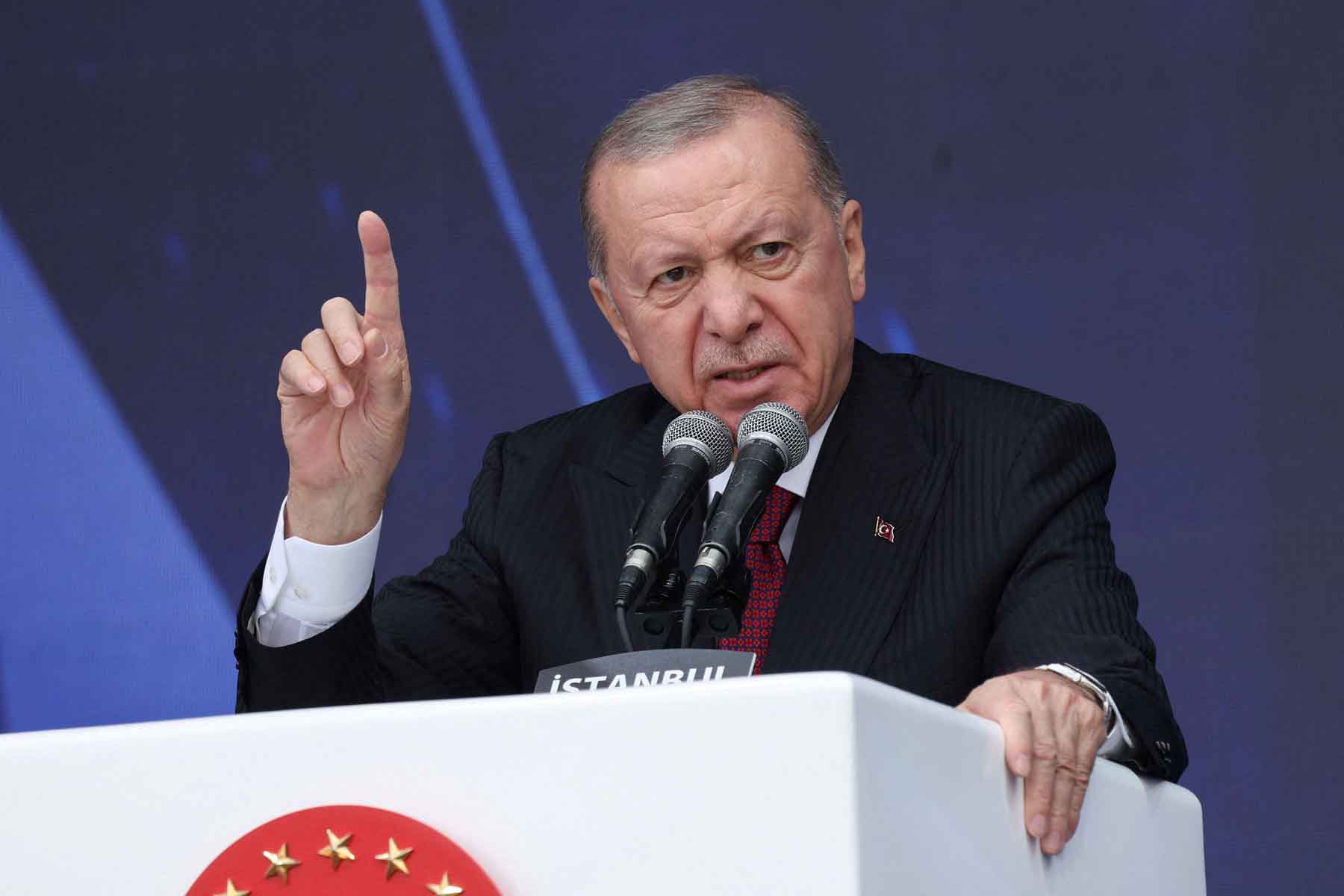
ANKARA – President Recep Tayyip Erdogan told Iranian President Masoud Pezeshkian in a phone call that violations of Turkish airspace cannot be justified and warned that striking countries in the region benefits no one, according to a statement from the Turkish presidency early on Tuesday.
Erdogan said Turkey was working to open the door for diplomacy to help end the war, the presidency said, telling Pezeshkian that Ankara does not consider it right for Iran to target countries in the region and that such actions do not serve anyone’s interests.
The warning came after Turkey said NATO air defences shot down a second Iranian ballistic missile that had entered its airspace, underscoring the risks the expanding conflict poses for Ankara and the Western military alliance.
Turkey’s defence ministry said the missile was intercepted after entering Turkish airspace in the south of the country, marking the second such incident involving Iranian projectiles within a week. The ministry said there were no casualties, adding that missile debris fell in empty fields in the province of Gaziantep.
“We once again emphasise that all necessary measures will be taken decisively and without hesitation against any threat directed at our country’s territory and airspace,” the Turkish Defence Ministry said in a statement.
“We also reiterate that it is in everyone’s interest to heed Turkey’s warnings in this regard.”
A NATO spokesperson confirmed that the alliance had intercepted a missile heading towards Turkey and said it stood firm in its readiness to defend allied territory. Unlike the previous incident, when a missile was destroyed outside Turkish territory, the latest projectile had already entered Turkish airspace before it was shot down.
Fragments fell in an area located between two strategically important military sites: the Incirlik airbase, used by United States forces, and a NATO radar facility in Malatya province that forms a key part of the alliance’s missile defence system.
President Erdogan said Turkey had delivered the necessary warnings to Iran after the incident. Speaking following a cabinet meeting in Ankara, he said Tehran was continuing to take “wrong and provocative steps.”
He added that Turkey had deployed six F-16 fighter jets to northern Cyprus earlier on Monday and would continue to take additional measures if necessary, stressing that Ankara’s main goal was to keep the country out of the “blaze” of the war involving Iran.
Despite its growing defence industry, Turkey does not yet possess a fully developed long-range air defence network and has relied on NATO systems stationed in the eastern Mediterranean to intercept incoming missiles in both incidents over the past week.
Ankara has not indicated that it intends to formally invoke NATO’s Article 4, which allows a member state to request consultations when it believes its security is threatened. Such consultations could potentially lead to the activation of Article 5, under which the alliance would defend a member under attack.
Erdogan’s office said Ankara was strongly reiterating its warning to all parties, particularly Iran, to avoid endangering regional stability and civilian lives.
Iranian President Pezeshkian meanwhile told Erdogan that Tehran was ready to form a joint team with Turkey to investigate what he described as allegations of Iranian missile attacks on Turkish territory, according to Iranian media reports.
It remained unclear where the intercepted missile had been headed. The US maintains air forces at the Incirlik base in southern Turkey, while the NATO radar facility in Malatya provides crucial early-warning coverage for the alliance.
The US embassy in Turkey ordered non-emergency government employees and their families to leave its consulate in the southern city of Adana and suspended services there, strongly encouraging American citizens to leave southeastern Turkey.
Ankara has said Washington has not used the Incirlik base as part of its air campaign against Iran, which began 10 days ago alongside Israeli strikes and prompted Tehran to launch missiles and drones across the region.
Iran did not immediately comment on the missile incident, but officials in Tehran have repeatedly said the country is not at war with regional states and is not deliberately targeting Turkey.
Turkey had previously sought to mediate talks between Washington and Tehran before the outbreak of hostilities and has continued to position itself as a potential diplomatic broker even as the conflict increasingly spills into neighbouring countries.