

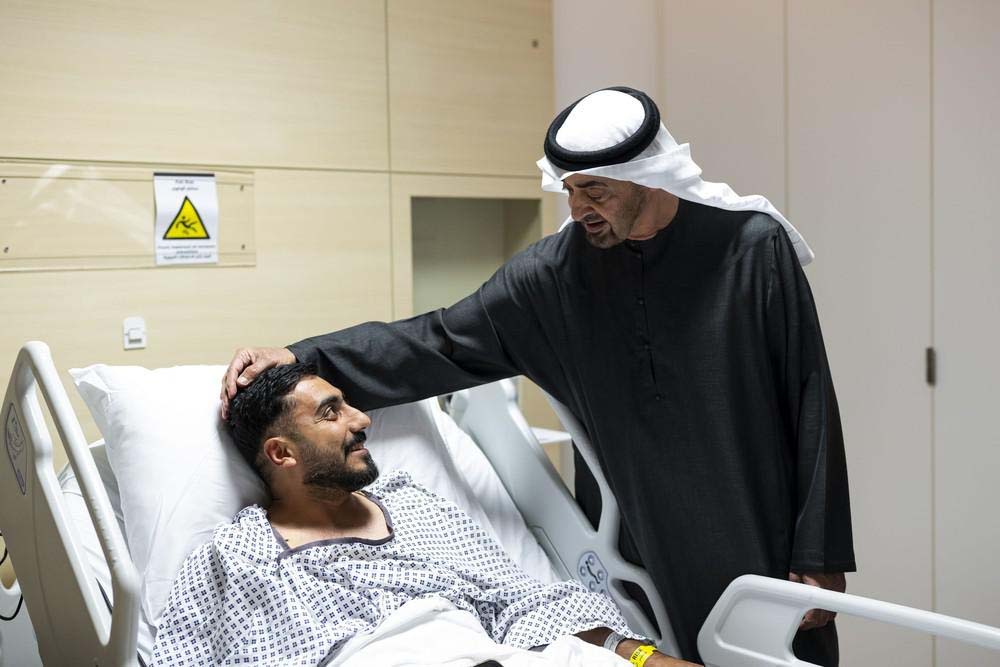
Cohesion between the UAE leadership and its people
The UAE’s messages in the midst of the storm
The Emirati model represents an opposite trajectory to the Iranian model; it reminds Iran of what might have been possible had material and human resources been invested in development rather than conflict.
Sunday 08/03/2026
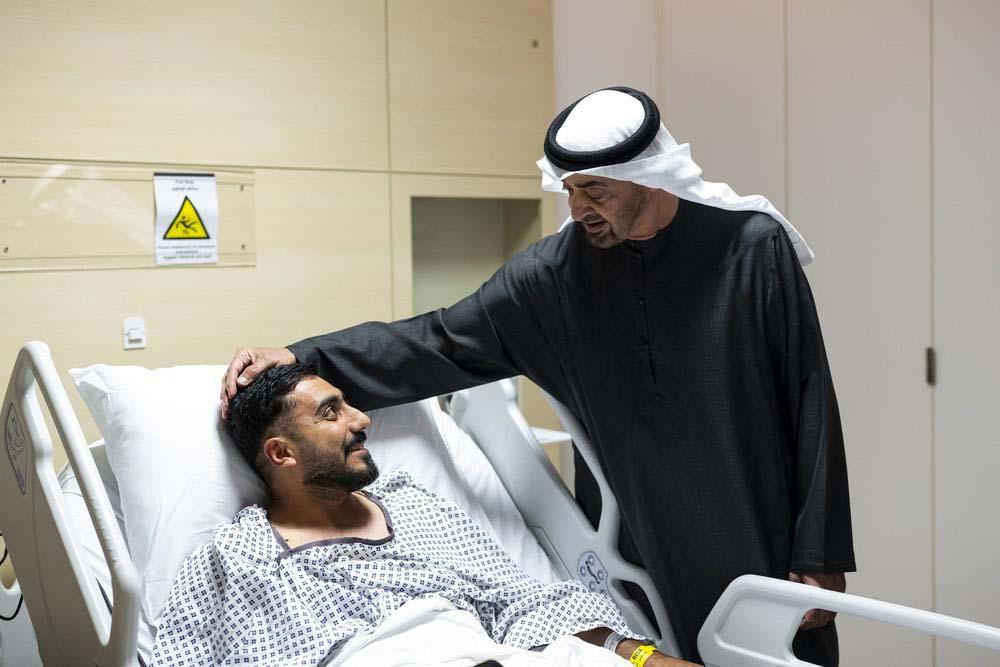
Cohesion between the UAE leadership and its people
Statements made on Saturday by UAE President Sheikh Mohamed bin Zayed Al Nahyan affirmed that his country remains proud, strong and resilient, and will not be broken by the challenges imposed by Iranian attacks. The remarks carried important domestic and international messages at a time when the Gulf region is experiencing a turbulent period marked by war and instability.
The President stressed the importance of booting security as an indispensable strategic asset, highlighting the government’s strong commitment to safeguarding the lives of both citizens and residents alike. Through simple, precise and direct language, he managed to dispel concerns that had arisen among some people about their future in the UAE.
The confident tone of his remarks also conveyed reassurance to many that the country will emerge from the crisis stronger and more resilient. He suggested that recent events have revealed the depth of unity within the country’s internal front and the refusal of Emirati society to allow any party to destabilize the stability the country has enjoyed for many years.
The UAE’s approach to dealing with the war and its repercussions also reflects the high level of composure demonstrated by Sheikh Mohamed bin Zayed. This emotional steadiness has helped the Gulf Arab state overcome several challenges aimed at undermining its image as a safe, stable and globally attractive destination for investment.
The clarity and decisiveness of his words reflected a deep understanding of the developments unfolding around him and a clear determination not to deviate from the positive path the UAE has pursued for years. Over time, the UAE has evolved from being a central player in the Middle East to becoming an influential actor in many global dynamics, thanks to its strong economic capabilities, wise leadership and the clear social cohesion within Emirati society. This cohesion has grown stronger through the integration of citizens and residents alike into the country’s broader development and modernization project.
In his remarks, Sheikh Mohamed bin Zayed emphasized that no matter how difficult the current crisis becomes, it will not cause the UAE to retreat from its ambitions or alter its course. Those who launched hundreds of missiles and drones at Emirati territory in the hope of forcing a change in the country’s direction will be disappointed. Likewise, those who believed the UAE’s leadership might abandon its core principles under the pressure of threats will see their assumptions proven wrong.
The crisis, he suggested, is likely to end within days or weeks with the triumph of the Emirati approach to regional and international dynamics — an approach characterized by agility, a keen reading of the rapidly shifting global landscape, a deep understanding of power balances and a strong ability to adapt to the evolving equations of modern technology. Early strategic foresight in this field has already helped position the UAE as one of the world’s most attractive destinations for technological investment.
Sheikh Mohamed bin Zayed’s statements achieved multiple objectives through their clarity, frankness and transparency. He spoke with confidence about the capabilities of the country and the preparedness of its security institutions to confront crises, while reaffirming his commitment to the strategic roadmaps the UAE has established for itself — plans aimed at cementing the country’s position among the world’s advanced nations.
He also sent a clear message to those who targeted the UAE or might consider doing so in the future when he said: “Do not underestimate the UAE… the UAE has thick skin and a bitter bite.”
The message was unmistakable: the UAE is resilient and strong, and it will not relinquish the achievements it has built over decades. The country stands on solid foundations and possesses the capacity to confront challenges and thwart the plans of those who seek to undermine it politically or militarily. It will not succumb to intimidation or to transient missile threats.
Through its attacks, Iran sought to undermine the comprehensive model presented by the UAE under the leadership of Sheikh Mohamed bin Zayed. It is no coincidence that vital centers in Dubai were targeted by hundreds of missiles and drones. The aim was to strike at a successful model whose influence radiates across the Gulf region and offers a message of hope to those striving for development and stability.
Yet these attempts have failed to achieve their objectives. The UAE has emerged from the confrontation more resilient, gaining greater security, political and economic immunity that strengthens its ability to continue its path without deviation.
The rapid outreach from several world leaders offering support and solidarity to the UAE’s president also reflects international recognition that the Emirati approach is moving in the right direction. The country’s model is now widely respected — and increasingly seen as one worthy of emulation.
Expressions of both domestic and international solidarity have underscored the importance of preserving the Emirati model in the region and rejecting attempts to undermine it. The UAE is no longer merely an economically stable state; it has become an idea present in the consciousness of many around the world — a model for development, openness and stability.
Efforts to break this model reflect a deep hostility toward the very idea of progress. At its core, the conflict is not simply military but a competition between two visions for the future: one rooted in knowledge, development and openness, and another bound by the past and driven by a spirit of revenge.
The UAE has successfully influenced its regional environment through its developmental resources and its effective use of soft power. As a result, its model has resonated with many societies — and perhaps for that very reason, its success has become a source of concern for those who view it as a challenge to their own model.
In essence, the Emirati model represents the opposite of the Iranian model. It serves as a reminder of what might have been possible had material and human resources been invested in development rather than conflict.
Today, the UAE appears to be more than just a state. It is an idea embodied in a quiet but effective development experience — one that has secured a prominent place on the international stage through soft power and long-term vision, while other countries have chosen confrontation and reliance on military force in an attempt to halt the progress of successful models.
