

Deeper strategic partnership
UAE, China sign investment cooperation deal to boost economic ties
The MoU is expected to accelerate partnerships between Emirati and Chinese enterprises and create new avenues for capital deployment and technology exchange.
Wednesday 15/04/2026
Deeper strategic partnership
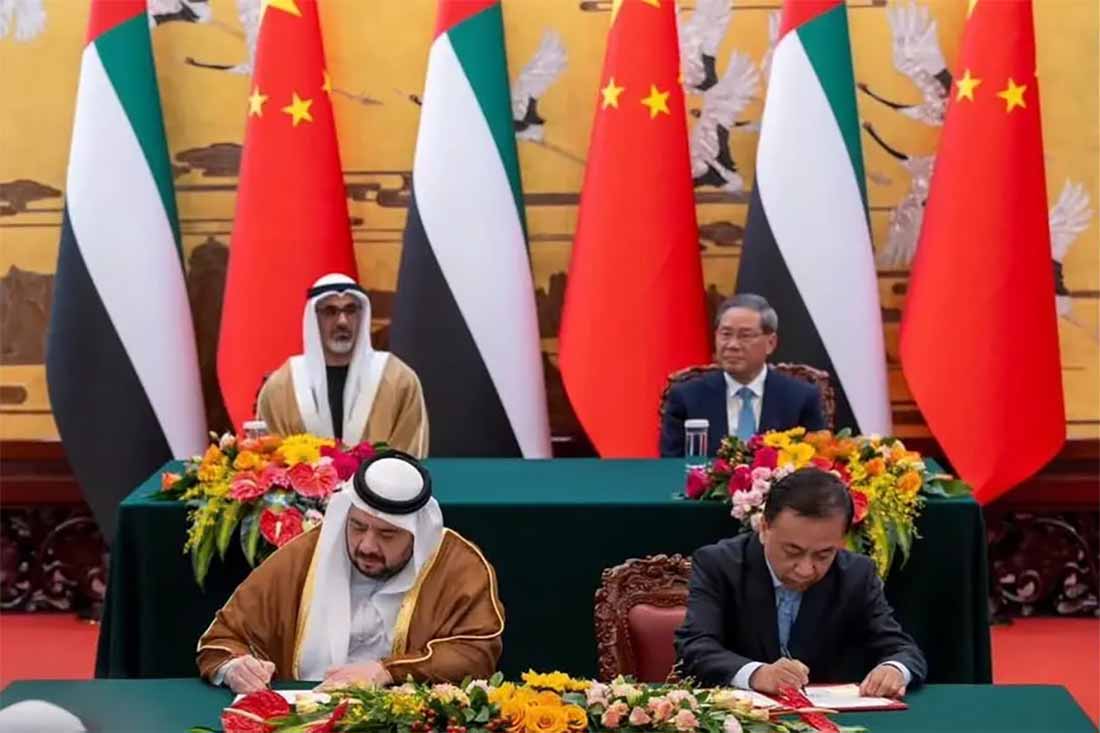
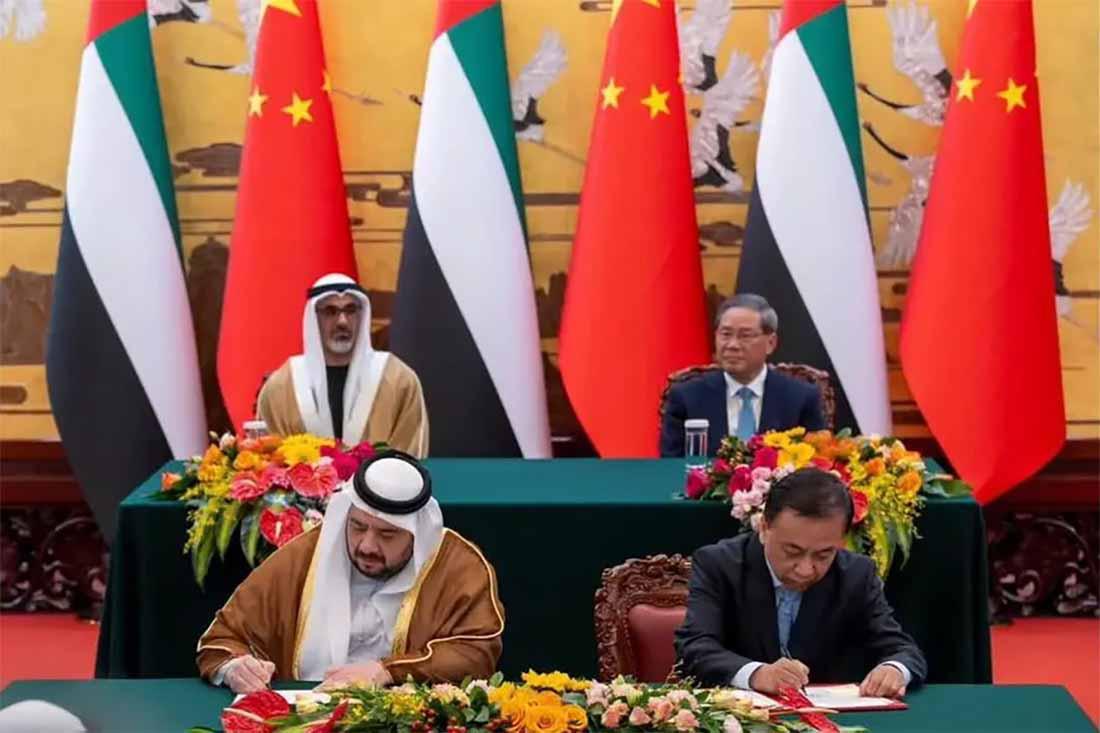
DUBAI - The United Arab Emirates' Ministry of Investment and China's National Development and Reform Commission signed a memorandum of understanding on investment cooperation to promote bilateral investment and strengthen economic ties.
The agreement was signed in the presence of Abu Dhabi Crown Prince Sheikh Khaled bin Mohamed bin Zayed Al Nahyan and Chinese Premier Li Qiang.
The agreement, signed in a formal ceremony, aims to promote and facilitate greater investment flows in both directions, encourage joint ventures, and support long-term collaboration across priority sectors including advanced technology, renewable energy, logistics, manufacturing, and infrastructure.
The MoU establishes a structured framework for regular high-level dialogue, information sharing, and the identification of concrete investment opportunities. It is expected to accelerate partnerships between Emirati and Chinese enterprises and create new avenues for capital deployment and technology exchange.
Strategic Partnership Amid Global Challenges
This latest agreement builds on the already robust economic relationship between the UAE and China. China remains one of the UAE’s largest trading partners, with bilateral non-oil trade exceeding $100 billion annually. The UAE is also a key hub for Chinese investment in the Middle East, while Emirati sovereign wealth funds and private investors have significantly increased their presence in Chinese markets in recent years.
The signing comes at a time when both nations are actively pursuing economic diversification strategies. For the UAE, the MoU aligns directly with the “We the UAE 2031” vision and the country’s broader goal of becoming a global investment destination. For China, it supports the high-quality development agenda outlined by the NDRC and complements the Belt and Road Initiative.
UAE Minister of Investment Mohammed Al Tayer welcomed the agreement, describing it as “a milestone that will unlock new opportunities for mutual growth and innovation.” Chinese officials from the NDRC echoed this sentiment, emphasising that the MoU reflects the deepening strategic partnership between the two countries and their shared commitment to open, rules-based investment cooperation.
Focus Areas and Expected Outcomes
Under the new framework, both sides will prioritise cooperation in green and renewable energy projects, artificial intelligence and digital economy, advanced manufacturing and industrial zones, logistics, ports, and supply chain resilience, and Healthcare, education, and knowledge-based industries
The MoU also includes provisions for investment facilitation, risk mitigation mechanisms, and capacity-building initiatives to support small and medium-sized enterprises from both countries.
Analysts view the agreement as a timely move that reinforces economic resilience amid ongoing regional tensions in the Middle East. With the Iran-Gulf conflict now in its seventh week and continuing threats to maritime security in the Strait of Hormuz, the UAE is accelerating diversification of its investment partnerships beyond traditional Western and regional partners.
The signing is expected to be followed by the formation of a joint working group that will meet regularly to translate the MoU into specific projects and investment deals.
This development further cements the UAE-China relationship as one of the most dynamic and forward-looking bilateral partnerships in the region, promising tangible benefits for businesses and economies on both sides.