


Strong relations
UAE, Morocco boost cooperation, stress unity amid regional turmoil
Discussions centred on pressing regional and international developments, particularly the ongoing conflict in the Middle East and its far-reaching implications for security and stability.
Thursday 23/04/2026
Strong relations
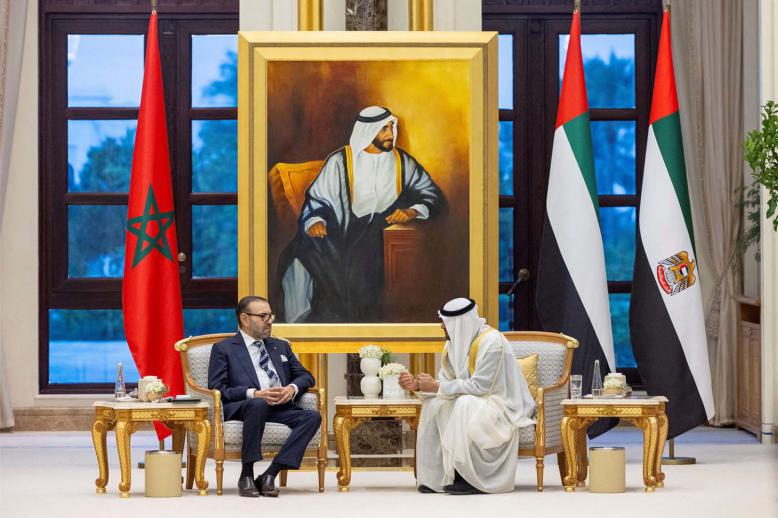
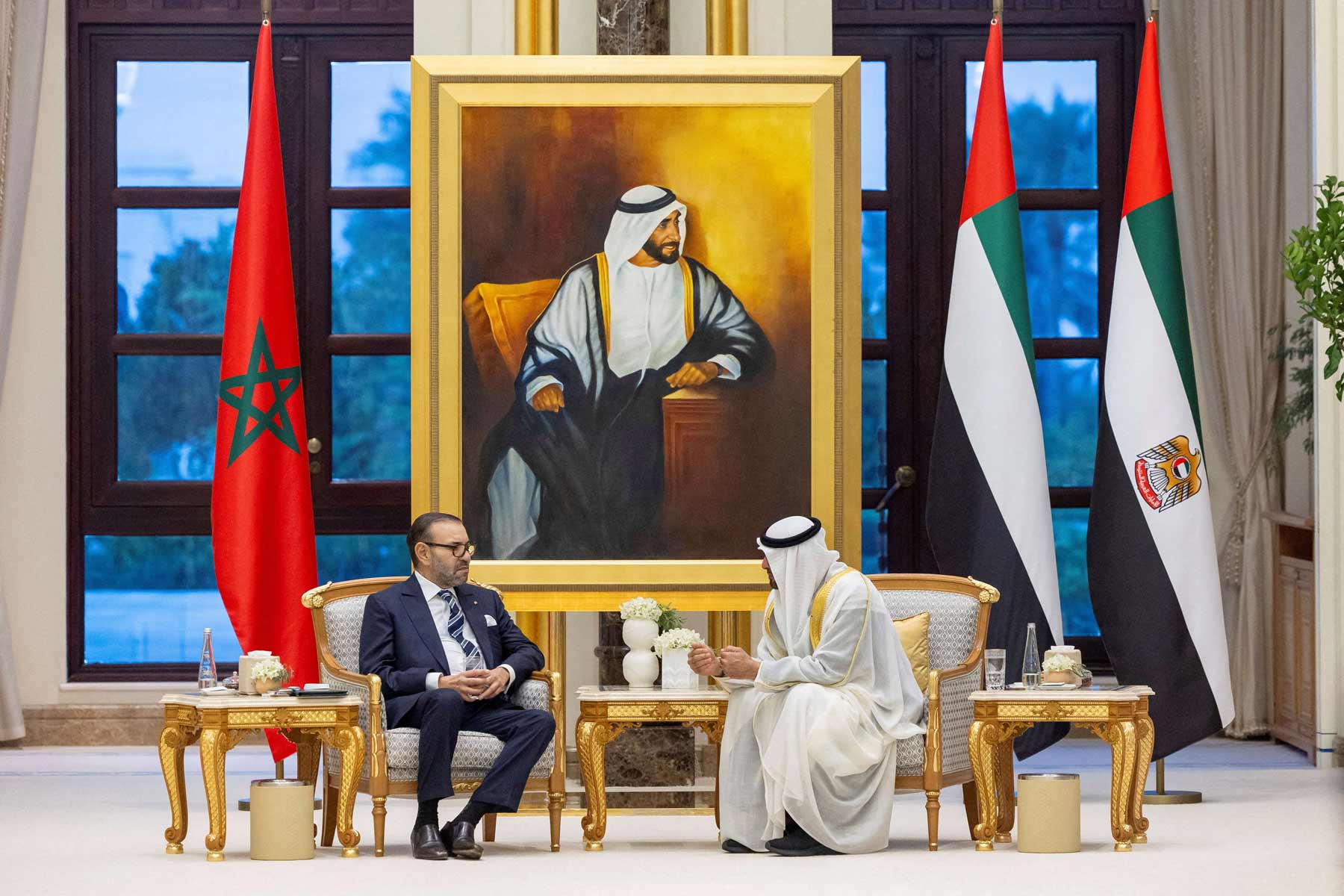
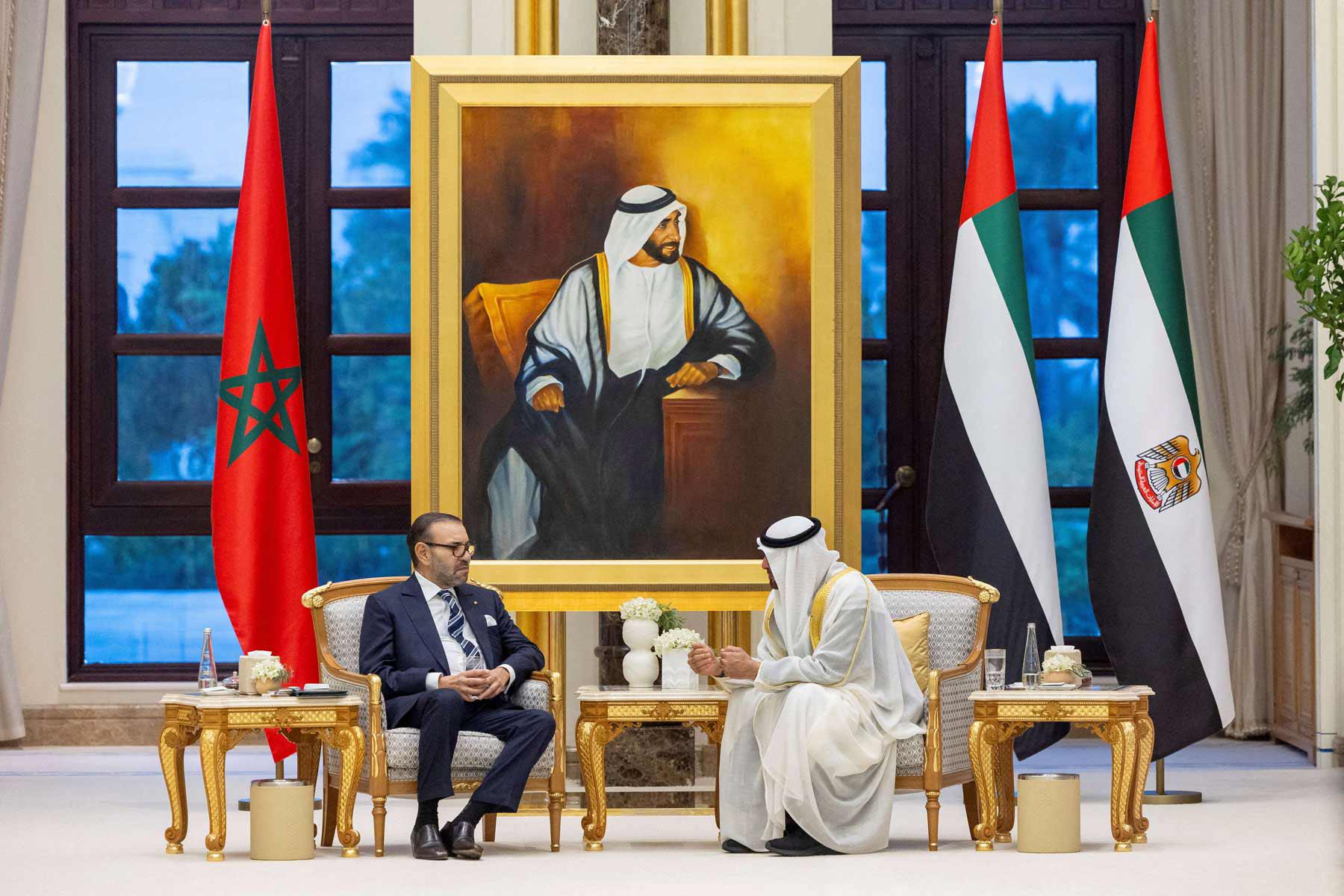
ABU DHABI/RABAT – President of the United Arab Emirates Sheikh Mohamed bin Zayed Al Nahyan and Morocco’s King Mohammed VI have reinforced their countries’ deepening strategic partnership during a high-level phone call, underscoring a shared commitment to expand cooperation and coordinate closely on mounting regional and global challenges.
The conversation highlighted the “strong fraternal relations” between Abu Dhabi and Rabat and explored ways to strengthen them across a wide range of sectors, particularly development-driven initiatives, economic partnerships and priority areas of mutual interest.
Both leaders stressed their determination to elevate bilateral ties to broader levels built on integration and shared interests, with the aim of supporting sustainable development and delivering tangible economic benefits to both nations.
“Both leaders affirmed their commitment to continued consultation and coordination while strengthening cooperation between the two countries in light of the challenges the region is facing,” the UAE’s state news agency WAM reported.
The UAE-Morocco relationship has increasingly been viewed as a model of evolving Arab cooperation, extending well beyond political alignment to include investment, infrastructure, trade and diplomatic coordination in regional and international forums.
Officials on both sides see sustained high-level engagement as a cornerstone of this partnership, reflecting a high degree of political trust and strategic alignment between the two leaderships.
The latest call signals a shared intent to build on existing gains and broaden the scope of collaboration, moving towards a more comprehensive strategic framework that transcends traditional forms of cooperation.
Discussions also centred on pressing regional and international developments, particularly the ongoing conflict in the Middle East and its far-reaching implications for security and stability.
The two leaders examined the repercussions of escalating tensions on international maritime security and the global economy, especially amid continued instability affecting key shipping lanes such as the Strait of Hormuz, through which a significant share of the world’s oil supplies passes.
Recent reports of attacks on commercial vessels in the strategic waterway have heightened concerns over global energy markets and trade flows, even as a fragile ceasefire, extended by US President Donald Trump, remains in place pending further diplomatic developments with Iran.
Morocco has consistently reiterated its support for Arab states in the face of regional threats. Foreign Minister Nasser Bourita recently reaffirmed Rabat’s stance during an emergency Arab League meeting, condemning attacks attributed to Iran and backing measures taken by affected countries to safeguard their sovereignty.
At the same time, Morocco continues to advocate dialogue and a political resolution to reduce tensions and prevent further escalation.
The UAE and Morocco also exchanged views on broader geopolitical shifts, including developments in North Africa. Rabat’s position on Western Sahara was part of the wider context, with Morocco continuing to promote its autonomy plan as a solution to the long-running dispute, an initiative supported by Abu Dhabi.
The leaders’ discussions reflect a shared understanding of the need for close coordination in addressing fast-evolving regional dynamics, from security threats to economic disruptions.
The call comes against an increasingly complex international backdrop marked by rapid geopolitical shifts, economic volatility and heightened security risks.
Analysts view such high-level exchanges as essential tools for aligning positions and maintaining policy coherence on major issues, particularly for countries with longstanding and stable ties.
Continued engagement between Sheikh Mohamed bin Zayed and King Mohammed VI underscores a joint commitment to sustained political dialogue and to advancing a forward-looking partnership grounded in mutual interests and a shared vision for stability and development.
As global and regional challenges intensify, this level of coordination is expected to play an increasingly important role in enhancing both countries’ ability to navigate uncertainty, across security, energy, trade and economic policy, while contributing to broader efforts to stabilise the region.