

Both leaders condemned Iran’s aggression toward neighbouring countries
UAE President discusses Iranian attacks with Trump
The two leaders review recent developments and their serious implications for regional and international peace and security, as well as their impact on maritime security and the global economy.
Thursday 02/04/2026
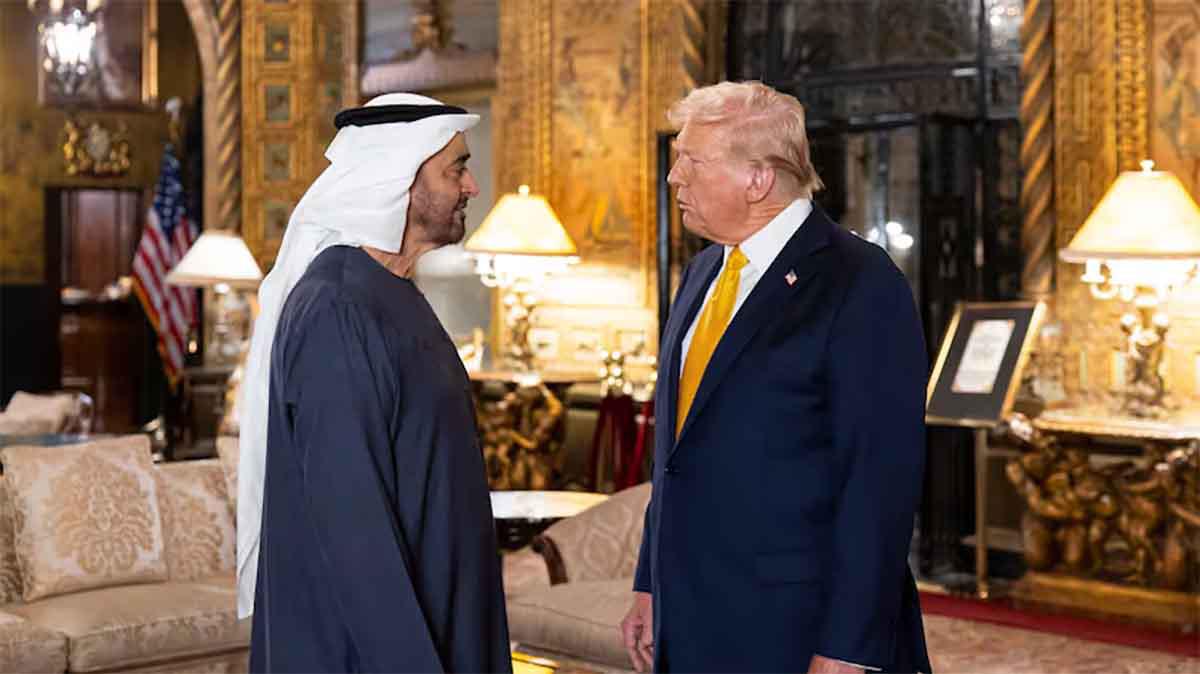
Both leaders condemned Iran’s aggression toward neighbouring countries
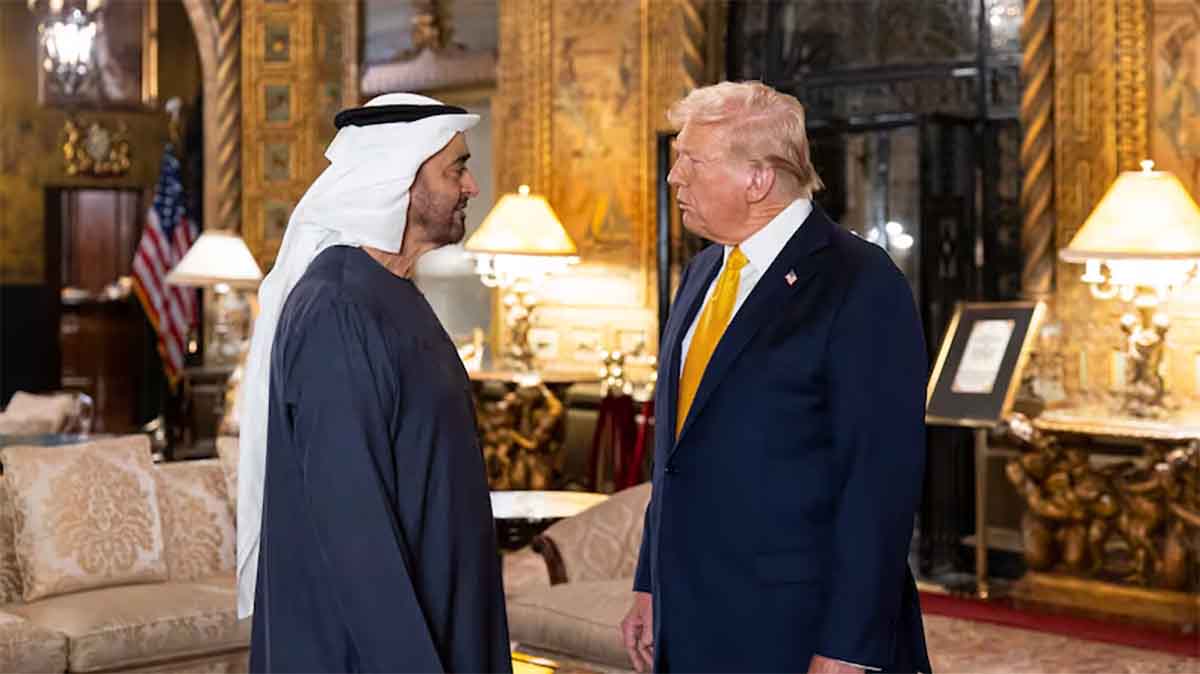
ABU DHABI — UAE President Sheikh Mohamed bin Zayed Al Nahyan held a telephone conversation with US President Donald Trump on Wednesday to discuss Iran’s ongoing attacks on the UAE and other countries in the region, the state news agency WAM reported.
The two leaders reviewed recent developments and their “serious implications for regional and international peace and security, as well as their impact on maritime security and the global economy.”
They condemned Iran’s aggression toward neighbouring countries, including strikes on civilians and civilian infrastructure, describing it as a clear violation of sovereignty and international law that undermines regional stability.
Since Iran launched its campaign of attacks on February 28, UAE air defences have intercepted 438 ballistic missiles, 19 cruise missiles, and 2,012 drones. The sustained strikes have killed two UAE military personnel, one Moroccan civilian contracted by the UAE Armed Forces, and nine civilians of Pakistani, Nepali, Bangladeshi, Palestinian, and Indian nationalities. Another 190 people have been injured.
Trump’s Address to the Nation: “Nearing Completion” but More Strikes Coming
The high-level call took place just hours before President Trump delivered a prime-time address to the American people from the White House on April 1, in which he declared that core US strategic objectives in the month-long war with Iran are “nearing completion.”
Trump stated that Iran’s navy has been destroyed and its air force lies in ruins. He warned that US forces will “hit them extremely hard” over the next two to three weeks, saying the goal is to “bring them back to the Stone Ages, where they belong.” At the same time, he projected that the conflict would wind down soon, though he offered no firm end date.
Crucially for the Gulf region, Trump expressed frustration with allies and urged countries that depend on oil flowing through the Strait of Hormuz to “build up some delayed courage” and take responsibility for securing the vital waterway themselves.
He made clear that the United States will not continue to shoulder the burden alone, telling partners to “go get your own oil” and that America “won’t be there to help you anymore.”
Impact on the UAE and Other Gulf States
The combination of the UAE-US phone call and Trump’s speech sends a dual message to the UAE, Saudi Arabia, and fellow Gulf Cooperation Council members. On one hand, Washington continues to stand firmly with its Gulf partners against Iranian aggression, as evidenced by the direct presidential engagement and the ongoing US-Israeli military campaign that has significantly degraded Iran’s capabilities.
On the other hand, Trump’s explicit call for Gulf states to assume greater responsibility for maritime security in the Strait of Hormuz — the chokepoint through which roughly one-fifth of global oil passes — places new pressure on the region. The UAE, as a major energy exporter and key player in Gulf security, could face increased operational and financial demands to protect shipping lanes previously underwritten by US forces.
Analysts note that while a weakened Iran may reduce long-term threats to Gulf capitals, the short-term reality includes heightened risks to oil prices, disrupted maritime trade, and the need for Gulf states to rapidly enhance their own naval and air defences.
The phone call and Trump’s address underscore a shifting dynamic: continued strong US-Gulf coordination against Iranian attacks, tempered by a clear American expectation that Gulf nations must now play a larger role in their own defence and in keeping the region’s economic lifelines open.