

Sheikh Mohamed reaffirmed the UAE's solidarity with Jordan in defending its territory
UAE President holds talks with Jordan king on Iran war
Both leaders condemn Iran’s continued retaliatory attacks as blatant violations of national sovereignty, international law, and diplomatic norms, describing them as direct threats to regional and global security.
Tuesday 17/03/2026
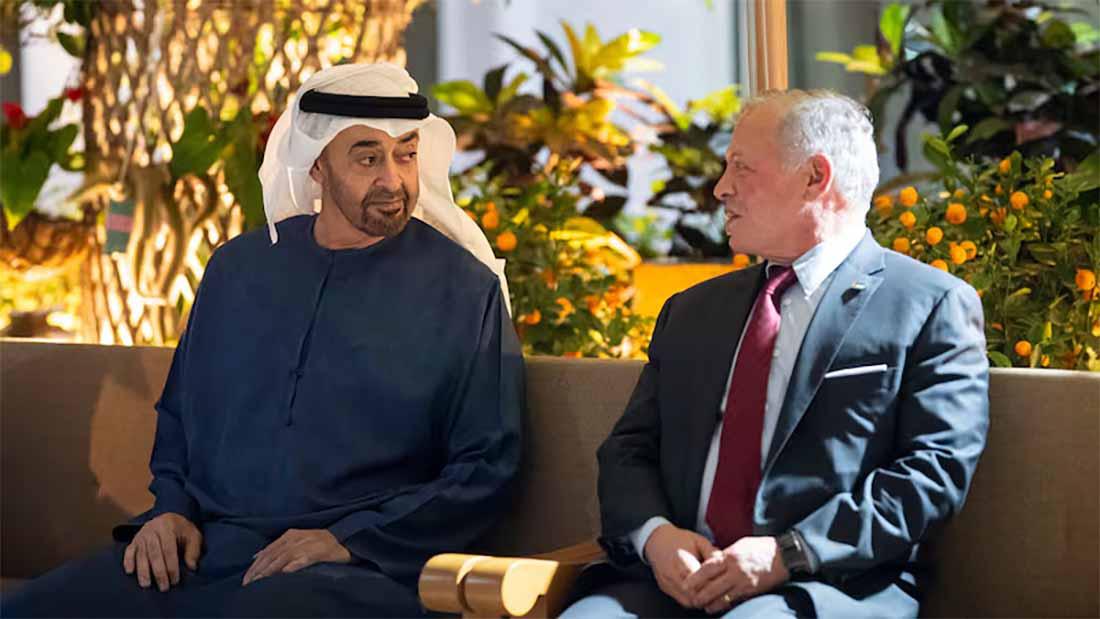
Sheikh Mohamed reaffirmed the UAE's solidarity with Jordan in defending its territory
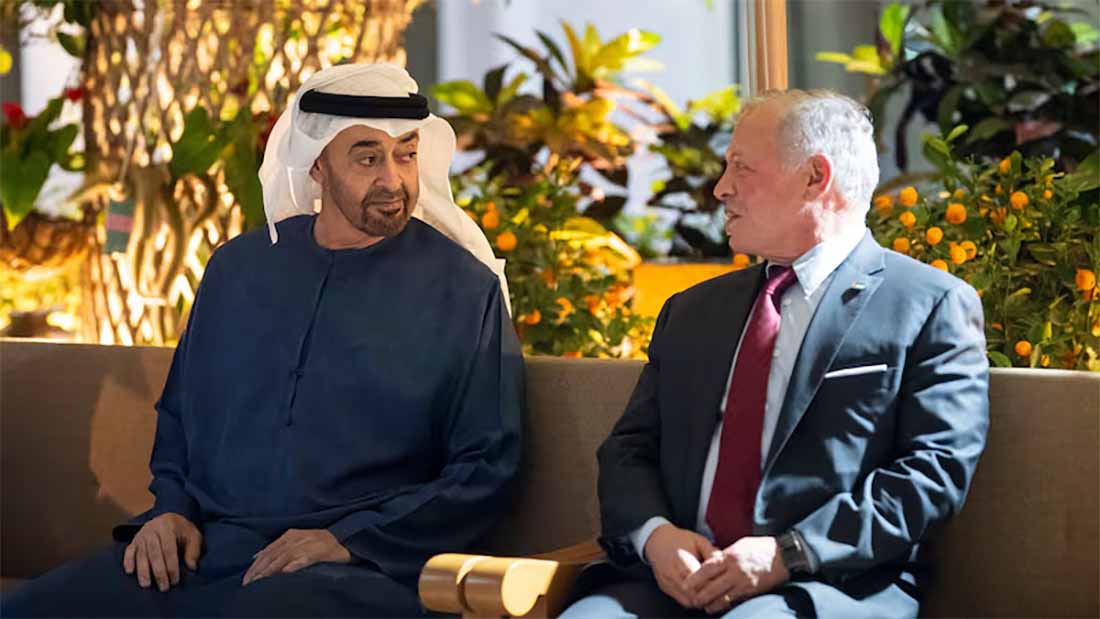
ABU DHABI - UAE President Sheikh Mohamed bin Zayed Al Nahyan received Monday Jordan’s King Abdullah II in Dubai amid escalating US-Israeli war on Iran.
The meeting, attended by key figures including Dubai Ruler Sheikh Mohammed bin Rashid Al Maktoum and other senior UAE officials, focused on the severe regional implications of the conflict now in its third week.
The discussions centered on the escalating military situation, particularly Iran's continued retaliatory attacks targeting multiple Arab states, including the UAE and Jordan.
Both leaders condemned these actions as blatant violations of national sovereignty, international law, and diplomatic norms, describing them as direct threats to regional and global security.
Sheikh Mohamed reaffirmed the UAE's solidarity with Jordan in defending its territory and people against Iranian aggression, while King Abdullah expressed unwavering support for the UAE's measures to safeguard its sovereignty.
A key point of consensus was the assertion that Arab nations, including members of the Gulf Cooperation Council (GCC), are not participants in the US-Israeli military campaign against Iran that began on February 28. Instead, the two leaders emphasized that Arab states have been actively working to contain the crisis, prevent further escalation, and promote de-escalation through diplomatic channels.
The meeting underscored the urgent need for an immediate halt to military actions and a return to serious dialogue to resolve outstanding issues. Both sides highlighted the importance of prioritizing diplomacy to preserve stability, avert additional crises, and protect the broader region's security architecture.
This face-to-face summit follows earlier phone conversations between the two leaders earlier in March, where similar concerns were raised about Iranian missile and drone strikes on Gulf states and Jordanian territory—often in retaliation for hosting US military facilities.
The conflict has seen Iran launch barrages against several Arab countries, including Bahrain, Kuwait, Qatar, Saudi Arabia, and the UAE, while maintaining selective control over the Strait of Hormuz, allowing its own exports to continue but severely disrupting others.
The UAE and Jordan, both longstanding US allies with significant economic and security ties to the West, have faced direct fallout from the war. Iranian strikes have damaged infrastructure in the UAE, including oil facilities, and forced temporary airspace closures. Jordan has intercepted threats over its territory and reaffirmed its defensive posture without joining offensive operations.
The leaders' emphasis on non-involvement and calls for de-escalation reflect broader Arab anxieties about being drawn into a wider confrontation.