
Cohesion, solidarity and unity
UAE shows wisdom and resilience in defence in preventing war
The Gulf Arab state emerges as a stable model capable of absorbing shocks without disruption, steadily continuing its journey, where defensive readiness integrates with continuous development amid Iranian aggression.
Tuesday 31/03/2026
Cohesion, solidarity and unity
TUNIS - In a charged regional moment, the United Arab Emirates chose to manage the challenge rather than react impulsively, balancing its sovereign right to defend its lands and airspace with its strategic vision that prioritizes stability and development.
This approach is not a spur-of-the-moment decision, but a continuation of a path established since the era of the founding father, Sheikh Zayed bin Sultan Al Nahyan, and is now sustained by a cohesive vision led by Sheikh Mohamed bin Zayed Al Nahyan. This vision posits that the true strength of nations is measured not only by their ability to respond, but by their wisdom in choosing the timing and nature of that response.
The true resilience of nations is measured in moments of adversity. Amidst the clamour, the deep cohesion between leadership and society emerges. In the case of the UAE, this meaning is clearly manifested in light of the Iranian attacks targeting its security and airspace.
The response has been within the framework of its sovereign right to self-defence, with precise calculations that avoided being drawn into a broader confrontation. This balance reflects strategic maturity based on protecting the state without compromising its developmental trajectory or internal stability.
In this context, the UAE stands out as a model for a nation capable of absorbing shocks without disruption and steadfastly continuing its journey, where defensive readiness integrates with continuous development. Thus, it proves that wisdom in crisis management does not mean hesitation, but rather making calculated decisions that protect sovereignty, maintain stability, and prevent slipping into wider conflicts, thereby enhancing its position as a strong and balanced state in a turbulent regional environment.
Efficient defence and calculated diplomacy
Since the beginning of the Iranian aggression, the UAE has dealt with threats with high efficiency. Its air defences confronted a series of ballistic missile and drone attacks, a scene reflecting advanced military readiness and remarkable operational discipline. The Ministry of Defence announced the interception and destruction of dozens of ballistic missiles and drones, demonstrating continuous defensive capabilities that protect the airspace without escalating beyond its defensive limits.
This military performance was not separate from a calculated political discourse, clearly expressed by Anwar Gargash, Diplomatic Advisor to the UAE President.
Gargash provided a coherent reading of the Emirati position. In a series of tweets, the most recent on Monday, he criticized the Iranian media discourse, describing it as "naive mobilization" far from realism, emphasizing that the credibility of the media narrative remains a crucial element in wars. This perspective reflects a deep understanding of the importance of the "battle of narrative" alongside the field battle.
He further affirmed in another tweet that any political solution must include clear guarantees preventing the recurrence of aggression and entrenching the principle of non-aggression, with the necessity of compensation for targeting civilian facilities. He also stressed that the UAE did not seek this war but is confronting "brutal aggression" with steadfastness and efficiency, while adhering to the belief that a political solution is the only path to ensure sustainable security in the region.
This balance between firmness and political openness illustrates the essence of the Emirati vision: defending sovereignty is an undeniable duty, but without being drawn into an open confrontation that could undermine regional stability. Herein lies the wisdom of the leadership in managing the crisis within a broader strategic framework aimed at containing escalation rather than fueling it.
Internal cohesion and continuous development
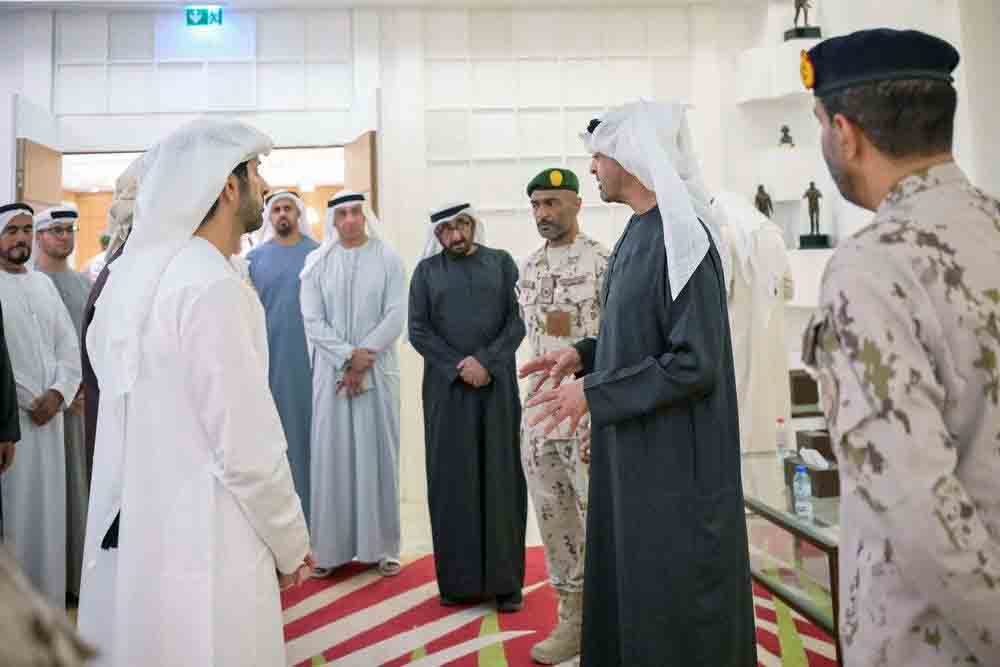
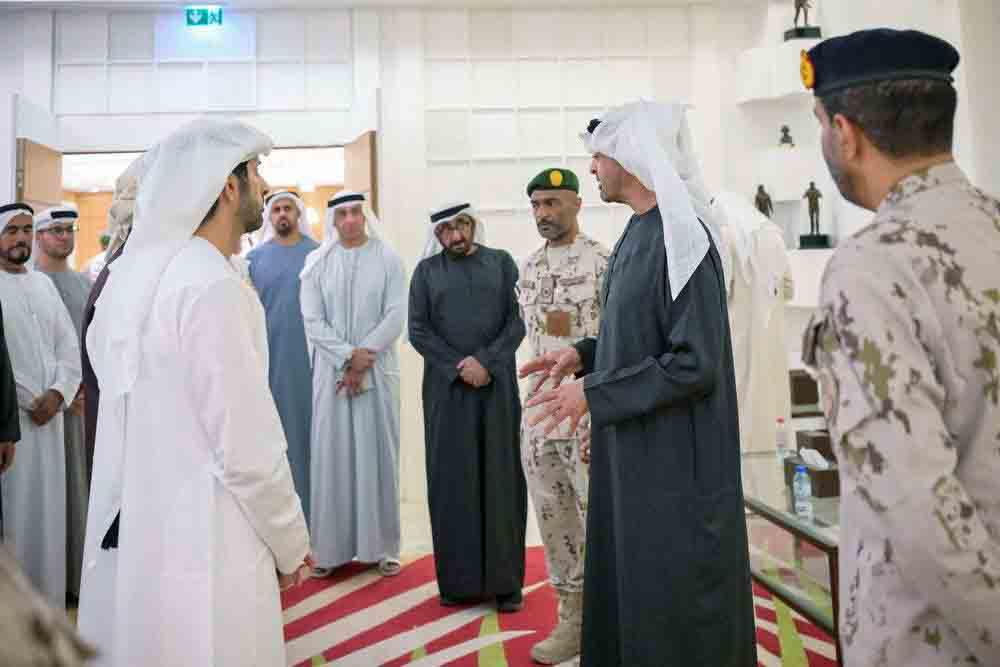
On the internal front, the image of national cohesion emerged as one of the most prominent elements of Emirati strength. Sheikh Mohammed bin Rashid Al Maktoum, Vice President, Prime Minister, and Ruler of Dubai, praised the high defensive spirit of the armed forces, the great national spirit of the people of the UAE and residents, and the sense of responsibility among work teams in various sectors. This solidarity between the leadership, institutions, and society formed a solid wall in the face of challenges.
The Cabinet affirmed that all sectors are working according to the President's vision to preserve achievements, with high readiness to ensure that the UAE is "stronger during events and faster in returning to normalcy." This reassuring message reflects deep institutional confidence in the state's ability to absorb shocks and continue its developmental path without interruption.
Perhaps what is striking is that the UAE, even in the midst of the crisis, did not halt the development wheel. Instead, it continued to launch strategic initiatives. A five-year strategy for the space sector was adopted, a sector exceeding 44 billion dirhams and comprising over 170 institutions, with plans to rank among the top ten countries globally. More than 120 international agreements in the fields of energy, investment, and technology were also approved, alongside an integrated medicine strategy, confirming that the state manages the crisis not with an emergency mindset, but with a continuity mindset.
This insistence on moving forward reflects the constants of the Emirati model, based on developed infrastructure, a flexible legislative system, a well-established network of international relations, and a quality of life among the best globally. These elements make the Emirati economy more capable of rapid recovery, and the state more attractive and trustworthy in the eyes of international partners.
The current scene, despite its complexities and interconnections, shows that the UAE presents a unique model in crisis management: a defensive force that efficiently protects sovereignty, a rational political discourse that rejects escalation, internal cohesion that strengthens the national front, and developmental continuity that sends a message of confidence to the world. In its entirety and essence, it is a precise equation that combines resilience and flexibility, deterrence and wisdom, making the UAE not only a country capable of overcoming challenges but also of emerging from them stronger and more stable.