

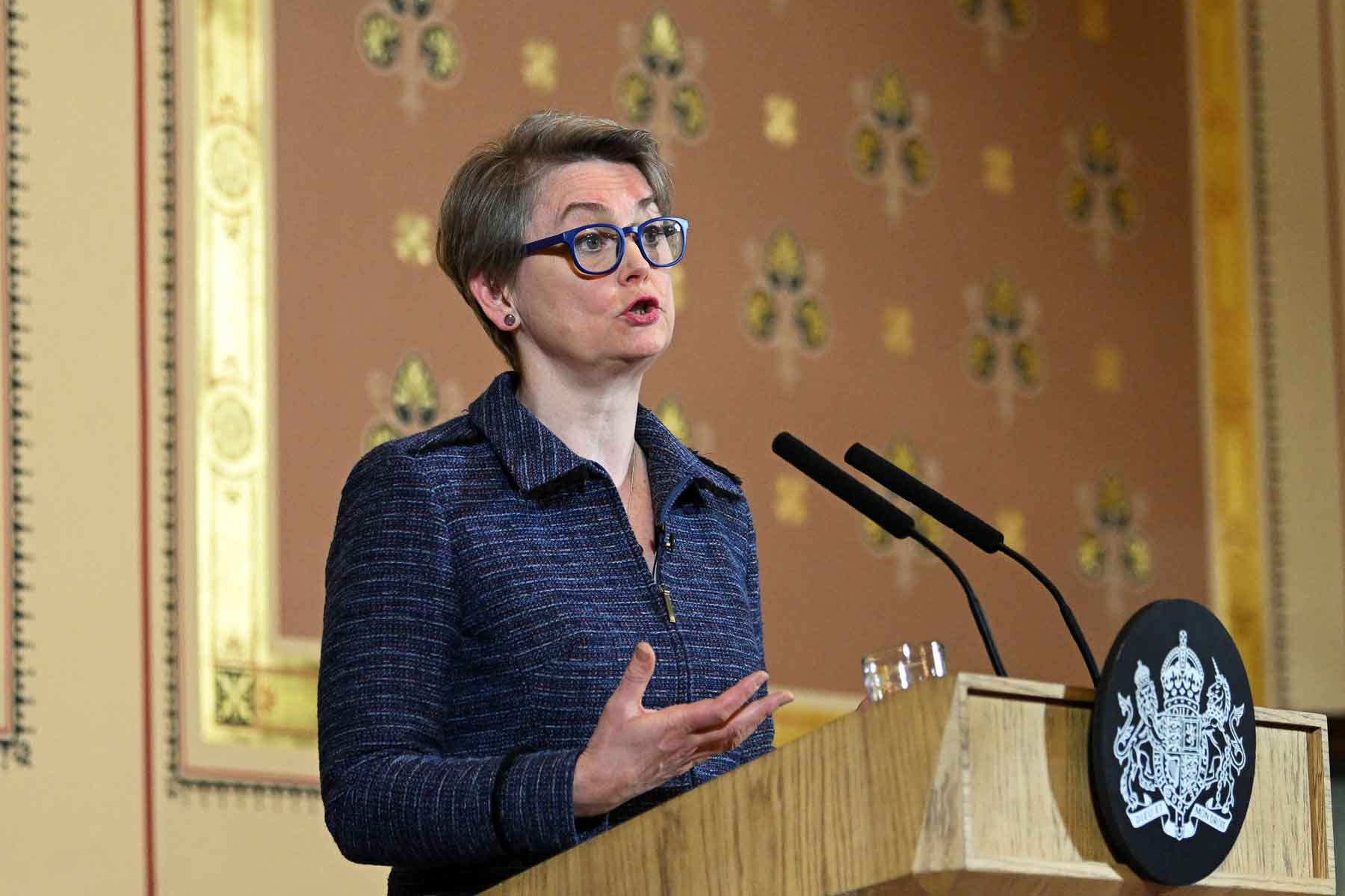
British Foreign Secretary Yvette Cooper speaks at an event in London, December 9, 2025.
UK balances aid and accountability in Syria with new sanctions
The latest action underscores that sanctions relief is neither comprehensive nor unconditional.
Friday 19/12/2025
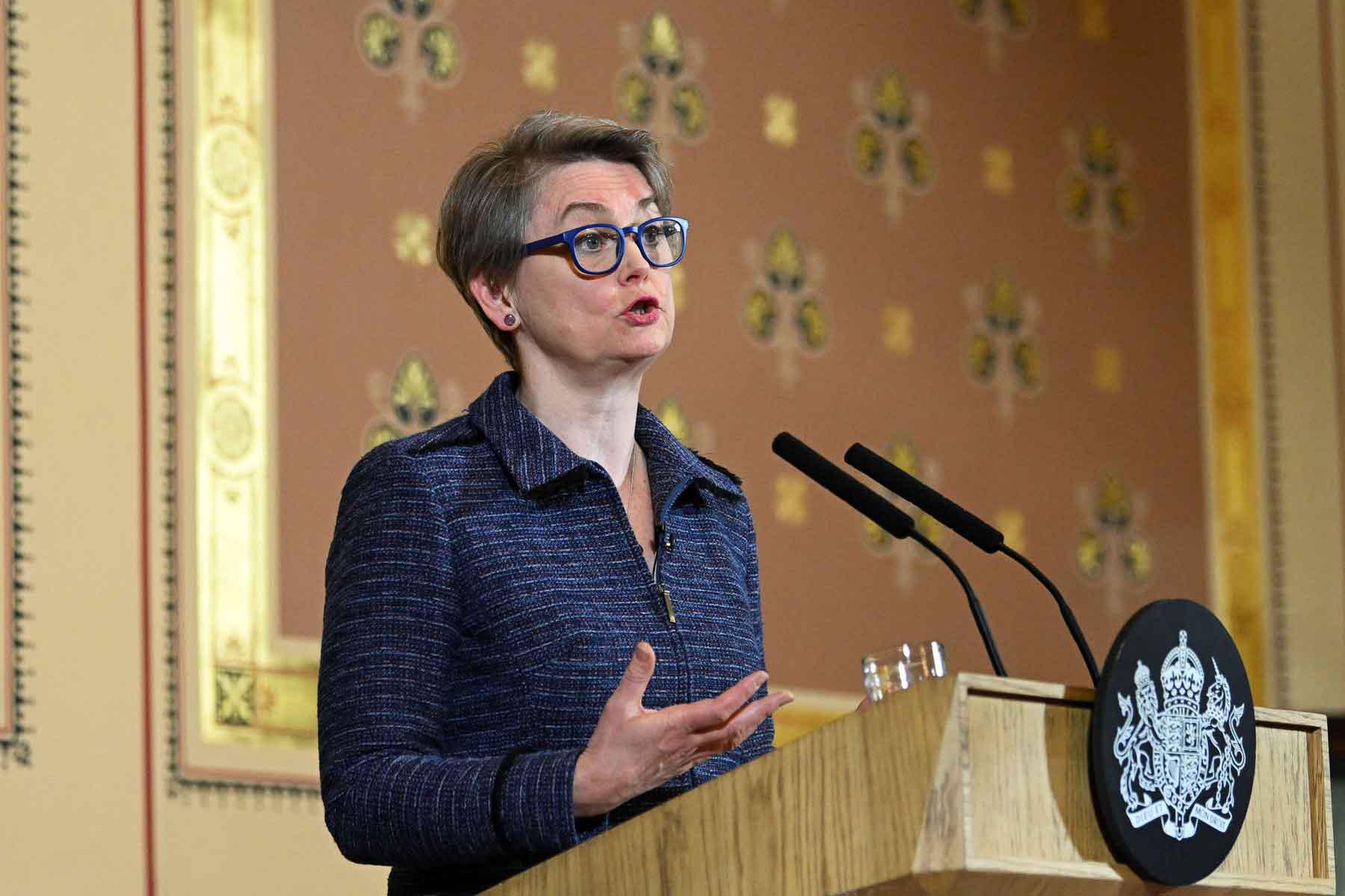
British Foreign Secretary Yvette Cooper speaks at an event in London, December 9, 2025.
LONDON –
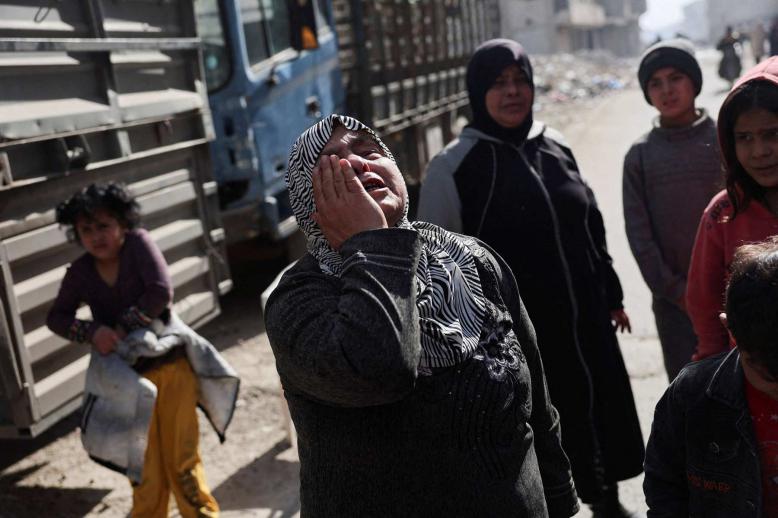
Britain imposed on Friday sanctions on individuals and organisations linked to violence against civilians in Syria, including some who financially supported the former regime of Bashar al-Assad. The measures, combining asset freezes and travel bans, are aimed at both recent incidents along the Syrian coast in March and historic abuses committed during the country’s long civil war.
“Accountability and justice for all Syrians is vital to ensure a successful and sustainable political settlement in Syria,” Foreign Minister Yvette Cooper said in a statement.
The decision comes just two days after London removed four other names from its sanctions lists, reflecting what officials describe as a “carrot and stick” policy. While institutions no longer linked to repression, such as certain service providers and state entities, have had restrictions eased to facilitate humanitarian aid and infrastructure rebuilding, individuals involved in violence remain in the crosshairs.
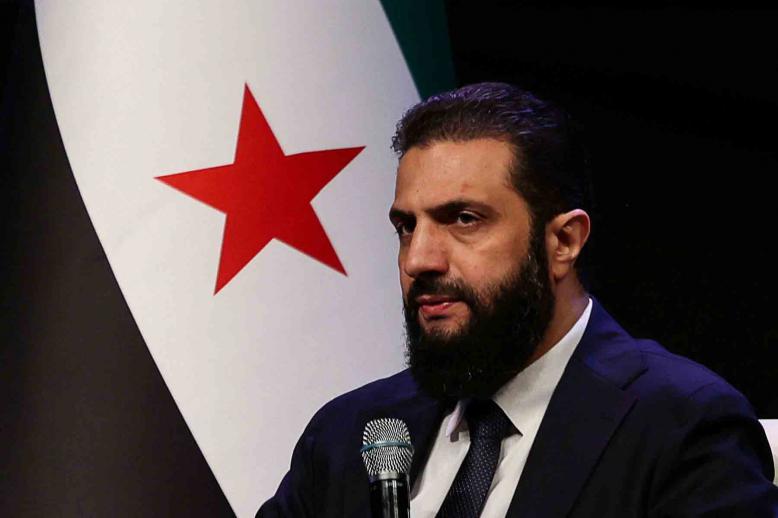
By targeting those responsible for the coastal attacks of last March, Britain is sending a clear message: stability cannot come at the cost of impunity, and local militias or rogue actors cannot be allowed to commit new violations. The measures place pressure on Syria’s transitional administration, led by Ahmed al-Sharaa, to maintain security in line with human rights standards.
Although previous sanctions on state institutions, including the central bank and energy companies, have been lifted to support the Syrian population, the latest action underscores that sanctions relief is neither comprehensive nor unconditional.
Business leaders and investors remain wary, as the UK’s approach signals that any financial dealings with suspected individuals or participation in repression could result immediately in asset freezes and travel bans, creating a highly scrutinised investment climate.
The coastal unrest represents a critical test for the legitimacy of Syria’s transitional authority. Analysts note that the incidents were not merely security disturbances but a barometer of the government’s ability to evolve from a militarised faction into an institutional state capable of protecting all citizens. The ease of toppling the Assad regime contrasts with the far more difficult task of building acceptance and safeguarding minorities.
In this context, the new UK sanctions serve as a stark reminder to the transitional government that “accountability” carries no statute of limitations and that recent civilian-targeted violence holds political weight comparable to abuses under the previous regime.
The combination of easing sanctions to aid reconstruction while punishing individual violators highlights London’s dual strategy: supporting Syria’s recovery while maintaining pressure on those who threaten peace and stability.