


Not only amusement but a formative education
Ancestors’ games keep Emirati values alive in digital age
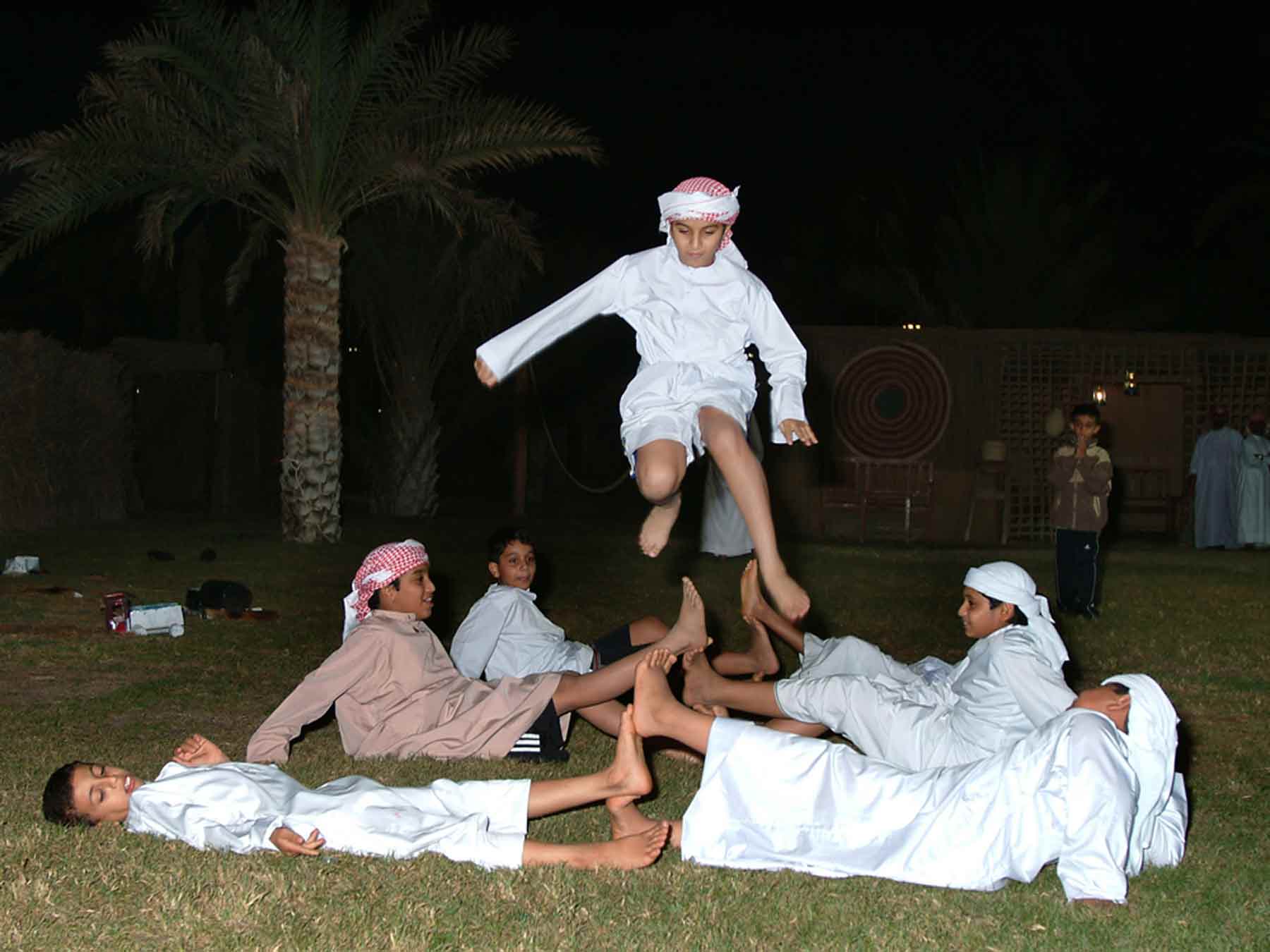
Rooted in the coast, desert, mountains and oases, folk games emerged naturally from the environment and economic realities of earlier generations.
Friday 27/02/2026
Not only amusement but a formative education
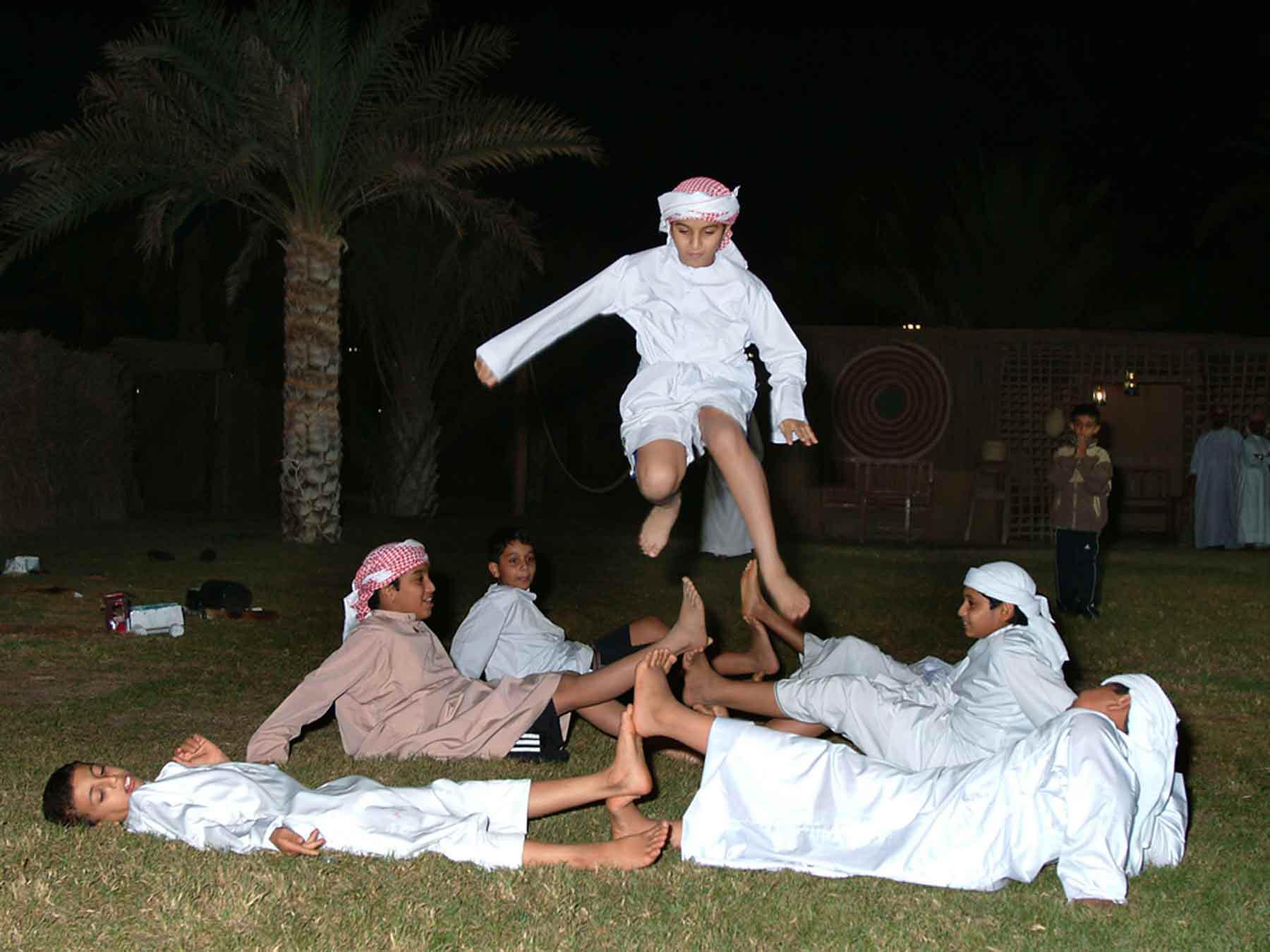
ABU DHABI – Traditional children’s games in the United Arab Emirates are far more than nostalgic pastimes. They form a cornerstone of the country’s intangible cultural heritage, preserving collective memory and reflecting the rhythms, values and social fabric of life before oil wealth and digital screens reshaped society.
Rooted in the coast, desert, mountains and oases, these games emerged naturally from the environment and economic realities of earlier generations. They mirrored daily life, its hardships, its solidarities and its resourcefulness, and offered children not only amusement but a formative education in cooperation, discipline and belonging.
Long before manufactured toys and electronic devices, Emirati children fashioned their own playthings from palm fronds, rope, stones and scraps of wood. The simplicity of the materials belied a striking creativity. Games were invented, adapted and passed down orally from one generation to the next, gradually becoming embedded in the national identity.
A school without walls
Researchers and heritage specialists view these folk games as rich with educational and psychological dimensions. They combine entertainment with character-building, helping to shape both physical and mental skills.
Group games instilled cooperation and reinforced community bonds, reflecting a society historically built on mutual support and collective effort. Through play, children learned patience, perseverance and respect for rules, values central to balanced personal development.
Many games were accompanied by simple chants and rhymes, embedding oral traditions into childhood memory. These verses preserved local dialects and offered subtle insights into everyday life, turning play into an informal classroom where culture and custom were transmitted naturally and continuously.
Lessons in leadership and fairness
Some of the most enduring games emphasised leadership and teamwork. In activities where children split into competing groups, each team selected a leader responsible for organising players and guiding strategy. Such structures taught the importance of coordination, trust and collective achievement.
Other games reinforced adherence to rules. Violating agreed boundaries was seen as undermining the spirit of play, instilling early notions of fairness and accountability. Trust-based games, where players counted points or waited their turn without supervision, fostered honesty and integrity.
Physical games, involving running, chasing or jumping, strengthened muscles and coordination. Mental games, including strategy-based contests and riddles, sharpened memory, concentration and quick thinking. Together, they offered a balanced developmental framework long before formalised recreational theory emerged.
Geography of play
The diversity of the UAE’s landscapes shaped its games. In agricultural and rural communities, children devised activities reflecting farming life and reliance on local materials. In coastal towns, games often drew inspiration from the sea, pearl diving and fishing traditions, capturing the maritime spirit of challenge and adventure.
Some activities were shared by boys and girls, particularly those associated with social gatherings and celebrations. Others reflected the gender roles prevalent at the time: girls’ games frequently involved light movement or role-playing elements, sometimes accompanied by songs, while boys’ games leaned more towards physical competition and endurance.
For younger children, simplicity was key. Early childhood games were designed to match limited physical and cognitive abilities, supporting the gradual development of basic motor and social skills.
Across cities, villages, mountains and desert settlements, around 25 principal traditional games became widely recognised. Collectively, they represent more than leisure; they form an integrated cultural system embodying solidarity, ingenuity and adaptation to environment.
Heritage under pressure
Today, rapid technological transformation poses a challenge to the continuity of these traditions. Electronic games and online entertainment dominate modern childhood, raising concerns that folk games may fade into obscurity.
Yet cultural institutions across the UAE have sought to counter that trend. Through heritage festivals, school programmes and community initiatives, authorities are working to revive and preserve traditional games as living practices rather than museum pieces.
For many Emiratis, these games are not relics of a distant past but a bridge between generations. They serve as a reminder that heritage is not static. It evolves, adapts and continues to shape identity even amid dramatic social change.
In their simplicity lies enduring relevance. Emirati folk games capture a way of life marked by cooperation, resilience and creativity. As the country strides deeper into the digital age, they remain a vibrant testament to the human values that underpinned its past, and continue to inform its present.