
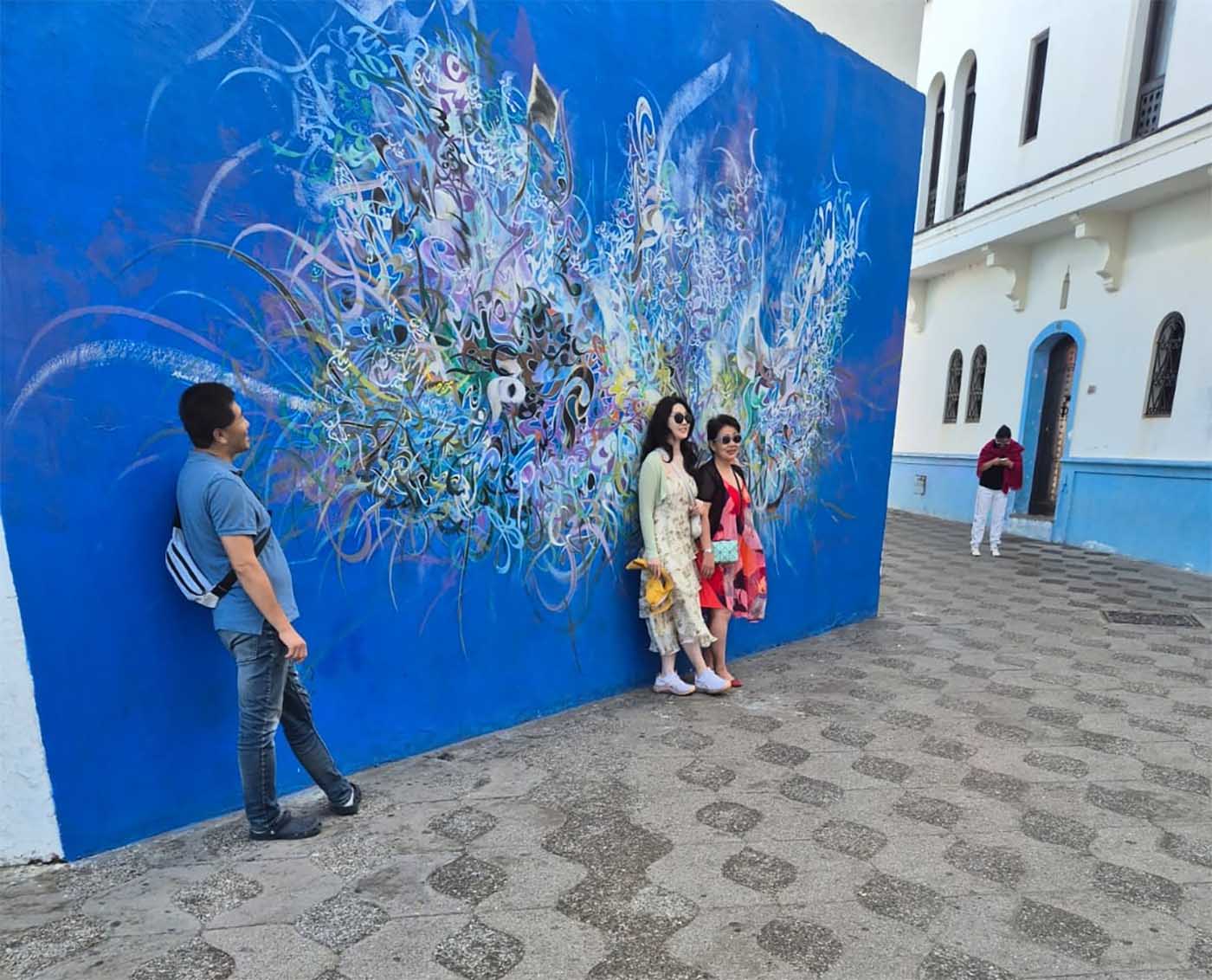
The beauty of Assilah is embodied by the murals painted by international artists during the cultural moussem
Assilah between the beauty of memory and the chaos of murals
The murals, which were once a symbol of artistic discipline, have now become the epitome of chaos as a result of the lack of organisation.
Wednesday 25/03/2026
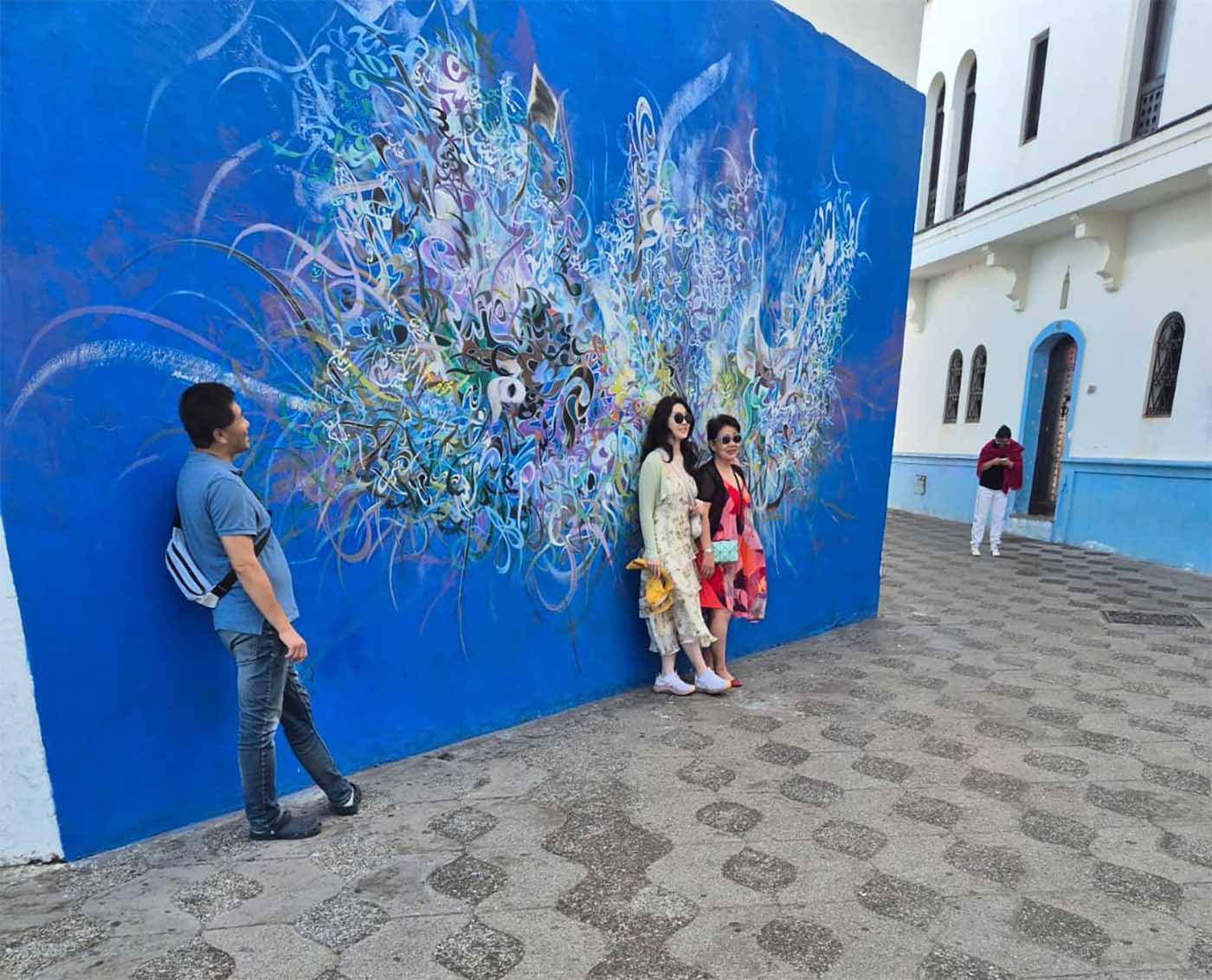
The beauty of Assilah is embodied by the murals painted by international artists during the cultural moussem
In the alleys of old Assilah, my summer tours have been since the early 1980s, and over the decades that ensued, starting with the murals. The alleys of the city were open theatres of art, and they surprised me in every corner with a new painting. I walked with pleasure between these paths, as if I were walking through a living gallery, where the murals mimic the spirit and history of the place.
The murals, with each summer, were like a bell for the cultural season. The city was shining on a rhythm of organised creativity, artists working in specific locations, and under artistic supervision that ensured harmony between the works and the space.
Creativity was a collective moment that reshaped the city, giving it a new breath without losing its identity. Each mural had a meaning, and each wall played a role in this elaborate visual symphony.
For nearly half a century, Assilah has been an integrated cultural project, which has succeeded in transforming the public space into a sophisticated artistic language, reflecting the city's identity and expressing its spirit through an exceptional experience that has made artistic murals part of a comprehensive and disciplined vision.
But what the city knows today is really troubling. Murals began to multiply randomly, outside of any clear artistic framework, harmonious aesthetic perception, or artistic framing. Walls are coloured here and there, without respect for the visual identity that has characterized Assilah's authentic identity for decades, and without taking into account the balance between painting, taste, and public space. With this unframed spread, the murals have gone from a creative element to a source of visual distortion that loses one of the city's most important secrets of its charm.
The murals, which were once a symbol of artistic discipline, have now become the epitome of chaos as a result of the lack of organisation. Painting in the public space cannot be left to individual jurisprudence, but needs clear rules, just as construction needs laws that control construction and preserve public harmony. When these rules are absent, individual initiative becomes chaos, and the line between creativity and distortion is lost.
Hence, the responsibility of the municipal council and local authorities emerges, not only as managerial bodies, but also as a guarantor of the city's memory and identity. Maintaining an authentic aesthetic should be treated as part of city policy, and managed with the same rigour as construction codes. Just as random construction that upsets the balance of the city is not allowed, ill-considered graphics that disrupt their visual harmony in the public space should not be allowed.
This requires a clear regulatory framework for the murals, which defines their standards, subjects them to specialized artistic supervision, and ensures that they are linked to framed cultural projects, such as in the case of an authentic season experience.
However, this local role needs to be strengthened through national initiatives. The preservation of Assilah's cultural heritage also requires the support of the Ministry of Culture, as the custodian of the protection of the national artistic heritage. The Ministry can play a constructive role by developing a national framework for regulating art in the public space, and by supporting visual rehabilitation programmes for cities with cultural baggage.
Today, Assilah is at a crossroads: either it maintains its identity as a city of art and disciplined taste or it slides into chaos and visual distortion.