
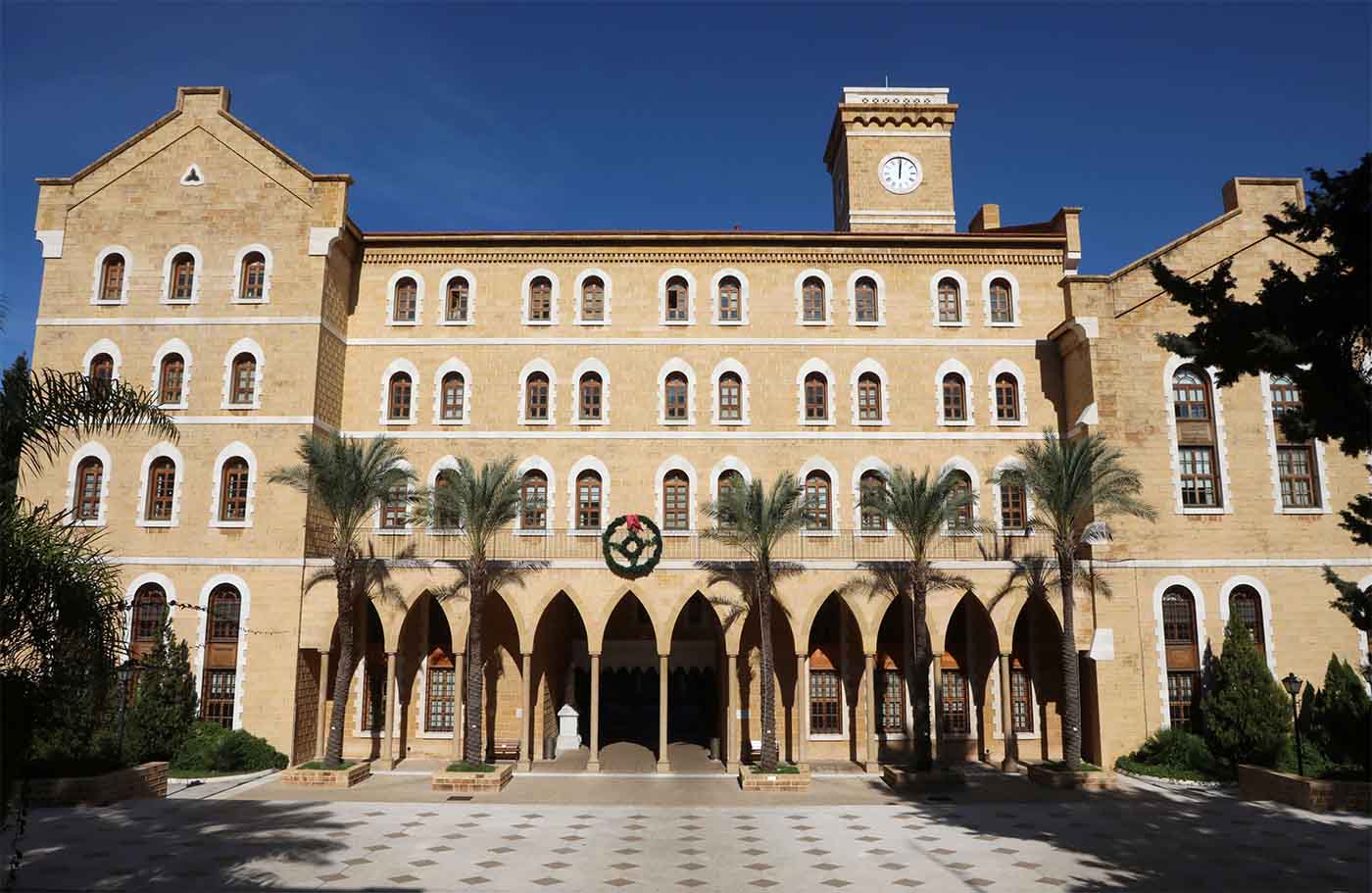
The American University of Beirut
Iran's grudge against the American University
The "Islamic Republic" drove the United States out of Lebanon after bombing the Marine barracks near Beirut airport in 1983. It is no coincidence that its campaign against the American presence began with the American University of Beirut, which is now under threat.
Thursday 02/04/2026
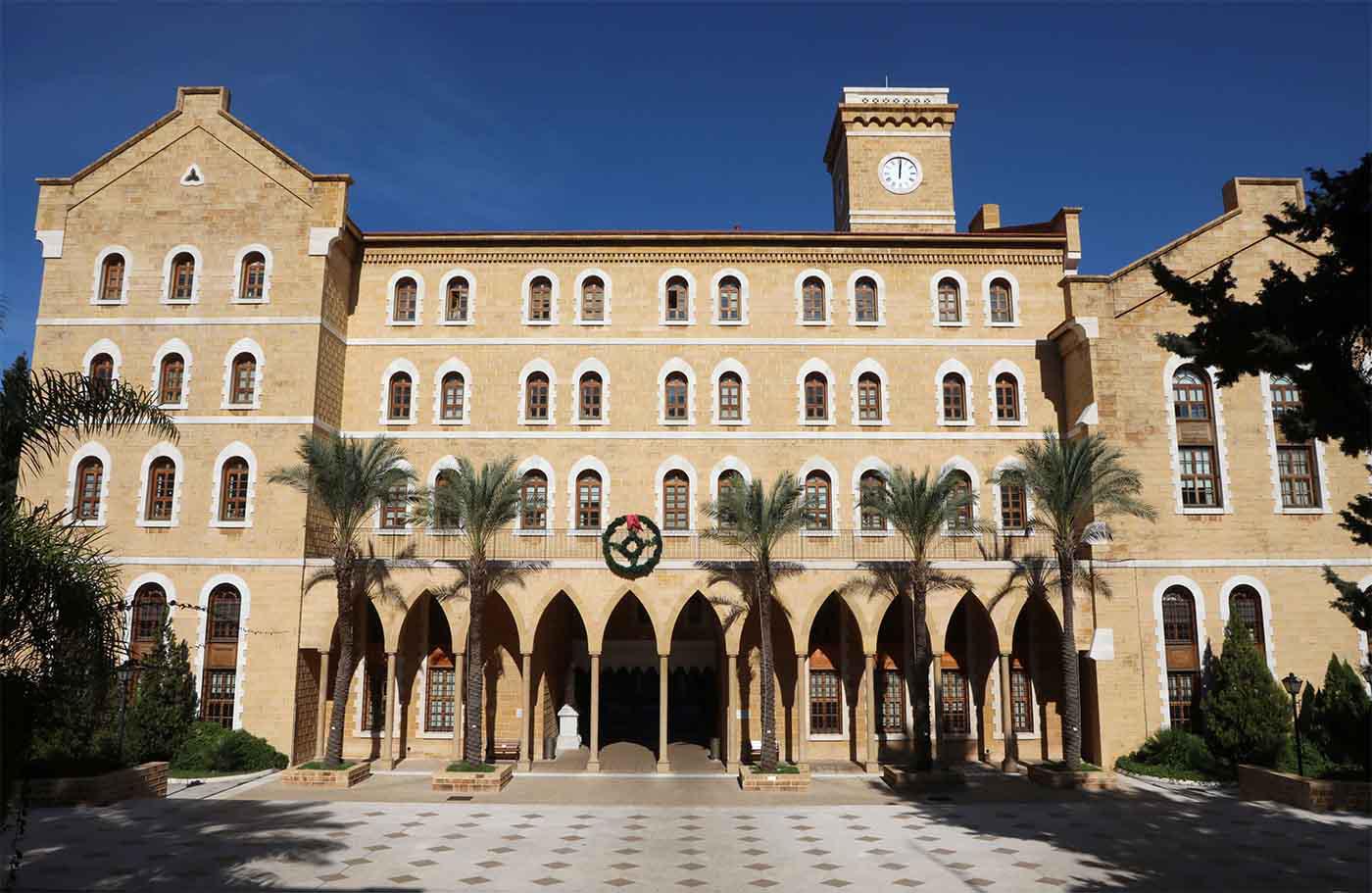
The American University of Beirut
A quick glance at the "Islamic Republic's" handling of Lebanon since its establishment in 1979 is enough to confirm that Tehran's refusal to withdraw its designated ambassador to Beirut, Mohammed Reza Shibani, is more than natural. What seems even more natural is the declaration of targeting American universities in the region, including the American University of Beirut (AUB), which was founded in 1866 and continues to fulfill its duty towards the Lebanese people – all Lebanese people. It has performed this civilizational duty since its first day in Ras Beirut without discrimination between one Lebanese and another, between one religion and another. This is confirmed by the fact that four out of the five Shiite ministers in Najib Mikati's government, including the two "Hezbollah" ministers, are AUB graduates.
Tehran's refusal to withdraw its ambassador, who has not yet presented his credentials, from Beirut only reflects a disdain for Lebanon. This is a view that those controlling the "Islamic Republic" system have never been able to shake off, just as they have never been able to shake off a deep feeling of grudge against the American University of Beirut. What must be noted in this regard is that disdain for Lebanon began on the first day elements of the "Revolutionary Guard" entered Lebanese territory in the summer of 1982. It is no secret that the decision to allow them into Lebanese territory was taken by Hafez al-Assad, then ruler of Syria, from a sectarian perspective.
It is remarkable that the first place where the "Revolutionary Guard" settled in Lebanon was a Lebanese army barracks, the "Sheikh Abdullah Barracks" in Baalbek, from which its soldiers and officers were expelled. This symbolized a long journey aimed at destroying Lebanese state institutions one after another, starting with the military institution. There is no need to recall the number of Lebanese officers, especially in the Beqaa region, whom the "Revolutionary Guard" worked to eliminate directly or through "Hezbollah," which it established in Lebanon.
Iran Does Not Believe!
The refusal to withdraw the Iranian ambassador seems a continuation of what the "Revolutionary Guard" began in the summer of 1982. The "Guard," which effectively rules Iran since the establishment of the "Islamic Republic," cannot believe that its ambassador is no longer acceptable in Beirut after having, at one point, determined who would be the President of the Republic of Lebanon.
Iran managed to impose Michel Aoun as President of the Republic in 2016. Before that, it made him go through all the tests he had to pass, including overthrowing Saad Hariri's government shortly after his return from a visit to Tehran where he rejected the three conditions Iran wanted to impose on him. These conditions related to exempting Iranian citizens from entry visas to Lebanon, signing a joint defense treaty, and allowing Iran to enter the Lebanese banking system through a deposit in the Central Bank.
The "Guard" achieved what it considers countless accomplishments in Lebanon, especially after the assassination of Rafik Hariri and his companions, which was an assassination of Lebanon itself. This was followed by its control over Beirut and Mount Lebanon on May 7 and 8, 2008. Before that, it instigated the 2006 summer war with Israel. The war aimed to complete the subjugation of Lebanon and the Lebanese in understanding with the Israeli state. Israel did not wake up to the danger of "Hezbollah," with whom it had an understanding on how to withdraw from South Lebanon in 2000 and then on the "rules of engagement," until it was too late.
It is not easy for the "Guard" affiliated with the "Islamic Republic" to admit that what it has achieved in Lebanon will be followed by a slap such as the request to withdraw its ambassador in Beirut. It was not limited to the assassination of Rafik Hariri and Bassel Fleihan. A series of assassinations targeted several figures known for their sovereign stance.
The Campaign Began from the University
The "Islamic Republic" drove the United States out of Lebanon after bombing the Marine barracks near Beirut airport in 1983. It is no coincidence that its campaign against the American presence began with the American University of Beirut, which is now under threat. Just as Iran began to subjugate Lebanon by occupying an army barracks in Baalbek, it initiated the attack on the American University by kidnapping the university president, David Dodge, from inside the university campus in Beirut in July 1982. Dodge was transferred to Tehran via Damascus. His release was thanks to the late Rifaat al-Assad, Hafez al-Assad's brother, who wanted to present his credentials to the Americans at the time and show that he was different from his elder brother.
In 1984, the Iranians, through their Lebanese tool, assassinated Malcolm Kerr, the new president of the American University. In 1991, "College Hall," the building from which the American University is administered, was bombed.
The "Islamic Republic" has never separated the American University of Beirut from its campaign against Lebanon and its institutions. It has not realized, to this day, that the university is one thing and the American presence in Lebanon is another, and that the university, which includes students from "Hezbollah," is not affiliated with the American administration. Rather, it is an independent institution whose Board of Trustees includes Lebanese and Arabs working to raise the level of education in the region in an atmosphere of tolerance and acceptance of the other.
The problem with the Iranian regime currently is that it refuses to deal with and adapt to a new reality. It is a reality epitomized by Lebanon's refusal, whose fate is now at stake, to be an Iranian card. Lebanon is looking for a way to catch its breath again, no more, in order to return to a space dominated by a culture of life expressed by an institution, symbolizing the Lebanese civilizational dimension, like the American University of Beirut.