

Under pressure
Militia commander killed as Iraq moves to contain regional spillover
The Islamic Resistance in Iraq warned that any entity seeking to interfere in Iraq or the wider region, naming NATO members, would have its interests considered “legitimate targets.”
Thursday 05/03/2026
Under pressure
BAGHDAD – A commander from the Islamic Resistance in Iraq, an umbrella group of Iran-backed armed factions, was killed in an airstrike south of the capital on Wednesday, police sources said, in the latest sign that Iraq is being pulled deeper into the widening regional conflict.
The commander and his driver died when their vehicle was struck south of Baghdad, according to security officials. No immediate claim of responsibility was made, but the killing comes amid intensifying hostilities between Iran, the United States and Israel, with Iraqi territory increasingly exposed to retaliation and proxy attacks.
In a separate development, Iraqi security forces seized a mobile rocket launch platform carrying two missiles ready to be fired at a neighbouring country. The launcher was discovered in the Zubair district, south of Basra, security sources said on Thursday, in what they described as a pre-emptive operation based on precise intelligence from the Iraqi National Security Service.
Authorities also reported intercepting a drone on the outskirts of Baghdad International Airport, underscoring the fragile security environment around key installations, including sites hosting US forces.
The Islamic Resistance in Iraq warned in a statement that any entity seeking to interfere in Iraq or the wider region, naming NATO members France, Germany and Britain, would have its interests considered “legitimate targets.” The threat signals a potential expansion of targets beyond US assets, raising concerns among Western governments with personnel and investments in Iraq.
Meanwhile, tensions have flared along Iraq’s northern border with Iran. Iran’s Tasnim news agency cited its reporters in three border provinces as denying claims that armed Kurdish militants had crossed into Iranian territory from Iraq.
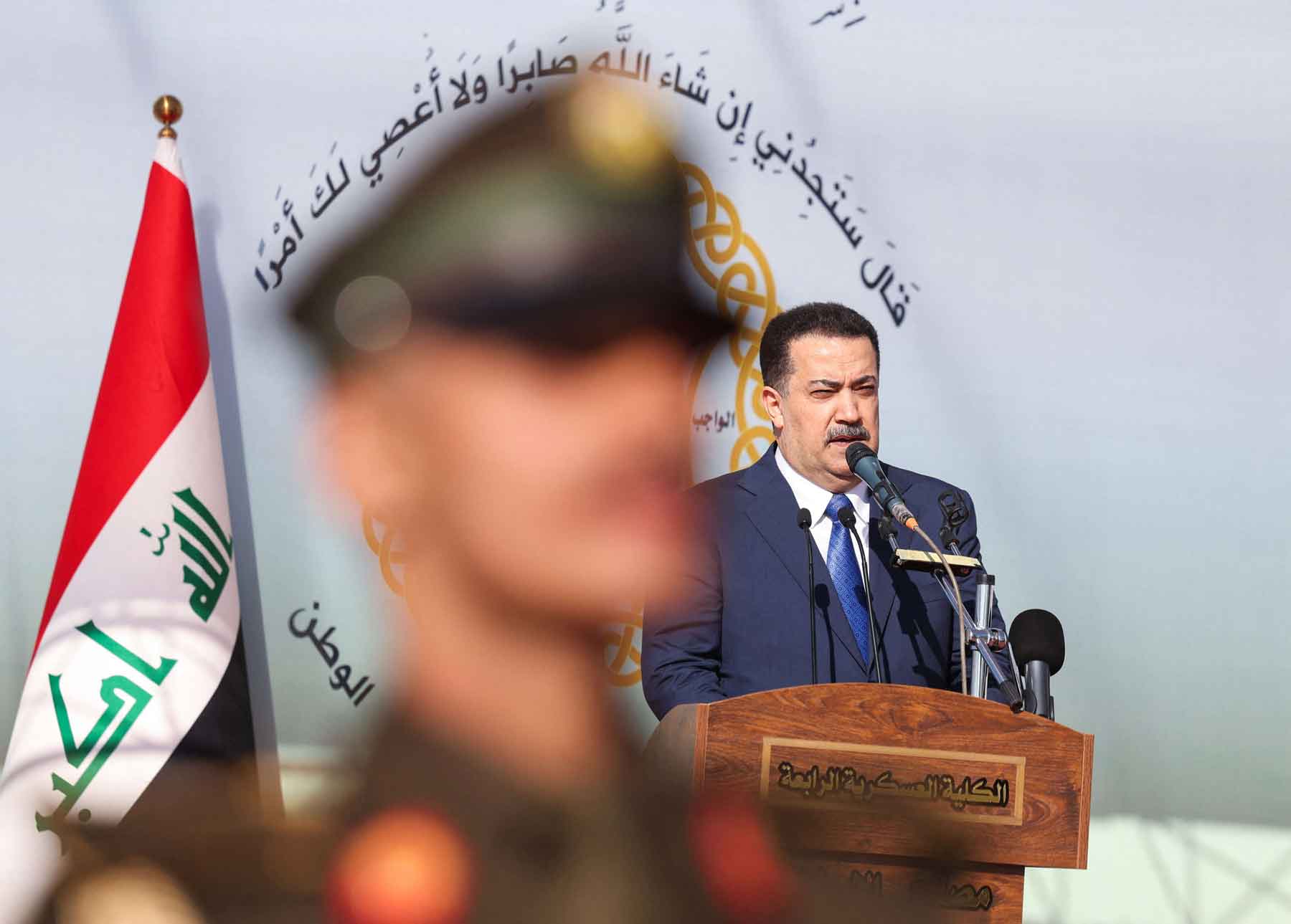
Iraq’s national security adviser, Qassem al-Araji, said Kurdish forces had bolstered security along the Iranian frontier to prevent infiltration or attacks. In a phone call with Iran’s senior diplomat Ali Bagheri, Araji said Prime Minister Mohammed Shiaa al-Sudani had ordered that no group be allowed to “infiltrate into Iran and carry out terrorist acts from Iraqi territory.”
Araji added that Kurdish authorities had deployed additional security reinforcements along the border from Erbil, capital of the autonomous Kurdistan region, in line with a 2023 security agreement between Baghdad and Tehran aimed at stabilising their shared frontier.
The Kurdistan region has increasingly been drawn into the regional war. It hosts camps and rear bases used by several Iranian Kurdish rebel groups, which Tehran accuses of serving Western or Israeli interests. These groups have frequently been targeted by Iranian cross-border strikes.
Since Tuesday, two Iranian Kurdish factions have accused Iran of attacking their positions in Iraqi Kurdistan. Last month, five groups announced a political coalition committed to “the struggle to overthrow the Islamic republic of Iran” and to Kurdish self-determination.
On Wednesday, Mustafa Hijri, Secretary General of the Democratic Party of Iranian Kurdistan (PDKI), called on Iranian soldiers and security personnel, particularly in Kurdish regions, to desert.Iraq finds itself navigating a precarious balancing act.
While officially aligned with neither side in the escalating confrontation, it hosts Iran-backed militias that form part of its powerful Popular Mobilisation Forces, alongside US troops stationed in the country as part of anti-Islamic State operations.
The killing of a militia commander south of Baghdad highlights the vulnerability of these factions to targeted strikes and raises the risk of retaliation against Western interests. The seizure of missiles in Basra and interception of a drone near Baghdad airport point to the possibility that Iraqi soil could be used as a launchpad for broader regional escalation.
At the same time, Iraq is under pressure from Iran to ensure that Kurdish opposition groups do not exploit the chaos to strike across the border. The reinforcement of Kurdish security positions appears aimed at reassuring Iran that Iraq will uphold the 2023 border security pact.
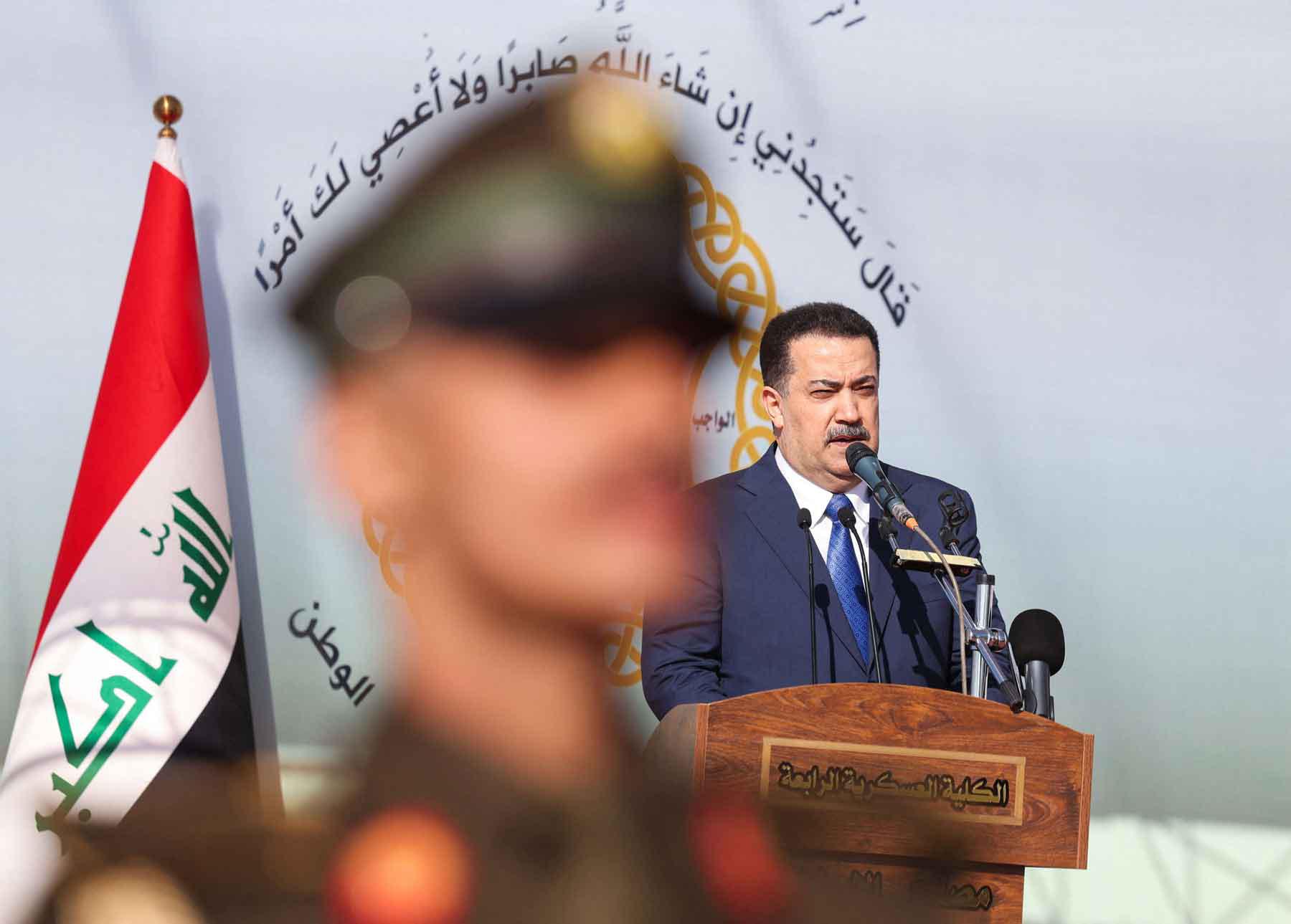
For Prime Minister Sudani’s government, the priority is to prevent Iraq from becoming a battlefield in a conflict not of its choosing. Yet with armed factions issuing threats against NATO countries and cross-border tensions mounting, Iraq’s ability to contain the fallout may prove increasingly strained.
The coming days will test whether Baghdad can assert control over its territory and maintain neutrality, or whether it will be drawn further into a confrontation reshaping the region.