

Sisi: Our region today stands at a historic crossroads
Sisi pushes diplomacy to contain Iran war as Egypt warns of spillover
Sisi held a phone call with Iraqi Prime Minister Mohammed Shiaa al-Sudani, during which he reaffirmed Egypt’s full support for the sovereignty, security and stability of Iraq.
Monday 16/03/2026
Sisi: Our region today stands at a historic crossroads
CAIRO – President Abdel Fattah al-Sisi has stepped up diplomatic outreach across the Middle East as Egypt warns that the widening war between Iran on one side and Israel and the United States on the other risks destabilising the region and triggering global economic repercussions.
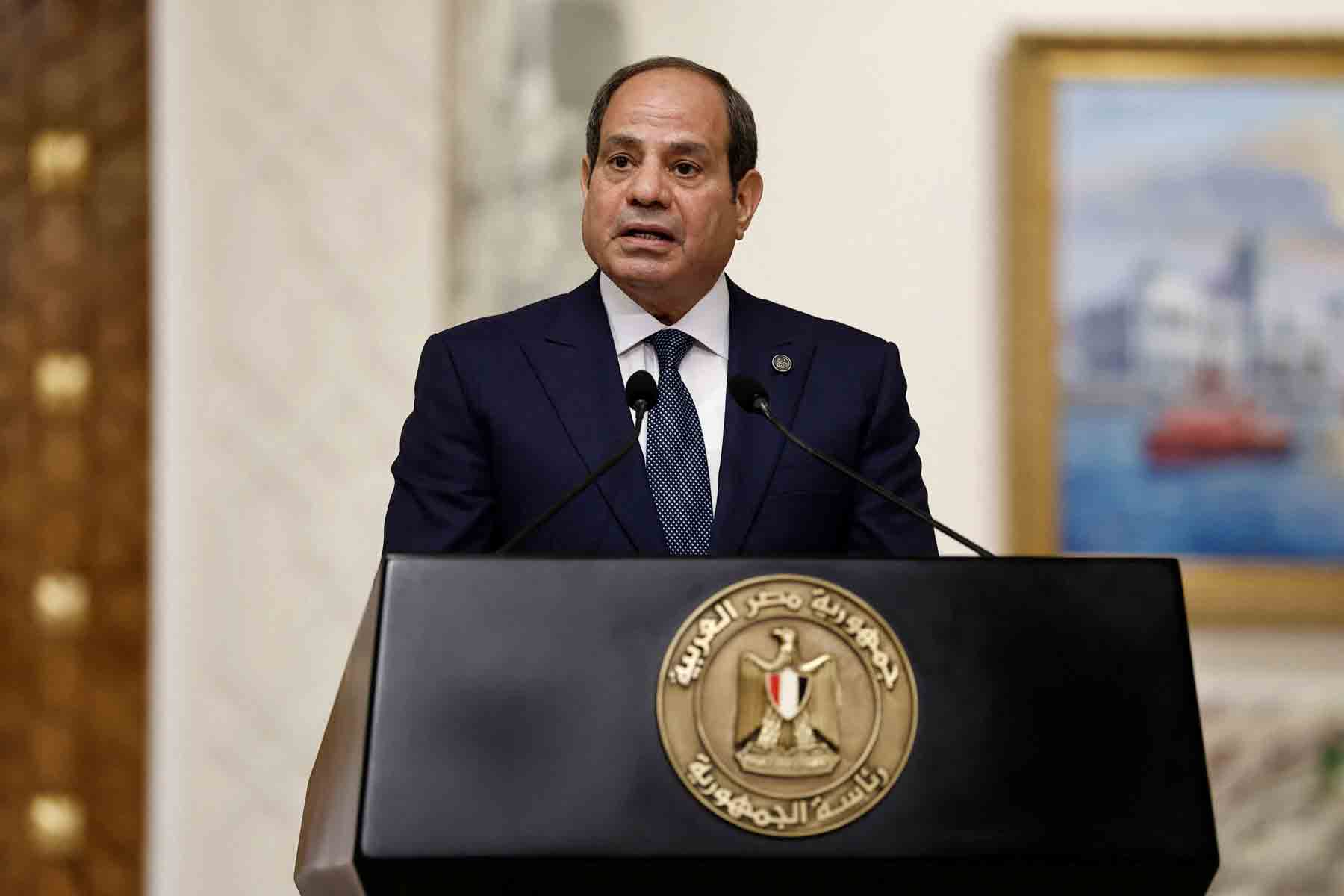
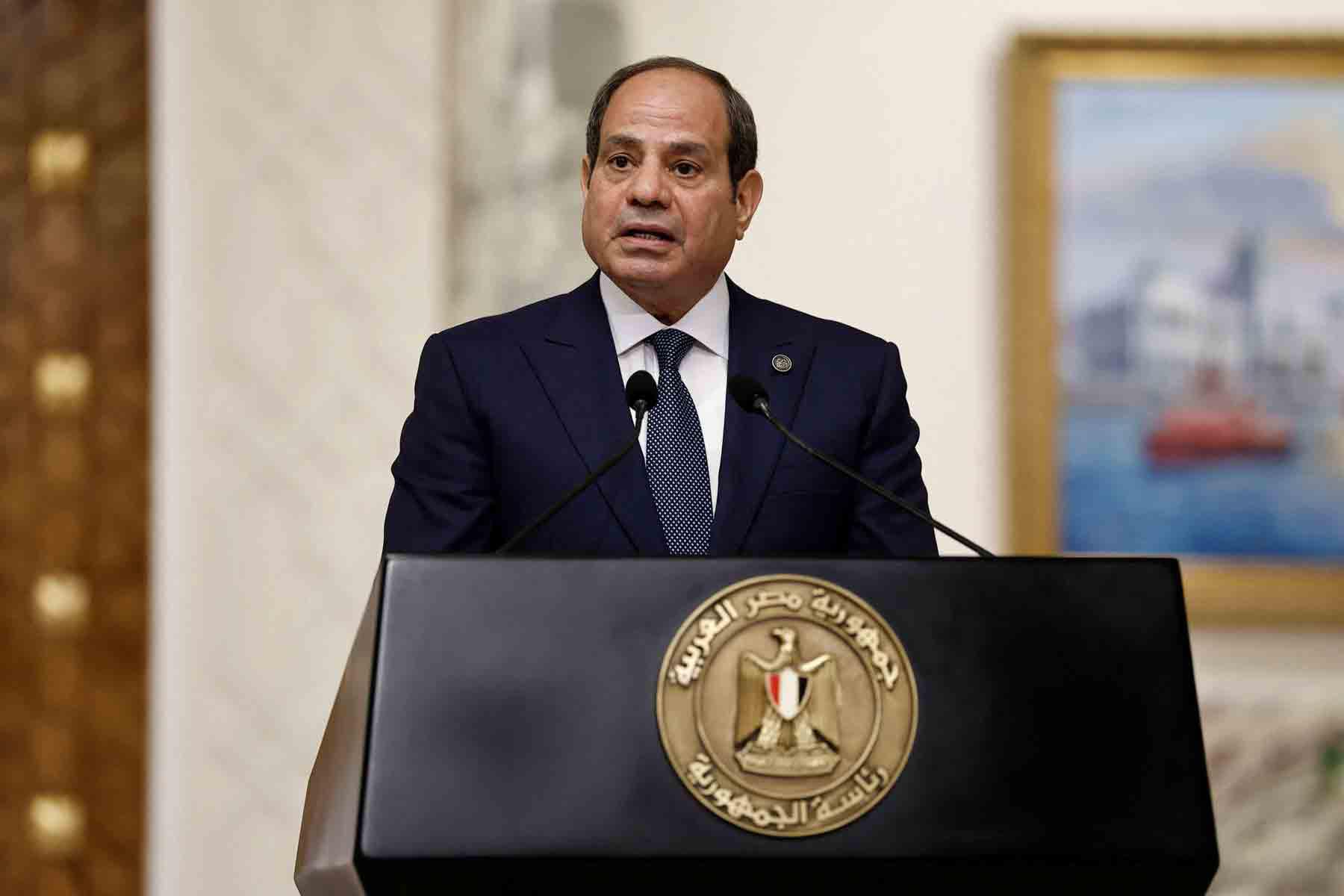
Speaking during the annual “Egyptian Family Iftar” gathering in Cairo on Saturday, Sisi said the region was passing through an “exceptionally critical” moment marked by escalating military tensions and widening conflicts.
“Our region today stands at a historic crossroads,” he said, warning that continued confrontation could have “devastating economic, humanitarian and security repercussions that will affect everyone without exception.”
The remarks reflect mounting concern in Cairo that the expanding confrontation could engulf more countries and undermine already fragile stability across parts of the Arab world.
Egypt intensifies regional diplomacy
Sisi said Egypt was exerting “every possible effort” to extinguish the flames of war in the Arabian Gulf while working to contain tensions elsewhere in the region.
The Egyptian presidency said Sisi held a phone call on Sunday with Iraqi Prime Minister Mohammed Shiaa al-Sudani, during which he reaffirmed Egypt’s full support for the sovereignty, security and stability of Iraq.
He stressed that Cairo rejects any aggression against Iraq or other Arab states and stands ready to support efforts to shield them from being drawn into the regional conflict.
The two leaders also discussed strengthening joint Arab coordination to safeguard regional security and confront growing challenges stemming from the war.
Sisi has also spoken with several regional leaders in recent days, including Hamad bin Isa Al Khalifa of Bahrain, Mohamed bin Zayed Al Nahyan of the United Arab Emirates, Tamim bin Hamad Al Thani of Qatar, and Abdullah II of Jordan, in what officials described as consultations aimed at reinforcing “collective Arab national security.”
Meanwhile Egyptian Foreign Minister Badr Abdelatty began a regional tour on Sunday that includes Qatar, the UAE and Oman, part of Cairo’s effort to prevent the confrontation from spreading further.
Egypt has also offered to mediate between Iran and the United States in an attempt to halt the conflict.
Economic shockwaves
Sisi warned that the tensions were already casting a shadow over the global economy, disrupting supply chains and pushing up energy and food prices worldwide.
“These conflicts and the tense atmosphere have cast heavy shadows over the global economy,” he said.
Egypt itself has felt the impact, with pressure on global energy markets contributing to the government’s recent decision to raise fuel prices for the first time in 2026.
Analysts say a prolonged escalation in the Middle East could trigger new economic turbulence, particularly if the fighting disrupts key energy-producing areas or major shipping routes.
Higher energy costs, weaker investment flows and slower trade could place additional strain on already fragile economies across the Arab world.
Suez Canal and shipping concerns
The regional conflict has also raised concerns about global shipping routes.
During a meeting with Prime Minister Mostafa Madbouly and Osama Rabie, head of the Suez Canal Authority, Sisi reviewed the impact of the war on traffic through the Suez Canal, one of the world’s most important maritime trade corridors.
Officials briefed the president on measures taken to maintain navigation through the canal, including heightened readiness at its facilities and round-the-clock operations to ensure the continuity of shipping services.
Sisi stressed the need to enhance safety procedures and contingency planning at canal facilities while accelerating several maritime industry projects linked to the authority.
These include expanding shipbuilding capabilities at the Red Sea Shipyard, developing tourist yacht manufacturing and increasing local production of tugboats and other maritime equipment.
He also emphasised the importance of digitalisation and cooperation with international companies to strengthen the canal’s operational efficiency and global competitiveness.
Domestic economic pressures
Addressing concerns over rising living costs, Sisi acknowledged that recent increases in petroleum product prices had generated frustration among Egyptians.
“I am aware of the negative feelings regarding the recent increase in petroleum product prices,” he said, adding that the state had not wished to impose such measures.
But he argued that difficult decisions were sometimes unavoidable to prevent more severe economic consequences.
Egypt spends roughly $20 billion a year on petroleum products to power electricity stations and energy facilities, equivalent to about one trillion Egyptian pounds, he said.
The government is therefore accelerating plans to expand renewable energy production, aiming for such sources to account for 42 percent of electricity generation by 2030.
Call for unity amid regional turmoil
Sisi urged government officials to improve communication with the public amid criticism in local media that authorities had not been sufficiently transparent about economic challenges.
He noted that Egypt had faced multiple global crises and regional wars in recent years that had strained public finances, including a loss of around $10 billion in revenues from the Suez Canal.
Despite the pressures, he said the government remained committed to protecting vulnerable families, expanding social support programmes and preventing price exploitation.
Sisi warned that traders found exploiting the crisis could face strict legal action.
In the volatile regional environment, he said unity among Egyptians would be essential.
“We must stand together and be vigilant,” Sisi said, warning that miscalculations had already led to the collapse of states in the region.
Despite escalating tensions around Egypt’s borders, he expressed confidence that the country would remain stable.
“No matter how great the challenges become, Egypt will remain proud and steadfast,” he said.