


Uncertainty now defines Iraq’s political horizon
Iraq enters constitutional vacuum as Shiite factions fail to agree new PM
The failure underscores the continuing paralysis within Iraq’s post-2003 power-sharing system, in which authority is distributed along sectarian and ethnic lines.
Monday 27/04/2026
Uncertainty now defines Iraq’s political horizon
BAGHDAD – Iraq has entered a constitutional vacuum after rival Shiite political factions failed to agree on a candidate for prime minister, exposing deep divisions within the country’s ruling elite at a moment of heightened political, security and economic sensitivity.
The deadlock follows the expiry of a 15-day constitutional deadline on Sunday for the president to task a nominee with forming a government, after political blocs were unable to reach consensus within the largest parliamentary coalition, the Coordination Framework.
The failure underscores the continuing paralysis within Iraq’s post-2003 power-sharing system, in which authority is distributed along sectarian and ethnic lines. Critics say the arrangement has entrenched political patronage, fuelled corruption, and repeatedly delayed government formation after elections.
Despite parliamentary elections held in November, political forces have been unable for more than five months to finalise the formation of a new executive.
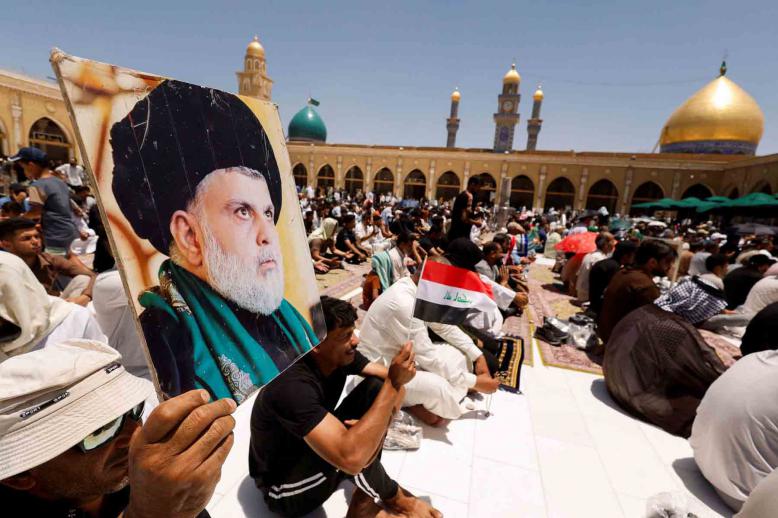
At the centre of the crisis is the Coordination Framework, an alliance of Shiite political forces formed after the 2021 elections, bringing together factions including former prime minister Nouri al-Maliki’s State of Law Coalition, the Fatah Alliance led by Hadi al-Amiri, and Ammar al-Hakim’s National State Forces Alliance. The bloc excludes cleric Moqtada al-Sadr, a key Shiite political rival.
Under Iraq’s informal quota system, the presidency is held by a Kurdish figure, the parliamentary speaker by a Sunni, and the prime ministership by a Shiite nominee.
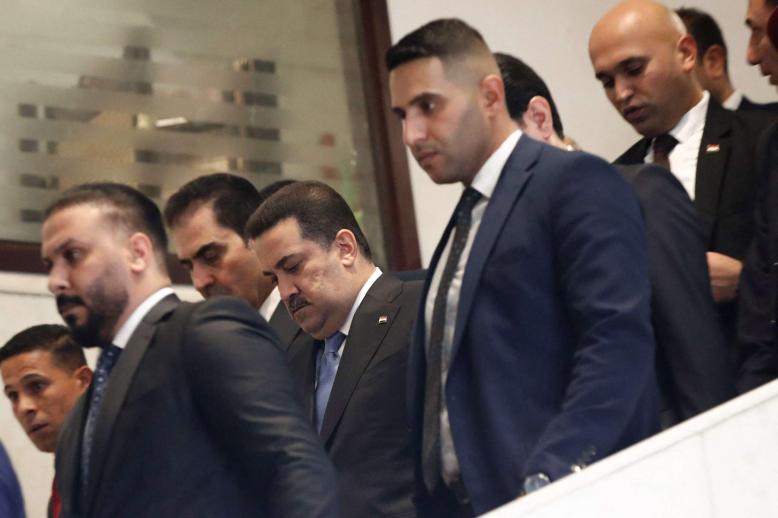
Current President Nizar Amidi has been unable to secure agreement among Shiite factions on a candidate for prime minister, with internal disputes forcing four postponements of key meetings in just one week before the deadline expired.
The coalition is split between factions insisting on a heavyweight political figure to lead the next government and others pushing for a compromise candidate to avoid domestic backlash and international rejection.
Unusually direct external pressure has further complicated the process. Statements attributed to US President Donald Trump opposing the return of Nouri al-Maliki to the premiership are reported to have intensified divisions within the bloc, forcing some factions to reassess potential nominees.
The United States retains significant leverage over Iraq’s financial system through Federal Reserve oversight of dollar flows from oil revenues, which are deposited in US-controlled accounts. Iraqi officials privately acknowledge that any premier viewed unfavourably by Washington could face financial constraints affecting budget execution and state payments.
Security cooperation is also a key factor, with Iraq dependent on US technical and intelligence support under long-standing agreements. Officials fear that political friction with Washington could undermine counter-terrorism capabilities and broader stability.
Amid the deadlock, several names continue to circulate as potential compromises. Current Prime Minister Mohammed Shiaa al-Sudani remains a leading contender for a second term, although political consensus on his continuation remains uncertain.
Other figures mentioned include former prime minister Haider al-Abadi, intelligence chief Qasim al-Araji and politician Mohammed Sahib al-Daraji, seen by some factions as possible consensus candidates capable of breaking the impasse.
The crisis reflects a recurring pattern in Iraqi politics, where post-election negotiations frequently extend beyond constitutional deadlines, producing prolonged periods of political uncertainty. A similar deadlock in 2021 lasted nearly a year before a government was eventually formed under Sudani.
However, analysts say the current situation is more fragile due to regional instability linked to the wider Iran-Israel-US confrontation, which has increased pressure on Iraq’s political system and heightened fears of spillover effects.
With constitutional timelines now formally exceeded, decision-making has effectively shifted from institutional procedures to informal political negotiations behind closed doors, as Iraqi leaders search for a compromise to avoid a prolonged power vacuum.