

Tehran is widening attacks across Gulf
Qatar arrests alleged IRGC cells as Iranian missiles target Al Udeid base
The twin developments, the dismantling of alleged IRGC-linked cells inside Qatar and the intensifying missile campaign, underscore the depth of the crisis engulfing the Gulf.
Wednesday 04/03/2026
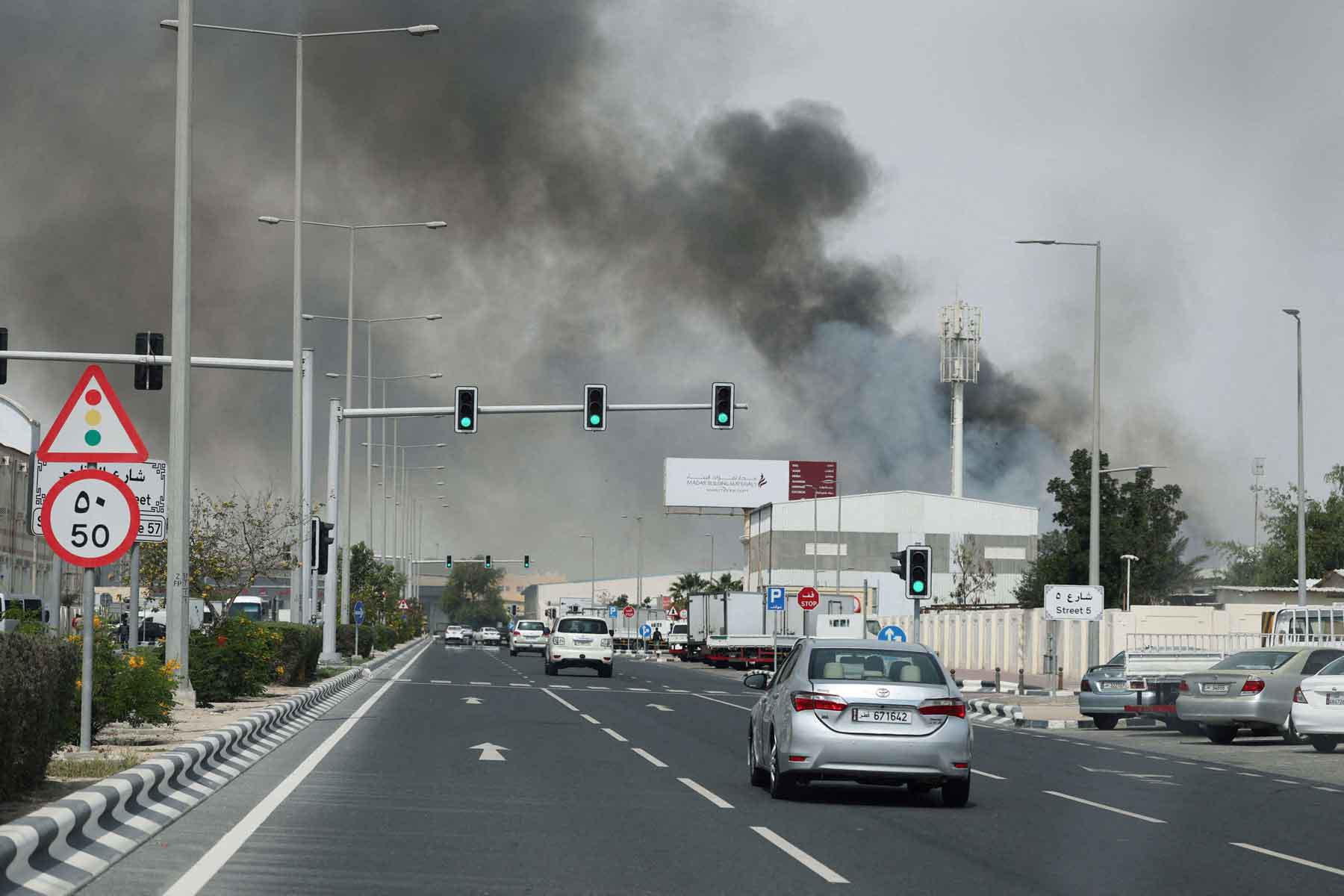
Tehran is widening attacks across Gulf
DOHA – Qatar said late on Tuesday it had arrested two cells affiliated with Iran’s Islamic Revolutionary Guard Corps (IRGC), as the Gulf state faced a wave of missile and drone attacks from Tehran in a rapidly escalating regional crisis.
The state security apparatus detained 10 suspects, according to the Qatar News Agency (QNA). Seven were allegedly tasked with spying on “vital and military facilities” inside Qatar, while three were assigned sabotage operations.
“During interrogation, the suspects admitted their affiliation with the Iranian Revolutionary Guard and that they had been tasked with espionage missions and sabotage activities,” QNA reported.
Authorities said they had recovered coordinates of sensitive sites, communications devices and technological equipment from the suspects, suggesting preparations for surveillance and potential attacks on strategic infrastructure.
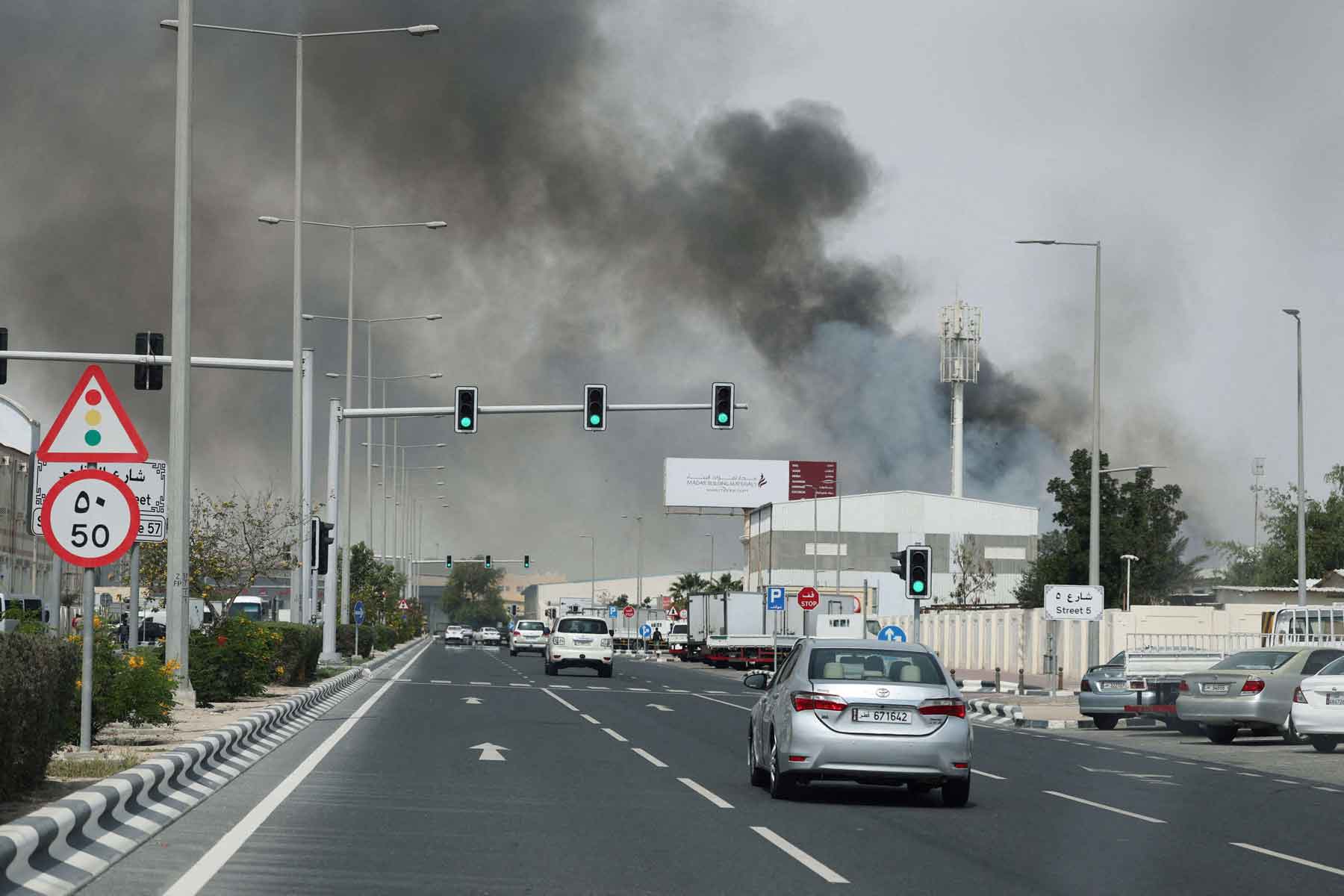
The arrests came as Qatar’s defence ministry confirmed that Iran had launched two ballistic missiles towards its territory on Tuesday evening, with one aimed at the US-run Al Udeid air base southwest of Doha. Air defence systems intercepted one missile, while the second landed on the base without causing casualties. The ministry did not specify whether there was material damage.
Earlier in the day, the ministry said it had detected three cruise missiles, 101 ballistic missiles and 39 suicide drones heading towards Qatari airspace since the start of the Iranian attacks. All missiles and 24 drones were intercepted, it said.
The Qatari Armed Forces “possess the full capability to safeguard the country’s sovereignty and territory and remain prepared to respond firmly to any external threat,” the ministry added, urging residents and visitors to remain calm and rely on official information.
First air combat and energy shock
In a dramatic escalation on Monday, Qatar’s air force shot down two Iranian Sukhoi Su-24 bombers, the first confirmed instance of a Gulf state downing Iranian aircraft since Tehran began retaliatory strikes following joint US-Israeli attacks on Iran.
As the conflict widened to energy infrastructure, QatarEnergy suspended liquefied natural gas (LNG) production after drone strikes hit two of its facilities.
Qatar is one of the world’s largest LNG exporters, and the halt sent European gas prices soaring by more than 50 percent, while oil prices surged nearly nine percent amid fears of supply disruption.
European natural gas benchmarks and global crude markets reacted sharply as investors weighed the risk of prolonged instability in one of the world’s most critical energy corridors.
No communication with Tehran
Qatar’s foreign ministry said there was no ongoing communication with Iran. Spokesperson Majed al-Ansari told journalists that Doha had been “surprised by these unjustified attacks,” noting that Iran had provided no prior notification.
He added that Iranian targets were not limited to military facilities but encompassed “all Qatari territory,” raising alarm over the breadth of the threat. Almost 8,000 people were stranded in Qatar as airspace closures disrupted regional travel.
Tehran has launched multiple retaliatory strikes on Qatar and other Gulf Arab states since the United States and Israel began joint operations against Iran on Saturday.
While Iran has said it is targeting US assets in the region, civilian infrastructure, including airports and hotels, has also been hit.
On Monday, Qatar formally condemned the Iranian attacks in a letter to the UN Secretary-General and the president of the Security Council, stating that it “reserves the complete right to respond” under international law.
The twin developments, the dismantling of alleged IRGC-linked cells inside Qatar and the intensifying missile campaign, underscore the depth of the crisis engulfing the Gulf.
What began as retaliation against US assets has evolved into a broader confrontation threatening sovereign territory, civilian infrastructure and global energy markets, with Qatar now at the forefront of both the military and diplomatic front lines.