


A focus on economy, technology and security
UAE moves to ease regional tensions, deepen strategic ties with US
The talks focused on economic, investment, trade, advanced technology, energy and artificial intelligence sectors, reflecting the breadth of the UAE-US relationship.
Thursday 26/02/2026
A focus on economy, technology and security
WASHINGTON/ABU DHABI – Deputy Prime Minister and Minister of Foreign Affairs of the United Arab Emirates Sheikh Abdullah bin Zayed Al Nahyan held high-level meetings in Washington on Wednesday, underscoring the depth of the strategic partnership between the UAE and the United States.
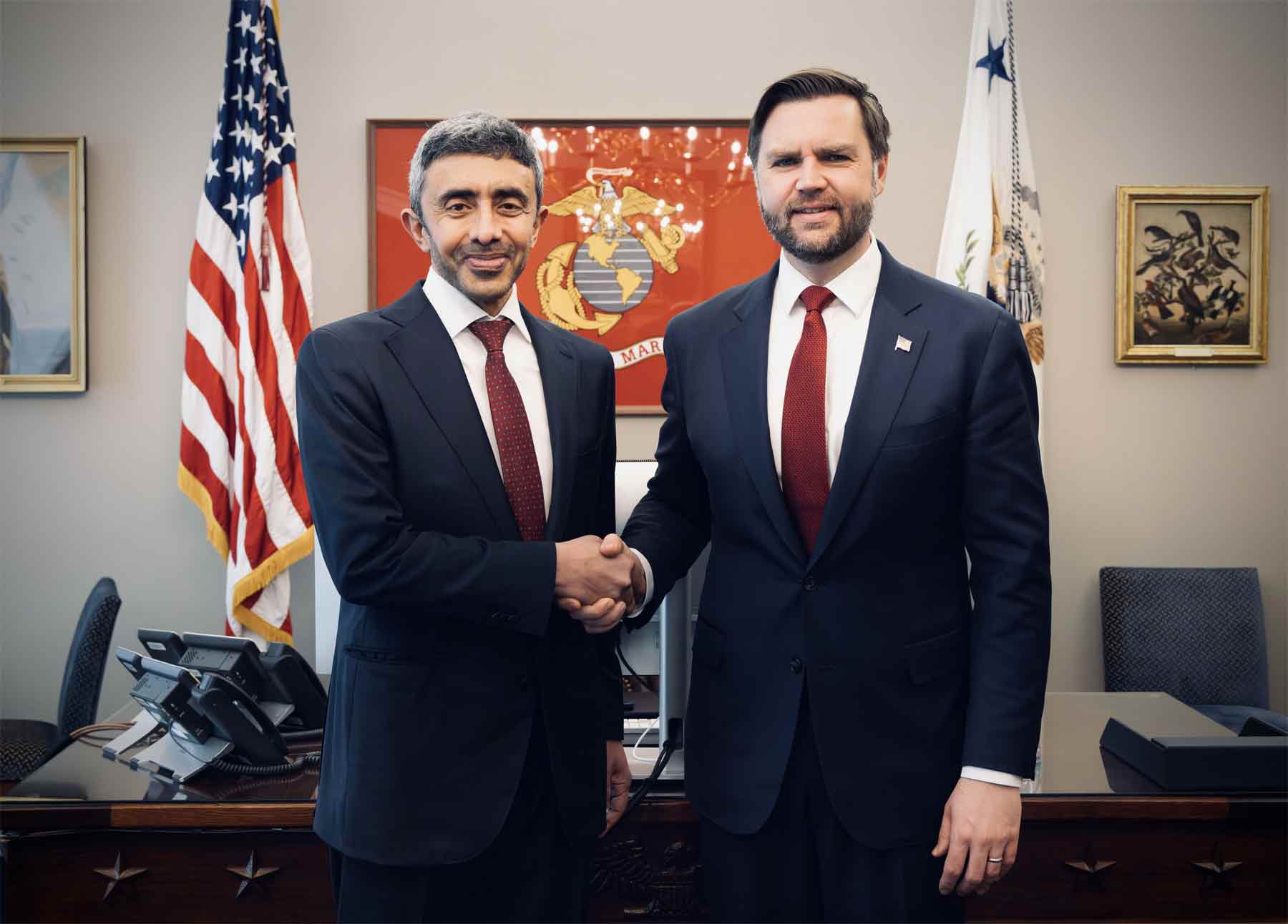
During a meeting with US Vice President JD Vance, Sheikh Abdullah discussed avenues to strengthen bilateral cooperation and exchanged views on a range of regional and international issues of mutual interest, according to the UAE Ministry of Foreign Affairs.
The talks focused on economic, investment, trade, advanced technology, energy and artificial intelligence sectors, reflecting the breadth of the UAE-US relationship.
Sheikh Abdullah reaffirmed the UAE’s commitment to expanding the horizons of its strategic partnership with the United States, noting that such collaboration serves the common interests of both nations while promoting sustainable development and regional stability.
“Our efforts aim to bolster peace, coexistence, and stability across the region,” he said.
The meetings come at a sensitive time, coinciding with heightened tensions between Washington and Tehran, a situation that has raised concerns across the Middle East due to potential security and economic repercussions.
Sheikh Abdullah’s visit reflects a consistent UAE diplomatic approach prioritising de-escalation, political solutions and proactive mediation to maintain regional stability.
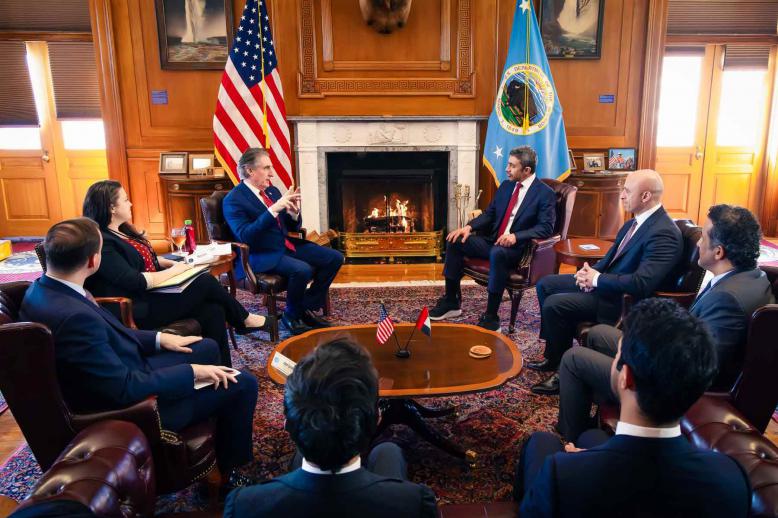
In addition to his meeting with Vice President Vance, Sheikh Abdullah held discussions with US Secretary of the Interior Doug Burgum on artificial intelligence cooperation, and with Secretary of State Marco Rubio, where Sudan and broader regional security issues were on the agenda. He also met Commerce Secretary Howard Lutnick to explore ways to advance trade and strengthen partnerships in priority sectors, including technology and AI.
Last week, Sheikh Abdullah participated in the inaugural meeting of the Board of Peace, focusing on Gaza reconstruction. During the session, he announced that the UAE would pledge an additional $1.2 billion in support for the enclave.
The visit demonstrates Abu Dhabi’s aspiration to consolidate its role as a reliable and influential partner for Washington in managing Middle Eastern affairs.
Analysts note that the UAE’s diplomatic approach combines strategic alliance-building with active mediation in regional crises, enhancing its credibility and leverage as a neutral interlocutor.
Senior UAE officials accompanying Sheikh Abdullah included Saeed Al Hajeri, Minister of State and Yousef al-Otaiba, UAE Ambassador to the United States.
The visit highlights the UAE’s view of its relationship with the US as a cornerstone of its foreign policy, allowing it to promote regional stability while maintaining open dialogue with diverse stakeholders.
Washington, in turn, considers Abu Dhabi a dependable ally capable of helping navigate complex regional challenges.
Through these discussions, the UAE and US appear committed to sustained strategic coordination across political, economic, and security dimensions, aiming to prevent escalation in the region while fostering development, technological cooperation, and investment.