


A mutually dependent relationship
Washington visit gives major lift to US-UAE relations
The UAE is positioning itself not only as a major global investor in the United States but also as a political partner in shaping regional solutions.
Friday 27/02/2026
A mutually dependent relationship
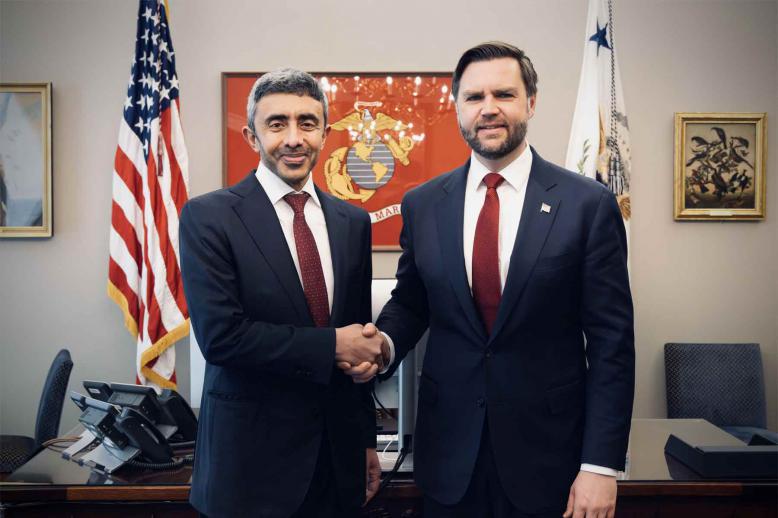
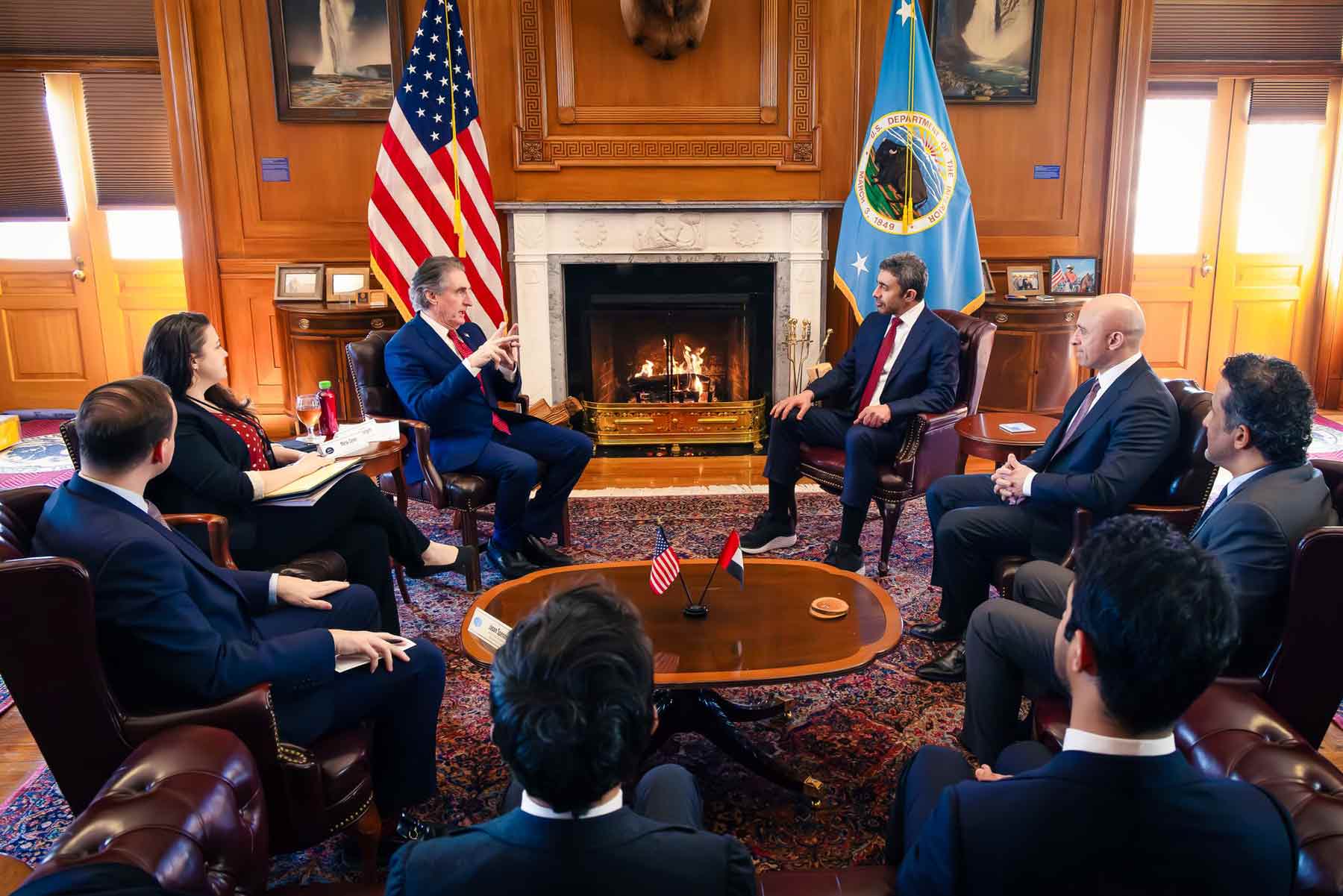
WASHINGTON – Deputy Prime Minister and Minister of Foreign Affairs of the United Arab Emirates Sheikh Abdullah bin Zayed Al Nahyan delivered a significant boost to US-UAE relations during his visit to Washington this week, underscoring deepening economic and political cooperation and highlighting the alignment of visions with President Donald Trump’s administration.
The visit marks a shift in the UAE-US relationship from a traditional strategic alliance toward comprehensive integration. The UAE is positioning itself not only as a major global investor in the United States but also as a political partner in shaping regional solutions, cementing its role as a cornerstone for Middle East stability and global economic growth in the coming decade.
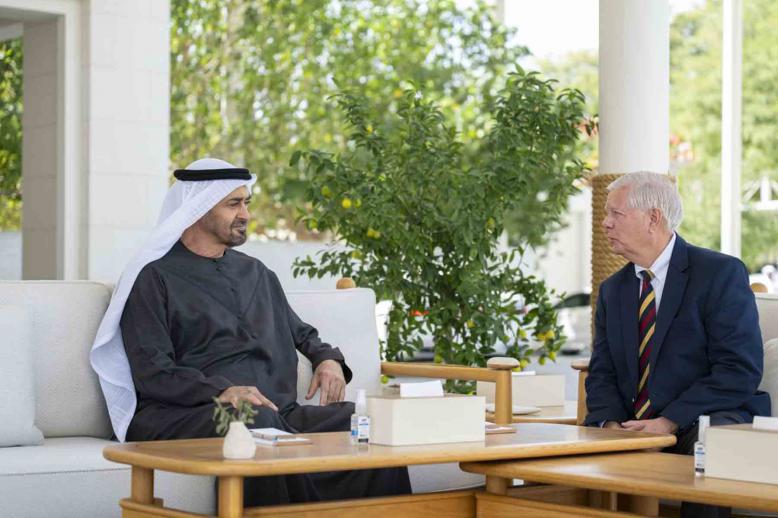
During his meetings with US senators and leading experts, Sheikh Abdullah sent a clear message: US-UAE partnership enjoys broad bipartisan support and a deep consensus that transcends conventional political lines, ensuring the durability and stability of the relationship.
The discussions focused on far more than routine investments. They reflected confidence in the US economy and the long-term strategic partnership between the two nations. Sheikh Abdullah reviewed progress on the historic $1.4 trillion investment pledge announced by President Sheikh Mohammed bin Zayed Al Nahyan during Trump’s visit to Abu Dhabi in May 2025, intended to span a decade. The pledge builds on a massive existing investment base exceeding $1 trillion already embedded across the US economy.
Trade between the two nations has surged, with goods exchange rising 9.47 percent in 2024 to $34.43 billion, while non-oil trade nears $40 billion.
The UAE has also emerged as a key player in Trump’s renewed vision for the Middle East, particularly in post-conflict reconstruction in Gaza. The Emirates committed $1.2 billion to support the Palestinian sector via the Board of Peace established by Trump, bringing total UAE assistance to Palestinians since October 2023 to nearly $3 billion.
The UAE is actively engaged in the four governance structures set up under Trump’s transitional framework, the Board of Peace, the National Committee, the Executive Council and the International Stabilisation Force, within a wider international package that has mobilised more than $7 billion to aid recovery efforts.
US policymakers are also counting on Emirati investments to advance the “America First” agenda by revitalising key industrial sectors. Notably, Emirates Global Aluminium will invest in the first US-based aluminium smelter in 35 years, boosting domestic production of a critical material for aerospace and defence industries. Meanwhile, Emirates Nuclear Energy Corporation signed a partnership with Westinghouse to accelerate nuclear reactor deployment, supporting US energy independence.
Official data highlight the UAE as a “financial lung” for the US in the Middle East. Emirati investments sustain hundreds of thousands of jobs across manufacturing, technology, and healthcare sectors, exemplified by collaborations such as Cleveland Clinic with G42 in medical AI.
Washington views Abu Dhabi not merely as a source of capital but as a platform for implementing major technology and energy projects. In turn, the UAE gains access to globally restricted technologies, creating a mutually dependent relationship that is deeply integrated and difficult to disentangle.