


‘Fruitful meeting’
US envoy urges ‘effective leadership’ as Iraq faces government test
As internal rivalries intersect with pointed American messages, Iraq’s government formation process hangs in the balance.
Monday 23/02/2026
‘Fruitful meeting’
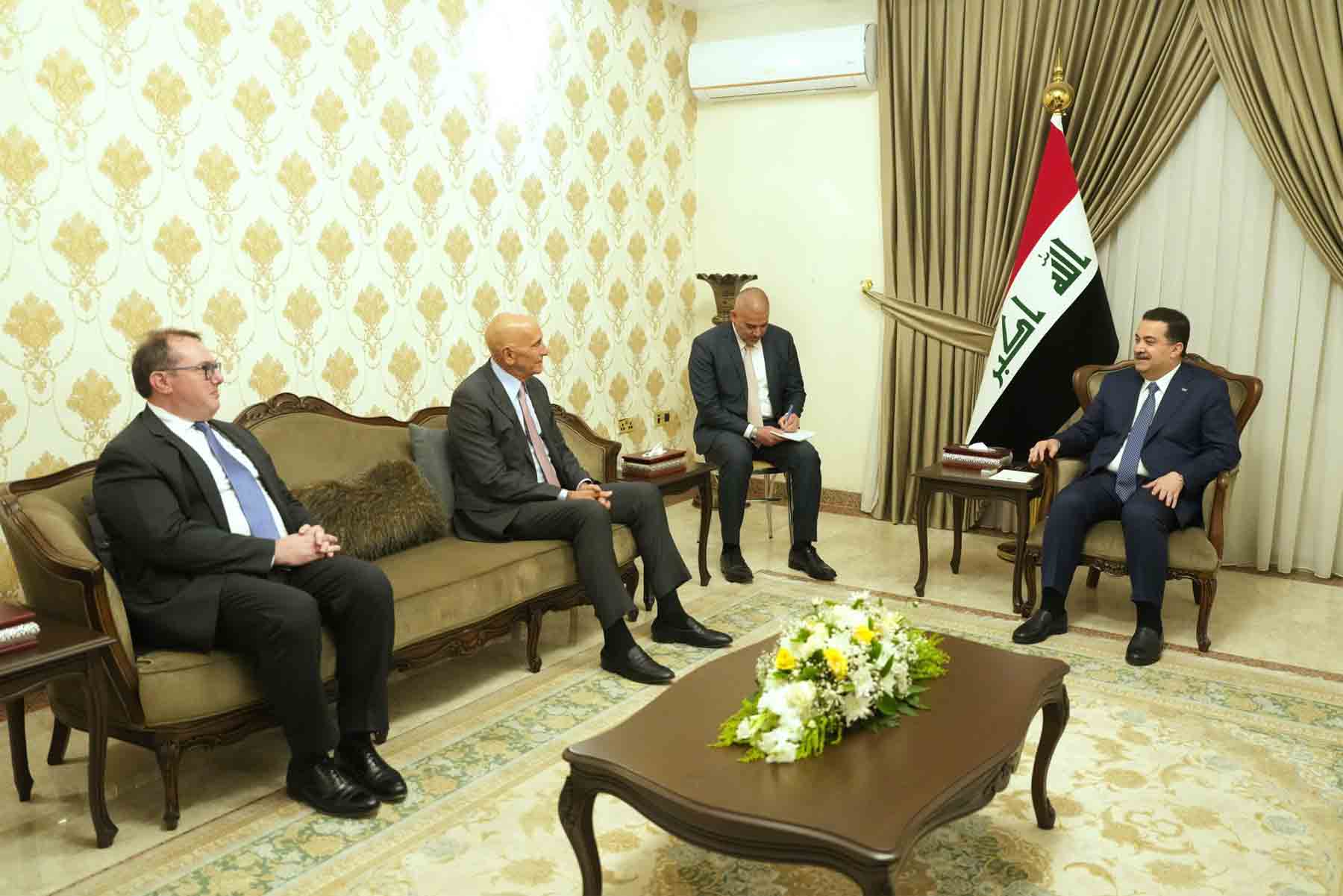
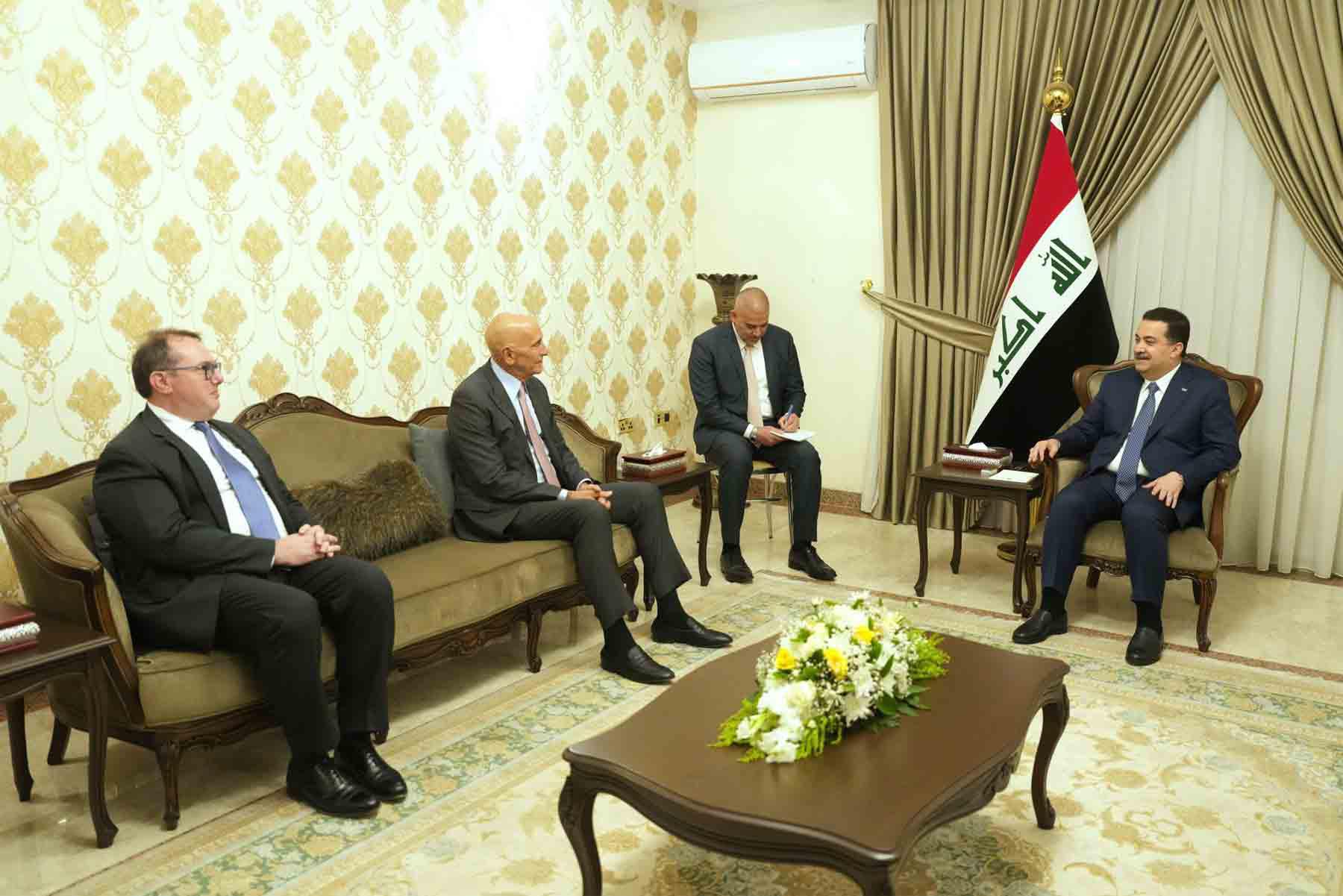
BAGHDAD –US envoy to Iraq Tom Barrack began his diplomatic engagement with a high-level meeting with Prime Minister Mohammed Shiaa al-Sudani, describing the talks as “fruitful” and underscoring the need for effective Iraqi leadership capable of consolidating stability and advancing bilateral partnership.
The meeting took place at a sensitive moment, coinciding with consultations over the formation of a new Iraqi government and amid escalating tensions with neighbouring Iran, including threats of possible military action against Tehran.
Barrack, who assumed responsibility for the Iraq portfolio following Mark Savaya, wrote on X, “Fruitful meeting with Prime Minister Mohammed Shiaa al-Sudani discussing continued Iraqi goals and objectives to build a sovereign, stable and prosperous future that aligns with ’s desire and plan for peace and prosperity in the region. The necessity of effective leadership that aligns itself with the policies and practices of further stabilisation for Iraq and the Iraqi people is key to our mutual goals.”
While the language was diplomatic, the broader US message appears far from neutral. Washington’s position intersects with a declared rejection of former prime minister Nouri al-Maliki returning to head the next government.
That stance has emerged within a wider recalibration of US policy towards Iraq’s political landscape. A spokesperson for the US State Department quoted President Donald Trump last week as saying that Maliki’s appointment would prompt Washington to undertake a comprehensive review of its relationship with Baghdad. The signal is widely understood to extend beyond political ties to encompass security cooperation and economic engagement.
Iraqi sources have spoken of an official message delivered to Baghdad warning that sanctions could be imposed on individuals and institutions should Maliki’s nomination proceed. Reports have also circulated of a short deadline granted for reconsideration, suggesting the seriousness of the US position and its intention to influence the government formation process.
Foreign Minister Fuad Hussein acknowledged that the Coordination Framework, the Shiite political bloc backing Maliki, remains committed to his nomination. However, he conceded that the American stance has created a new political reality, without confirming whether Washington’s position is tactical or fixed. His remarks reflect official recognition that domestic calculations are increasingly intertwined with external pressures.
The US approach appears grounded in several key priorities: reducing the influence of Iran-backed armed factions within Iraqi state institutions; curbing Tehran’s sway over political decision-making; and expanding economic partnerships in line with Washington’s regional vision. From this perspective, any incoming government is expected to distance itself from entrenched regional power centres and demonstrate the capacity for independent decision-making.
Within the Coordination Framework itself, divisions persist over pressing ahead with Maliki’s candidacy. While the former premier draws on his political weight and experience leading two previous governments, some alliance members fear that insisting on his return could complicate relations with the United States at a time when Iraq requires sustained international support to address mounting economic and security challenges.
Leaks from within the bloc point to intensive discussions over potential alternative candidates who could secure domestic backing while avoiding a direct confrontation with Washington, all while preserving the cohesion of the ruling alliance. Recent American warnings appear to have prompted some factions to reassess their calculations, particularly given the link between political stability and continued international assistance.
Maliki, for his part, maintains that any decision to withdraw his candidacy must originate from within the Coordination Framework itself, not in response to external pressure. He argues that a return to the premiership is a political right determined by parliamentary balances. His critics, however, contend that the current phase demands new leadership capable of rebuilding trust with the international community.
As internal rivalries intersect with pointed American messages, Iraq’s government formation process hangs in the balance. Political forces face the challenge of crafting a formula that ensures genuine stability while insulating the country from regional power struggles.
For its part, Washington has signalled that it remains committed to supporting an Iraqi leadership independent of Iranian influence and capable of maintaining a delicate equilibrium in its foreign relations. Whether Iraq’s political class can navigate this pressure without deepening internal fractures will shape not only the next government, but also the trajectory of US-Iraq relations in a volatile regional environment.